
He was a former soldier, the son of a wealthy merchant, who walked away from everything to rebuild the Church. The real St. Francis is far more bracing than the garden statue — and his witness is more urgently needed now than at any point in a generation.
Francis of Assisi is one of the most recognized names in Christian history. He is also one of the most misunderstood. The version of Francis that has settled into popular imagination is a gentle wanderer who talked to birds and wrote poetry about the sun. That picture is not entirely false. But it is dramatically incomplete, and the parts that get left out are the parts that matter most.
The real Francis was something far more bracing. He was a young man with military ambitions who had been taken prisoner in battle, spent a year in captivity, and came home changed. He was a man who stood before the Muslim Sultan Malik al-Kamil during the Fifth Crusade and offered to walk through fire to demonstrate the truth of the Christian faith. He was a man who received the Stigmata — the actual wounds of Christ in his hands, feet, and side — two years before his death. He was a man who wrote a Rule of Life so demanding that members of his own order argued it was impossible to follow.
None of that fits on a garden statue.
The Knight Who Became a Herald
Francis grew up with every advantage. His father Pietro was one of the most successful cloth merchants in Assisi, a prosperous town in the Umbrian hills of central Italy. The family had wealth, social standing, and connections. Francis had fine clothes, good food, and a reputation as the life of every party. He dreamed of knighthood, of glory, of making a name that would outlast him.
He went to war. He was captured. He spent a year in a prison in Perugia, sick and cut off from everything familiar. When he finally returned home, something had changed in him. The illness that followed only deepened it. He began to pray more seriously. He began to pull away from the noise of his old life.
Then came San Damiano. It was a crumbling little chapel just outside the walls of Assisi, barely standing, its crucifix old and darkened with age. Francis knelt before it and prayed. And he heard Christ speak to him: "Francis, go and rebuild my house, which as you can see is falling into ruins."
He took it literally at first. He began hauling stones and repairing the chapel with his own hands. He later understood that Christ was asking something far larger: the renewal of the Church itself, which in the 12th century was struggling under the weight of corruption, comfort, and compromise. Francis's response was total. He gave back his inheritance, embraced radical poverty, walked barefoot through villages preaching repentance, and drew around him a brotherhood committed to living the Gospel as literally as possible.
The Brotherhood He Built
Francis called his followers the Friars Minor, the Little Brothers. The name was intentional. In the social hierarchy of his day, the minores were the people at the bottom: the poor, the laborers, the nobodies. Francis chose the name deliberately. His order would belong to no class, hold no property, and seek no privilege.
This was not romanticism. It was a radical spiritual and social statement. Francis demanded that his brothers work with their hands, beg for food when work ran out, and refuse to own anything — including the buildings they lived in. When wealthy patrons tried to give the order land and property, Francis sent it back. He understood that comfort and mission rarely keep company for long.
He also sent his brothers into the world — not just to minister to Catholics but to go among the poor, the sick, the lepers, and the enemies of the faith. Francis himself walked into the middle of the Fifth Crusade, crossed enemy lines, and sat down with the Sultan to talk about Christ. The Sultan did not convert. He did, however, grant Francis and his companion safe passage and treat him with unexpected respect. Francis came back with his faith deepened and his mission sharpened.
By the time he died in 1226, his brotherhood had spread across Europe and into the Middle East. He was forty-four years old.
Continue Reading This Series
- → Article 1: The Virtues of St. Francis
- → Article 2: St. Francis vs. Modern Masculinity
- → Article 3: Why Pope Leo Declared a Year of St. Francis
- → Article 4: 800 Years Later: Peace in the Family
- → Article 5: The Hard Teachings Behind the Gentle Image
- → Article 6: From Knight to Herald: The Conversion
- → Article 7: How to Pray Like St. Francis
- → Article 8: The Peace Prayer: What It Actually Means
- → Article 9: How to Bring the Peace Into Your Home
The Peace That Costs Everything
The Prayer of St. Francis — "Lord, make me an instrument of your peace" — is probably the most widely known prayer in Christendom outside of Scripture itself. It is read at funerals, stitched into throw pillows, and repeated at interfaith services around the world. And in all that repetition, its real weight has largely been lost.
Francis was not praying for a gentle life. He was praying for the grace to live in a way that required giving up everything the world tells you to hold on to. The peace he sought was not the absence of conflict. It was the fruit of total surrender to God's will — a surrender that cost him his inheritance, his comfort, his health, and eventually his life.
His peace began on the inside and moved outward. First it transformed him. Then it transformed his brothers. Then it transformed the towns and cities he walked through. Then it reached the Church. He understood something that is easy to miss in a world full of noise about justice and peace: the world will not have peace until families have peace, and families will not have peace until the people who make them up find it first.
This is still true. It is more urgently true now than perhaps at any point in a generation.
Why He Matters Today
In declaring a Year of St. Francis, Pope Leo is not asking Catholics to become medieval friars. He is asking something both simpler and harder: that we look seriously at what Francis saw, and allow it to challenge us.
Francis saw a Church that had traded its mission for comfort, and he called it back. He saw a culture that measured a man's worth by his wealth and status, and he walked away from it. He saw violence and war on every side, and he responded not with counterviolence but with the kind of radical trust in God that looks like foolishness to the world and turns out to be the only thing that endures.
Catholic families today are navigating some of the most disorienting cultural forces in living memory. The noise is relentless. The pressure to consume, achieve, perform, and present a certain image is constant. Into that noise, Francis speaks with the same clarity he brought to the 12th century: stop carrying things you were never meant to carry.
His witness is a direct challenge to anxiety, materialism, and the endless noise of modern life. Not because he was a gentle poet who loved sunsets, but because he was a former soldier who decided the only battle worth fighting was the one inside himself — and he fought it to the very end.
This Year and This Rosary
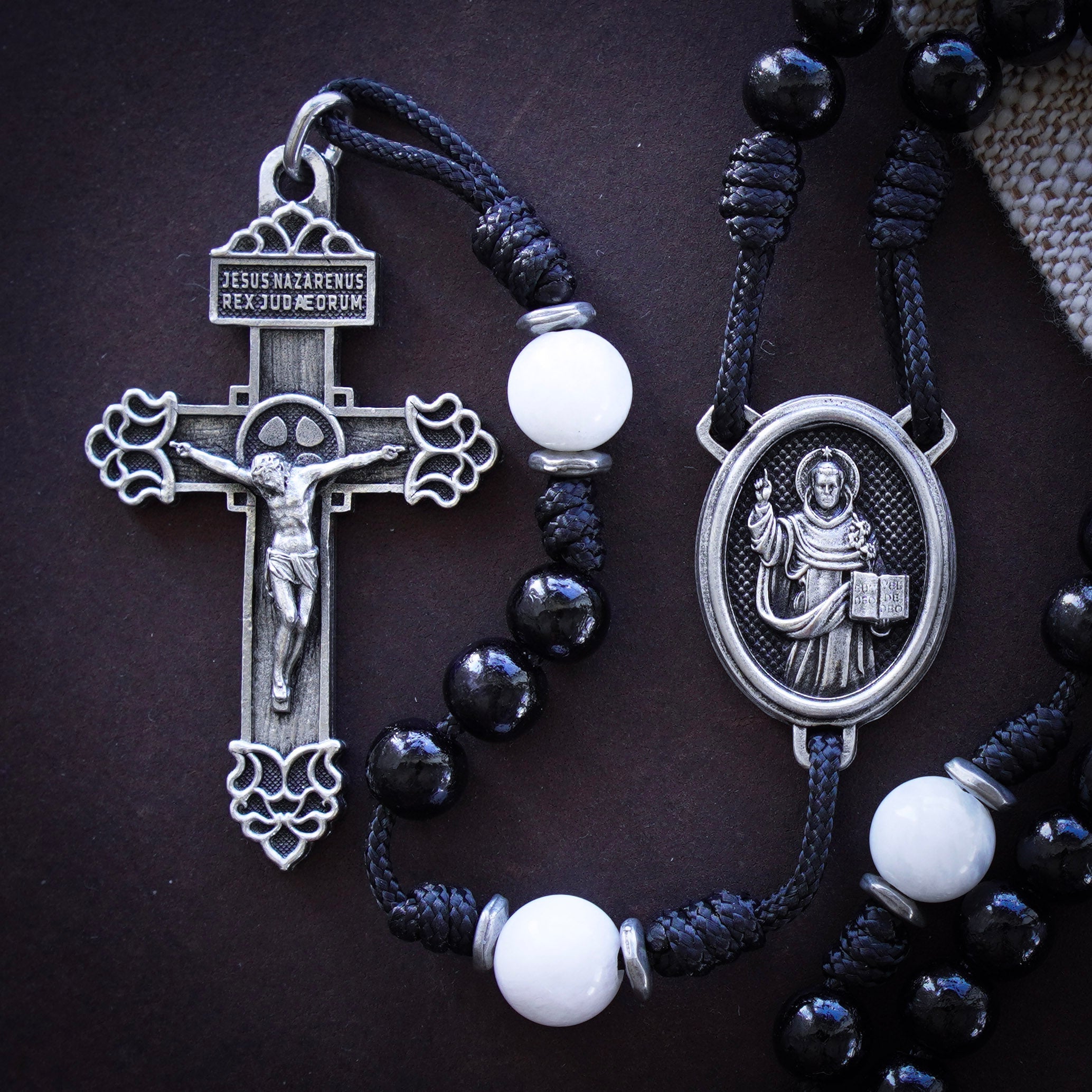
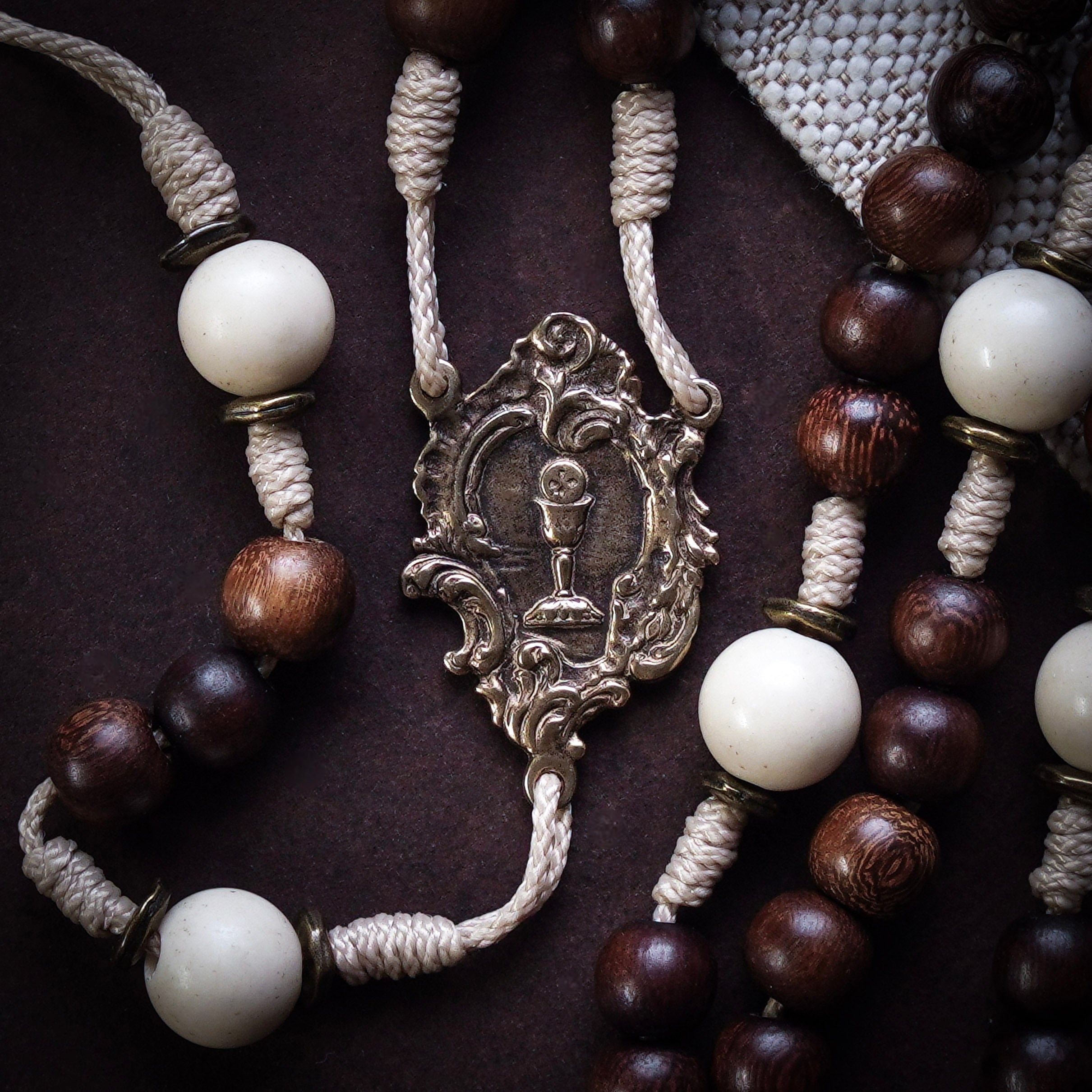
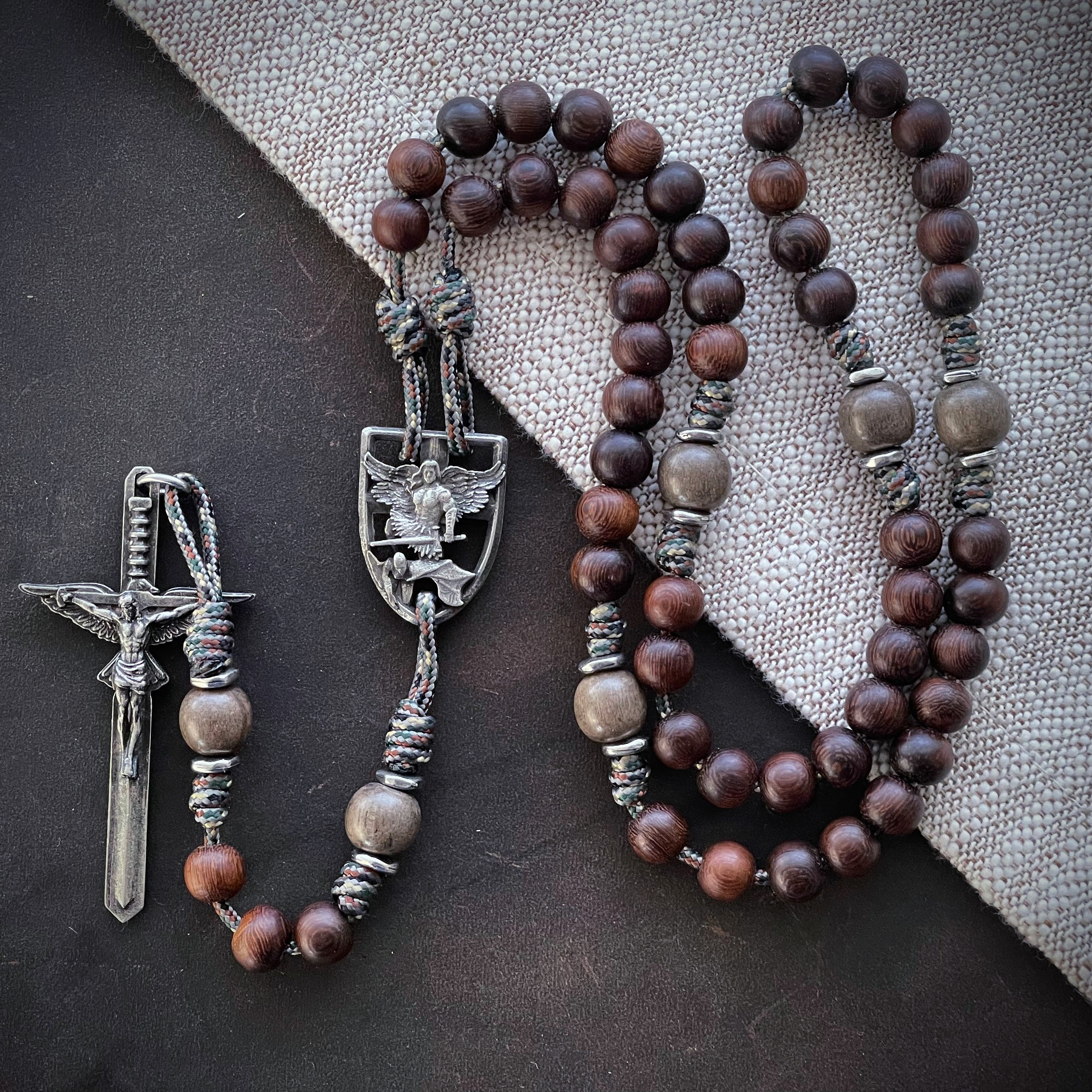
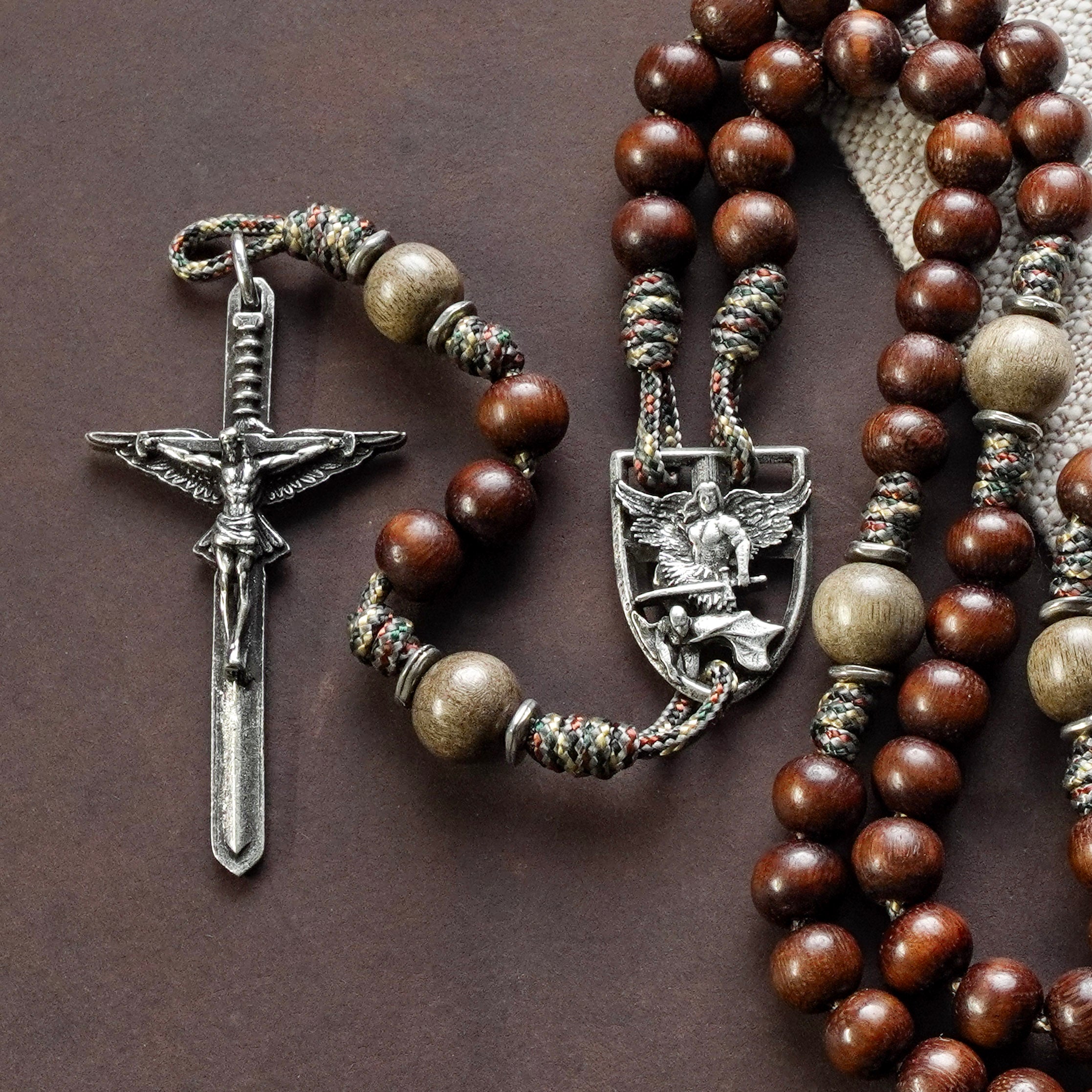
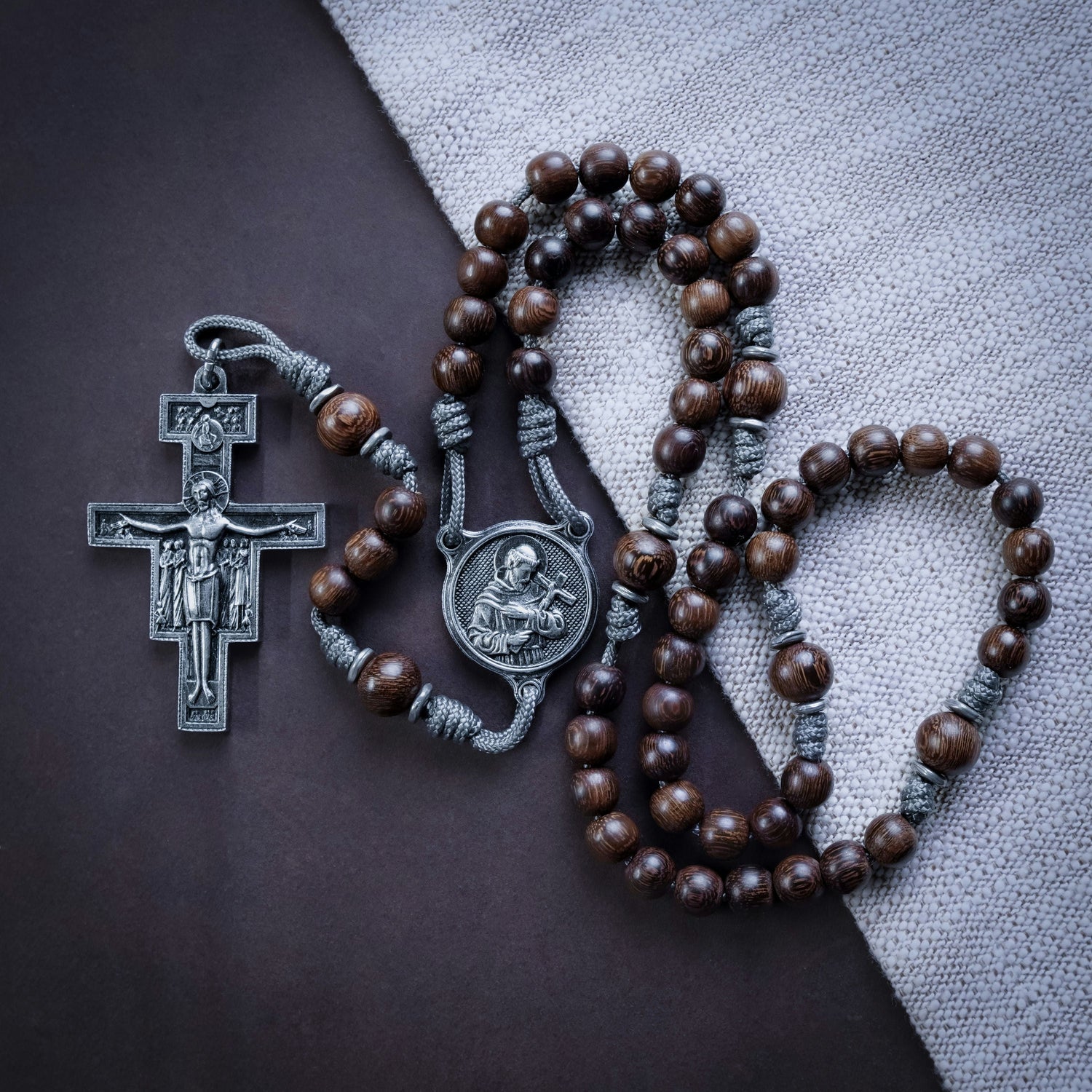
In honor of the Year of St. Francis and in the spirit of his call to pray for peace, The Catholic Woodworker is releasing a new rosary dedicated to St. Francis of Assisi. It is designed for Catholic families who want to pray together for peace in their home and peace in the world, in the Franciscan tradition that has carried that prayer for 800 years.
Over the coming weeks, we are sharing a series of reflections on Francis: his life, his conversion, his virtues, his spirituality, and why his witness is as urgent now as it was in the 13th century. If you want to go deeper with this remarkable saint, start here.
St. Francis of Assisi Rosary
Handcrafted for families who want to pray for peace in their home and peace in the world — in the Franciscan tradition that has carried that prayer for 800 years.
Shop the Rosary →