
And What It Means for Your Family
When Pope Leo declared a Year of St. Francis, he was not issuing a historical commemoration. He was summoning a witness the Church has always called forward when the noise of the age grows loud enough to drown out what matters. Francis has been called in every century when the Church needed renewal from within. He is being called now for the same reason.
Quick Reference| Element | What It Means | For Families |
|---|---|---|
| Pope Leo XIV | Elected 2025; name carries weight of reform popes | A new papal voice with a Franciscan call |
| The Declaration | Call to recover poverty of spirit, simplicity, fraternity | Practical invitation, not historical footnote |
| The Invitation | Begin with what is ordinary and in front of you | Rosary, prayer, honest conversation |
| The Peace Rosary | Franciscan intercessory prayer for home and world | A tool for the year's specific calling |
A Pope Named for a Saint, a Year Named for a Mission
When Robert Prevost took the name Leo upon his election as pope in 2025, the name carried a weight of history. Leo XIII, the great social encyclical pope. Leo I, who turned back Attila the Hun at the gates of Rome. The name belongs to popes who have stood between the Church and the forces pressing against it. The declaration of a Year of St. Francis is consistent with that posture.
Francis of Assisi has been summoned by the Church in every century when the noise of the age has grown loud enough to drown out what matters. He was summoned in the 13th century because the Church needed renewal from within. He is being summoned now for the same reason — not as a historical figure to be admired from a distance, but as a witness whose life continues to pose urgent questions.
Why Francis, Why Now
The years since the Church's last major Franciscan year in 2009 have brought significant turbulence: cultural pressure on Catholic institutions, deepening fragmentation within Catholic communities, and a generation of young Catholics navigating a world that offers a dozen alternatives to faith and very few compelling reasons to stay. Francis is the right answer to this moment not because he was gentle but because he was free.
He had already been through the version of life the world was selling. He had the money, the social standing, the exciting future. He found it empty and walked away from it — not with bitterness but with joy. That witness speaks directly to the disillusionment of this moment. A generation that has been sold comfort and delivered anxiety is ready to hear from a man who went the other direction and found something real.
The reason Francis keeps being called forward is that he had already tried what the world offers — and found something better. His freedom was not theoretical. It was demonstrated, publicly, at great personal cost, over twenty years.
What the Year Is Actually Asking
Pope Leo's declaration of a Year of St. Francis is not primarily about historical commemoration. It is a call to the Church to recover what Francis embodied: poverty of spirit, simplicity of life, genuine brotherhood, and radical trust in divine providence. For individual families, this means something practical. It means asking whether the pace and weight of daily life is ordered toward prayer and genuine communion — or whether it has drifted, as it tends to do, toward achievement, distraction, and low-grade anxiety.
It means looking at the home and asking whether it is a place of prayer or merely a place of activity. Whether family life is building something durable or consuming itself in motion.
The Franciscan Invitation for Families
Francis placed the family at the center of his vision of peace. He believed that the world would have peace when towns had peace, that towns would have peace when families had peace, and that families would have peace when the people in them chose — daily and concretely — love over resentment, simplicity over accumulation, prayer over noise. That sequence has not changed. It still runs in the same direction.
The Year of St. Francis is an invitation to step into that sequence. Not by undertaking something dramatic or unusual but by beginning with the ordinary: a rosary prayed together after dinner, a Franciscan prayer before bed, a genuine conversation about what the family is building and why. Francis started with a crumbling chapel and a handful of stones. He built something that outlasted every principality and power in his world.
The Year of St. Francis is not asking your family to do something dramatic. It is asking you to begin with what is ordinary and in front of you — and to begin now, with the actual material of your actual life.
A Rosary for the Year
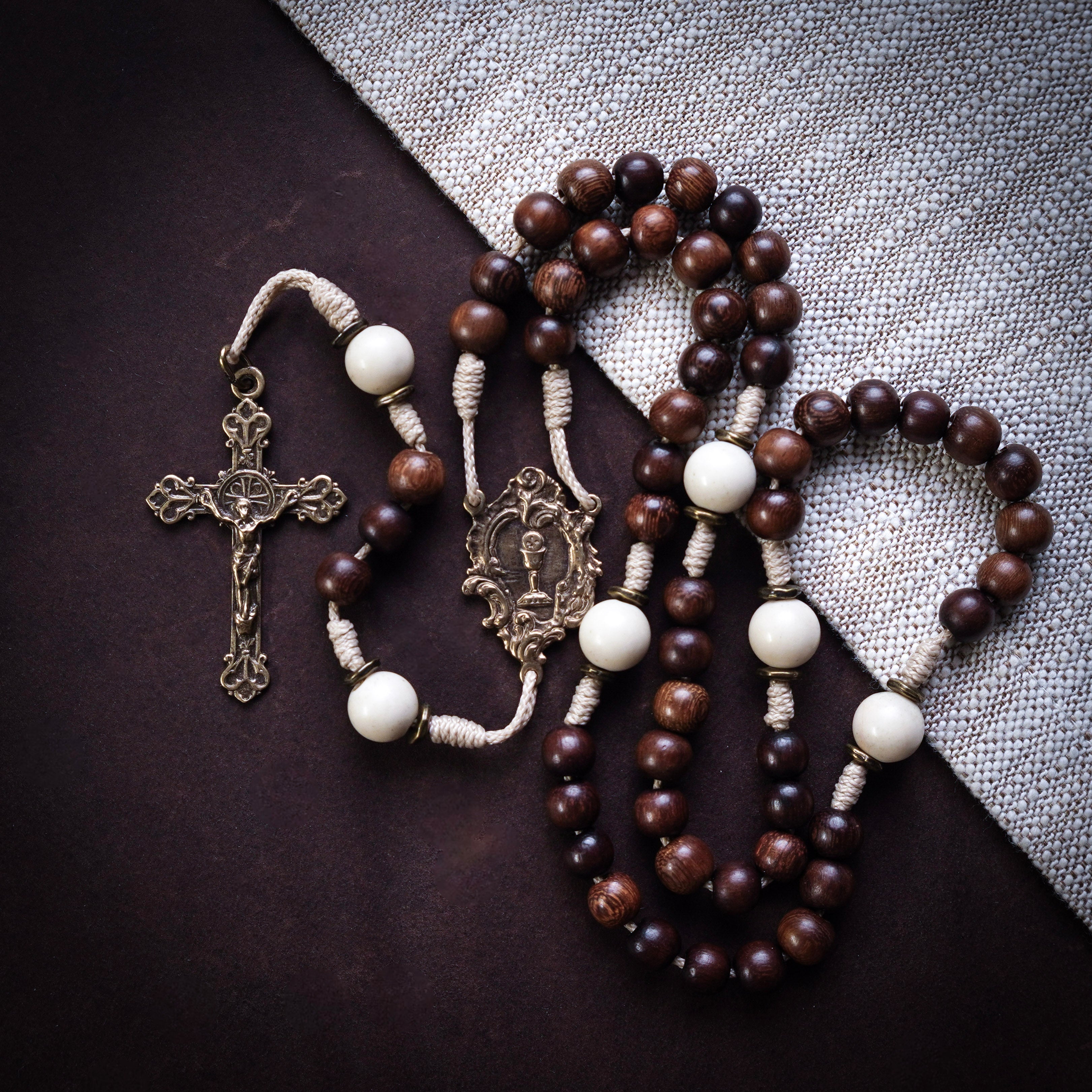
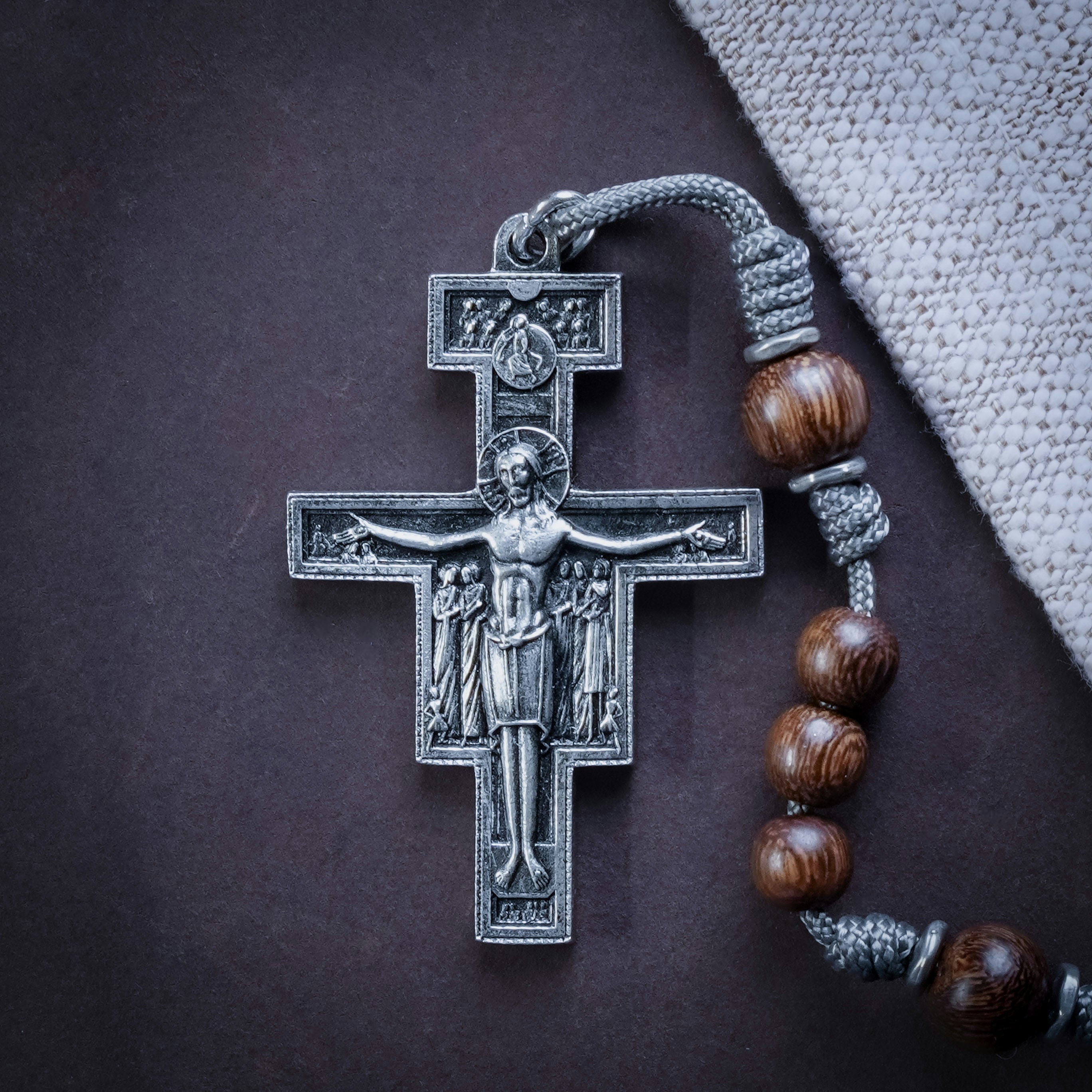
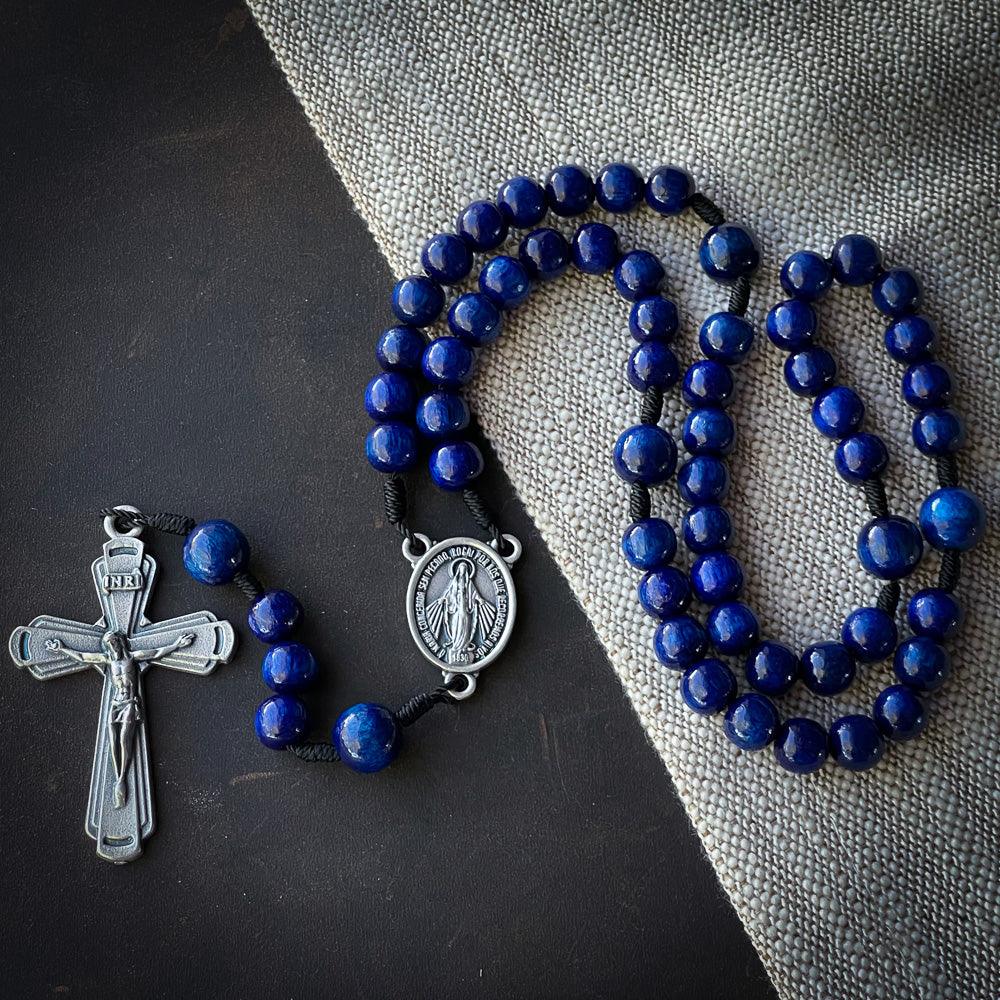
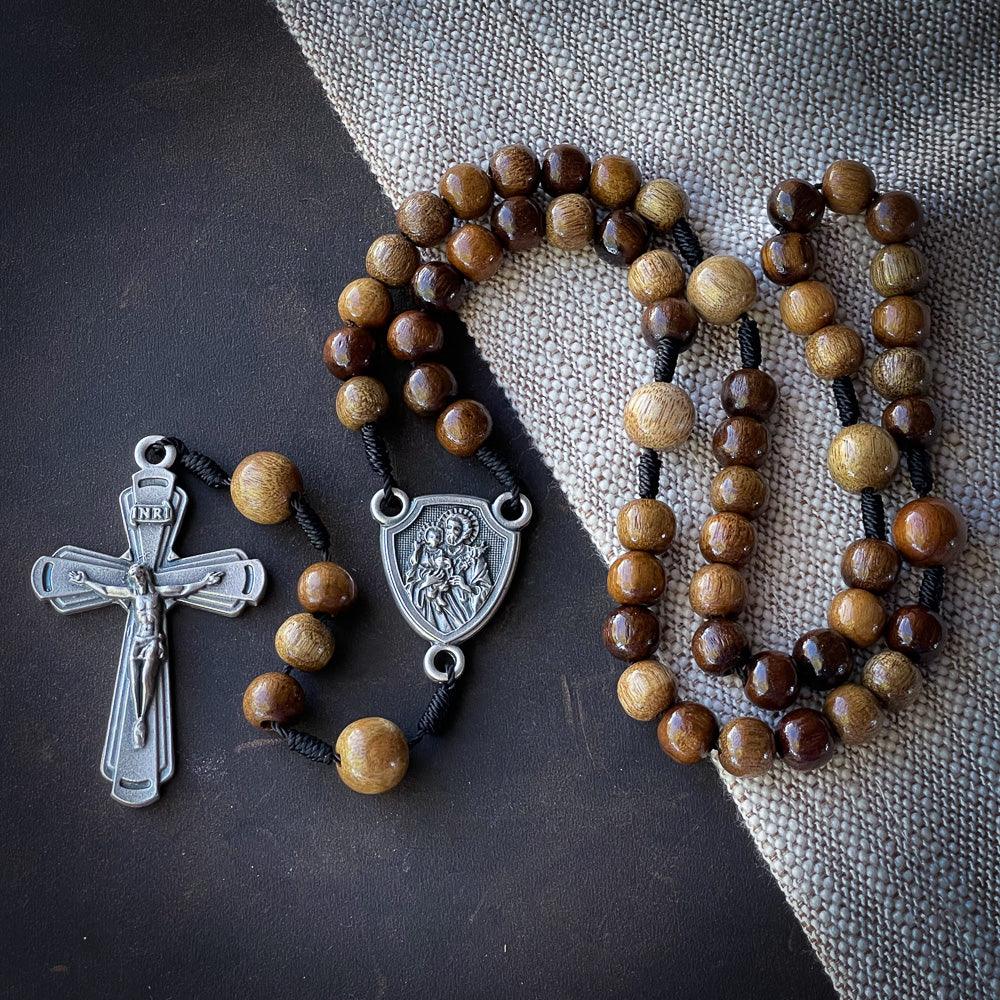
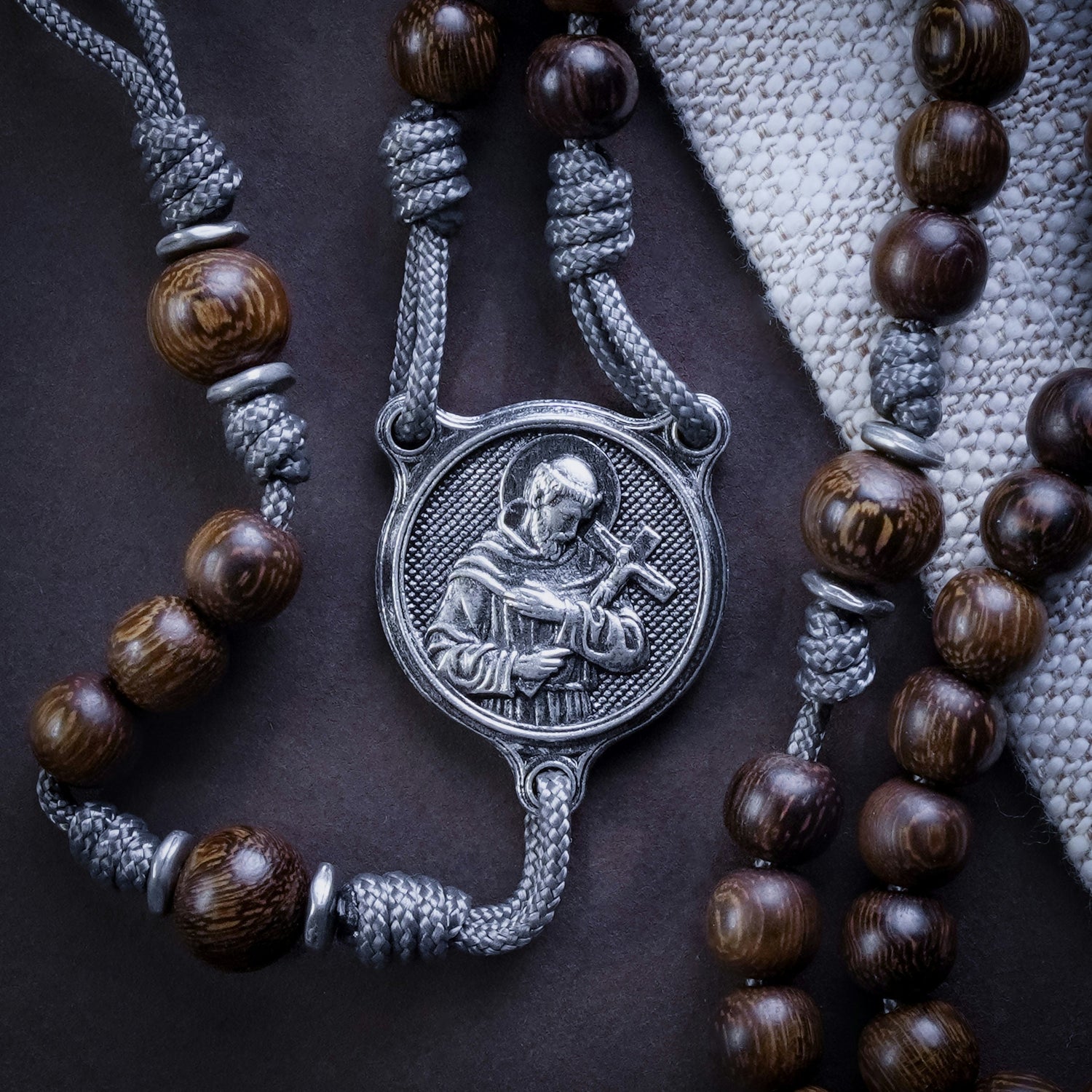
In honor of the Year of St. Francis and his centuries-long witness for peace, The Catholic Woodworker is releasing the St. Francis Peace Rosary — designed for families who want to pray for peace in their home and peace in the world. It draws on the Franciscan tradition of intercessory prayer that goes back to Francis himself and forward through eight centuries of brothers and sisters who have carried that prayer.
A rosary is not a passive object. It is a prayer in your hands — a weapon for the only battle that produces lasting results: the spiritual battle that begins in the home and reaches, through the intercession of the Blessed Mother, to the world. If this year is calling your family to something deeper, start here.
Q&A Flashcards: The Year of St. Francis
Tap any card to reveal the answer.
Source: Content produced for The Catholic Woodworker · youtube.com/@thecatholicwoodworker · April 2026