
A meaningful gift designed to last beyond the day itself
A rosary is the most meaningful First Communion gift you can give, but not every rosary is made for a child to pray with daily. Here is how to choose one that will actually be used, covering the four qualities that matter most: material, size, durability, and personalization.
Quick Reference| Quality | What to Look For | Why It Matters |
|---|---|---|
| Material | Wood for daily use; silver for keepsakes; crystal for display | Affects feel, durability, and how often the child will actually pray with it |
| Size | Beads that are easy to hold and move; a length they can grow into | Children pray with a rosary that feels comfortable in their hands |
| Durability | Strong cord, secure knots, solidly attached crucifix | A rosary that breaks early becomes a barrier to prayer |
| Personalization | A Eucharistic centerpiece, a rosary journal, a patron saint | Builds ownership. Children who feel it is theirs are more likely to pray with it |
Why a Rosary Is a Meaningful First Communion Gift
On the day of First Communion, your child will receive Jesus in the Eucharist for the first time. It is the beginning of a deeper relationship with the Lord and an invitation into a deeper life of prayer, which is exactly what makes the rosary such a powerful gift for this moment.
Praying the rosary is simple enough for a child to start learning, yet deep enough to carry them through every stage of life. The rosary is a way of walking through the life of Jesus Christ alongside the Blessed Mother, a spiritual journey that strengthens the soul daily. It ties a child to Mary, who gently and persistently leads every soul toward her Son.
Unlike toys or clothes, a rosary is something a child grows into. Over time, what begins as a simple prayer becomes a source of strength, a habit of devotion, and a connection to the Church that will outlast every other gift given that day.
Before choosing a rosary, ask yourself one thing: Will this rosary encourage my child to pray? Appearance matters, but usability matters more. A beautiful rosary that sits on a shelf is not serving its purpose.
A rosary is the most spiritually significant First Communion gift because it is a tool for daily prayer that the child grows into, connecting them to Christ through Mary for the rest of their Catholic life.
Choosing the Right Material
The material of a rosary affects how it feels in the hand, how durable it is, and ultimately how often it will be used. The three most common options for First Communion rosaries are wood, silver, and crystal, each with its own advantages and trade-offs.
Wood: Best for Daily Prayer
Wooden rosaries have a natural, warm feel that makes them approachable, especially for a child just beginning to learn the rosary. They are lightweight, easy for small hands to move bead by bead, and far more forgiving when dropped or handled roughly. Hand-finished wooden beads have a natural variation that makes them feel grounded and real. If your goal is to help your child build a daily prayer habit, wood is the right choice.
Silver: Best for Keepsakes
Silver rosaries carry a timeless, polished look traditionally associated with sacramental gifts. Their shine and clean lines make them well suited to being a cherished keepsake from the First Communion day. However, silver rosaries are more delicate than they appear, particularly those with thin chain links, and require more care over time. If the rosary is meant to be treasured and remembered more than prayed with daily, silver is a beautiful choice.
Crystal: Best for Display
Crystal rosaries are visually striking, with reflective beads that feel elegant and refined. The trade-off is fragility. Crystal beads break more easily than wooden or corded rosaries, which makes them less suited to a young child who is still learning to handle a rosary with care. Crystal is best for occasional use or display.
There is nothing wrong with choosing a beautiful rosary, but if beauty comes at the cost of usability, the gift loses its purpose. A child who breaks their rosary in the first week will stop trying to pray with it. Choose durability first, beauty second.
| Material | Feel | Durability | Best Use | For Daily Prayer? |
|---|---|---|---|---|
| Wood | Warm, natural, lightweight | High: handles daily use well | Daily prayer, everyday carry | ✅ Yes |
| Silver | Polished, traditional, elegant | Moderate: requires care | Keepsake, special occasions | With care |
| Crystal | Striking, refined, decorative | Low: fragile under handling | Display, occasional use | ❌ Not ideal |
Getting the Size Right
When the rosary is for a child, think about how it feels in their hands. Beads should be easy to hold and move one at a time, and the rosary should be light enough to carry in a pocket or church bag without feeling like a burden.
Some families choose a smaller children's rosary for the early years. Others prefer a standard five-decade rosary the child can keep praying with as they grow, so the gift from their First Communion is the same rosary they pray with as a teenager and an adult. The practical test is simple: if your child can hold the rosary comfortably and move from one bead to the next without strain, it is the right fit.
A rosary that feels comfortable in a child's hands is a rosary they will actually pick up. Choose for comfort now and for the years of prayer ahead.
Why Durability Is Non-Negotiable
A poorly made rosary creates a frustrating prayer experience. Chains snap. Beads come loose. The crucifix pulls free. When a child's rosary breaks in the first few weeks, it becomes a barrier to prayer, and children are not always equipped to return to the practice after that disappointment.
Strong craftsmanship removes friction from prayer. When you are choosing a First Communion rosary, look for these signs of quality construction: strong, hand-tied cord in place of thin wire or chain; secure knots between beads that will not loosen with regular handling; and a solidly attached crucifix that will not pull free over time. A well-made rosary should be something your child can carry daily and still have in adulthood.
Quality construction is a prerequisite for building a prayer habit. A rosary that survives childhood and adolescence is one that will still be prayed in adulthood.
Making It Personal
Personalization is how a rosary becomes theirs rather than just another gift. When a child feels ownership of a sacramental item, they are far more likely to care for it, carry it, and pray with it.
One of the most meaningful choices is a rosary with a Eucharistic centerpiece, a chalice and host that ties the gift directly to the sacrament they are celebrating. Families can also write their child's name and First Communion date in a rosary journal, or pair the rosary with a medal or prayer card of their patron saint. For more ideas, see our guide on how to personalize a First Communion rosary.
A rosary with a Eucharistic centerpiece featuring a chalice and host creates a direct visual connection to the sacrament your child just received. Every time they pick it up to pray, they are reminded of the Communion that began their relationship with Christ at the altar.
Personalization turns a rosary from a beautiful object into a meaningful spiritual companion. A child who feels the rosary belongs to them is a child who will pray with it.
A Rosary They Will Use
When you bring together all four qualities (the right material, a comfortable size, strong construction, and meaningful personalization) the result is a rosary that does exactly what a First Communion gift should. It walks with your child long after the celebration is over, supporting their prayer life one bead at a time.

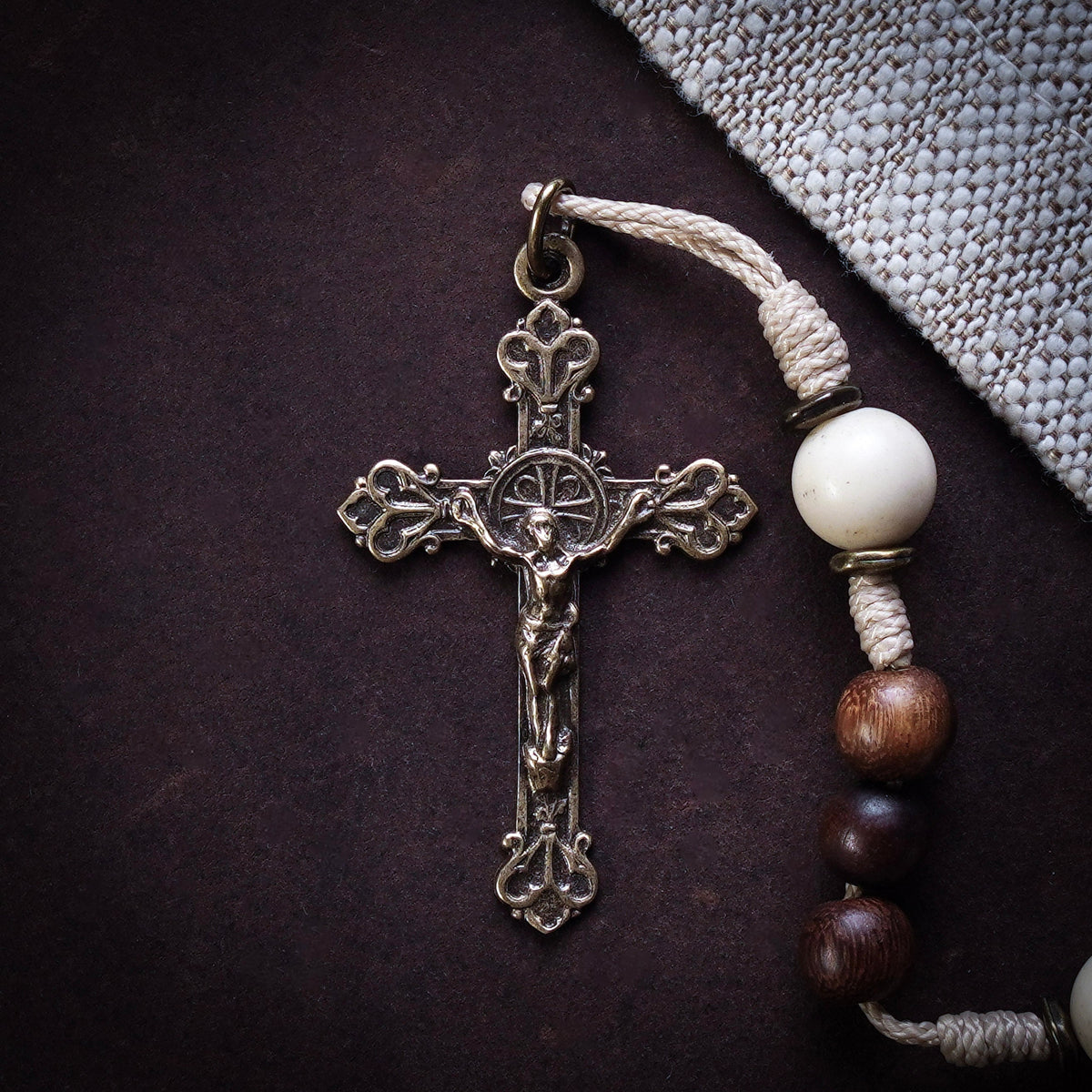
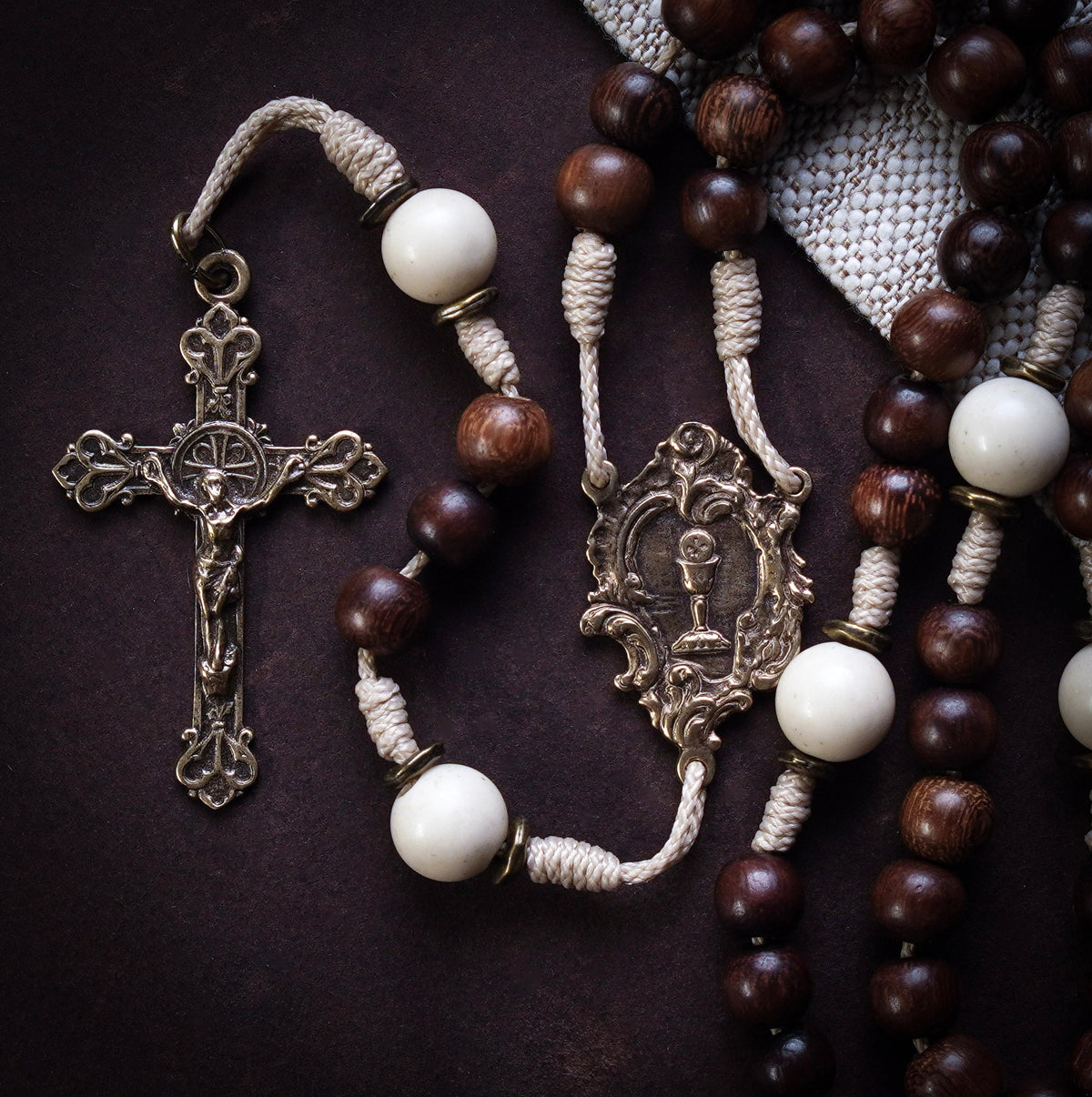
At the center of the Glory Rosary is a medal depicting the chalice and host. Especially fitting as a First Holy Communion gift, this rosary reminds the wearer that the Blessed Mother gently leads us closer to her Son, most perfectly encountered in the Eucharist.
It is handmade with warm, dark Madre de Cacao wood Hail Mary beads (8mm) and smooth white Riverstone Our Father beads (10mm), finished with a bronze color Eucharist centerpiece and crucifix and hand-tied on strong tan Micro90 cord. At approximately 17 to 18 inches, it is a full five-decade rosary your child can keep praying with for years. It comes with a navy blue burlap pouch and a My Rosary Story Book notebook so your child can track their rosary journey from day one.
A Gift That Points Them Toward Christ
The rosary you choose for your child's First Communion has the opportunity to support everything that comes next. More than a reminder of the day, it can walk with your child through childhood, adolescence, and adulthood, helping them grow in prayer one small step at a time.
A thoughtful, simple choice that is durable, meaningful, and made to be used goes further than any elaborate or decorative gift. As your child learns to pray, the Blessed Mother will be there, quietly guiding them toward her Son. That is the real gift. The rosary is just the beginning.
Source: Content produced for The Catholic Woodworker · youtube.com/@thecatholicwoodworker
Q&A Flashcards: Choosing a First Communion Rosary
Tap any card to reveal the answer.