
The Saint Who Spread the Rosary
St. Dominic sold his books to feed the hungry, walked into heresy-ridden France to preach the Gospel, and received the rosary in a vision from the Blessed Virgin Mary. His life was a mission — and the rosary he spread is still prayed by millions of Catholics every day.
Quick Reference| Key Fact | Detail | Significance |
|---|---|---|
| Birth | 1170, Caleruega, Spain | Born to devout noble parents; shaped by faith from childhood |
| Order Founded | 1216, approved by Pope Honorius III | The Order of Preachers — Dominicans — still active worldwide today |
| The Rosary Vision | c. early 1200s, near Toulouse, France | Our Lady revealed the rosary as a weapon against the Albigensian heresy |
| Key Heresy Fought | Albigensianism (Catharism) | Denied the Incarnation, matter, and sacraments — a direct attack on the Gospel |
| Death | 1221, Bologna, Italy | Canonized 1234; feast day August 8 |
The Early Life of St. Dominic
St. Dominic was born Dominic Guzman in 1170 in Caleruega, Spain. His mother was Joan of Aza — renowned for her charity to the poor — and his father Felix de Guzman, a nobleman. Both parents were devout Christians, and Dominic absorbed that faith from his earliest years. As a boy, he went to live with his maternal uncle, a parish priest, for seven years to receive instruction for the priesthood.
While studying arts and theology at the University of Palencia in 1184, a severe famine struck the region. Dominic sold his books — his most prized possessions as a student — to feed the starving. It was an act that revealed the character of the man he was becoming: someone for whom faith was never merely academic, but always incarnate and urgent.
After completing his studies, Dominic joined the priesthood and became a canon at the Cathedral of Osma. His life there was marked by deep compassion for the poor, rigorous prayer and fasting, and a commitment to charity that would define everything he did next. It was in Osma that his vocation as a preacher began to take its full shape.
When Dominic sold his books to feed the hungry, he reportedly said: "I could not bear to prize dead skins when living souls were starving." This was not an isolated gesture — it was the pattern of a life lived entirely for others.
St. Dominic's character was formed long before his famous missions. Charity, prayer, and theological depth were not tools he picked up for ministry — they were the fabric of who he was from the beginning.
| Period | Event | Formation |
|---|---|---|
| 1170 | Born in Caleruega, Spain | Devout household; faith embedded from birth |
| c. 1177 | Sent to live with uncle, a parish priest | Seven years of priestly formation and instruction |
| 1184 | Studies at University of Palencia; sells books in famine | Intellectual and spiritual formation; charity over comfort |
| c. 1196 | Becomes canon at Cathedral of Osma | Life of prayer, fasting, and compassion for the poor |
Founding the Order of Preachers
In 1203, while accompanying his bishop through southern France, Dominic was confronted with the devastation the Albigensian heresy was causing among ordinary people. He resolved to do something about it — not by force, but by the power of truth preached with conviction and lived with integrity.
In 1206, the Pope commissioned Dominic and Bishop Diego to preach the truth of the Gospel against the Cathars. But Dominic quickly recognized that the prevailing model of ministry was not reaching people where they were. Catholic preachers arriving in comfort and status were not persuading ordinary faithful who admired the austere, disciplined lives of the Cathar leaders.
In 1216, Dominic traveled to Rome and received approval from Pope Honorius III to establish the Order of Preachers — what we now call the Dominican Order. Their mission was not monastic enclosure but active engagement: traveling through towns, preaching the Gospel, engaging people of every class and background, and bringing the truth of Christ to wherever people actually were.
Unlike the monks of earlier centuries who stayed in monasteries, the Dominicans were mendicant friars — itinerant preachers who owned nothing, lived among the people, and brought the Gospel into the marketplace, the university, and the streets.
The Dominican Order was a direct response to the pastoral crisis of its time — mobile, intellectually rigorous, and rooted in prayer. It remains one of the most influential religious orders in the history of the Church.
Mission Against the Albigensian Heresy
The Albigensian heresy — also called Catharism — was spreading rapidly through southern France and parts of Europe in the 12th and 13th centuries. Its followers held a dualistic worldview: everything material is evil, and only the spiritual is good. The physical body was therefore evil, and the soul's salvation lay in escaping from matter entirely.
The theological consequences of this were severe. If matter is evil, then the Incarnation of Christ — God becoming flesh — is impossible. The sacraments, which use physical elements like water, bread, wine, and oil, are meaningless. Marriage and procreation, through which God creates new souls, are to be avoided. The Cathar inner circle led extreme ascetic lives that ordinary followers admired as heroic purity — making Catholic preaching seem comparatively lax and uninspiring.
Dominic saw that combating this heresy required more than theological argument. It required a way of praying that united the faithful in meditating on the truths the heresy denied — particularly the Incarnation, the Passion, and the Resurrection of Jesus Christ. Each of these truths is a direct refutation of Cathar dualism: Christ truly became flesh, truly suffered in a body, and truly rose physically from the dead.
Albigensianism did not merely challenge Church authority — it denied the foundations of the Gospel itself. A God who could not become human, a Christ who did not truly die, a resurrection that was not physical — these were not minor variations of Christianity but a different religion entirely.
The Role of the Rosary in Fighting Heresy
According to Dominican tradition, after praying fervently for a way to combat the Albigensians, Dominic received a vision of the Blessed Virgin Mary. She revealed the rosary to him as a spiritual weapon — and told him to preach the Marian Psalter: 150 Hail Marys divided into groups of 10 (decades), separated by Our Fathers. She also revealed which mysteries of Christ's life to meditate upon with each set of prayers.
These mysteries — the Incarnation, the Passion, the Resurrection — were precisely the truths the Cathars denied. Meditating on them through the rosary was not merely devotional; it was doctrinal. Every Hail Mary was an act of faith in the flesh of Christ. Every mystery was a refutation of dualism. The rosary gave ordinary, often illiterate faithful a way to hold the Gospel in their hearts without needing to read it.
The rosary was not given to St. Dominic as a pious practice — it was given as a weapon of doctrinal warfare. Its mysteries are a structured meditation on the very truths the Albigensian heresy denied. To pray the rosary is to profess the Gospel.
| Cathar Belief | Catholic Truth Refuted | Rosary Mystery That Counters It |
|---|---|---|
| Matter is evil; God cannot become flesh | The Incarnation — God truly became man | The Annunciation, The Nativity (Joyful) |
| The body is evil; physical suffering is meaningless | Christ's suffering was real and redemptive | The Passion, The Crucifixion (Sorrowful) |
| Salvation is escape from the body | The Resurrection was bodily — matter is redeemed | The Resurrection (Glorious) |
Devotion to the Blessed Virgin Mary
At the heart of St. Dominic's mission was a profound personal devotion to the Blessed Virgin Mary. He saw her not merely as a figure of devotion but as an active intercessor who leads souls to her Son. His commitment to spreading the rosary flowed directly from this conviction: that Mary's intercession is not passive, but purposeful — that she is constantly at work guiding the faithful toward Christ.
The rosary as we pray it today is centered on Mary's role in salvation history. By meditating on the mysteries — the Annunciation, the Nativity, the Crucifixion, the Resurrection — we see the life of Christ through her eyes, the woman who knew Him most intimately. Dominic's genius was recognizing that Mary is not a detour on the way to Christ, but the most direct road.
St. Dominic's devotion to Mary was inseparable from his devotion to Christ. He understood that to honor Mary is to follow her gaze — and her gaze is always fixed on Jesus. The rosary embodies this truth in every decade.
His Legacy in the Rosary
St. Dominic did not create the rosary as Catholics pray it today — the full form we know developed over centuries. But he had a defining role in promoting and spreading it as a tool for universal prayer. Before Dominic, the rosary was largely a practice of the learned and the monastic. After Dominic, it belonged to everyone.
He understood something about the nature of ordinary human faith that many of his contemporaries missed. Most of the faithful in the 13th century could not read. Long sermons and complex theological arguments could not reach them. But the rosary — its rhythm, its repetition, its meditations on the life of Christ — gave every Catholic a way to pray deeply without needing literacy. It democratized contemplation.
For centuries to come, the rosary has guided Catholics through war, persecution, illness, and doubt. It has been prayed in prisons and in palaces, at bedsides and in foxholes. The Dominican Order still bears his rosary as its most characteristic devotion, and the legacy of this 13th-century Spanish friar is still alive in every bead prayed around the world today.

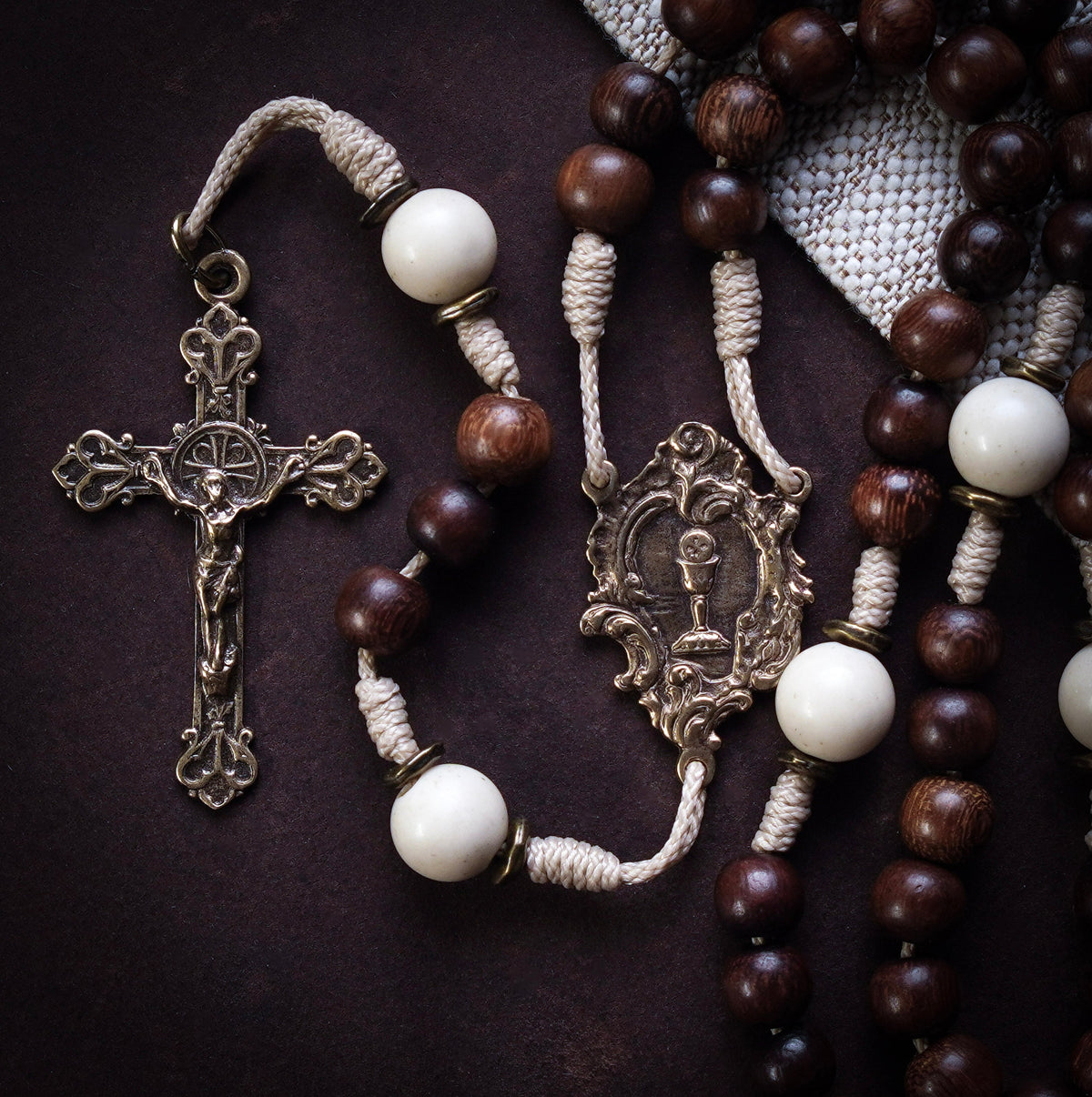
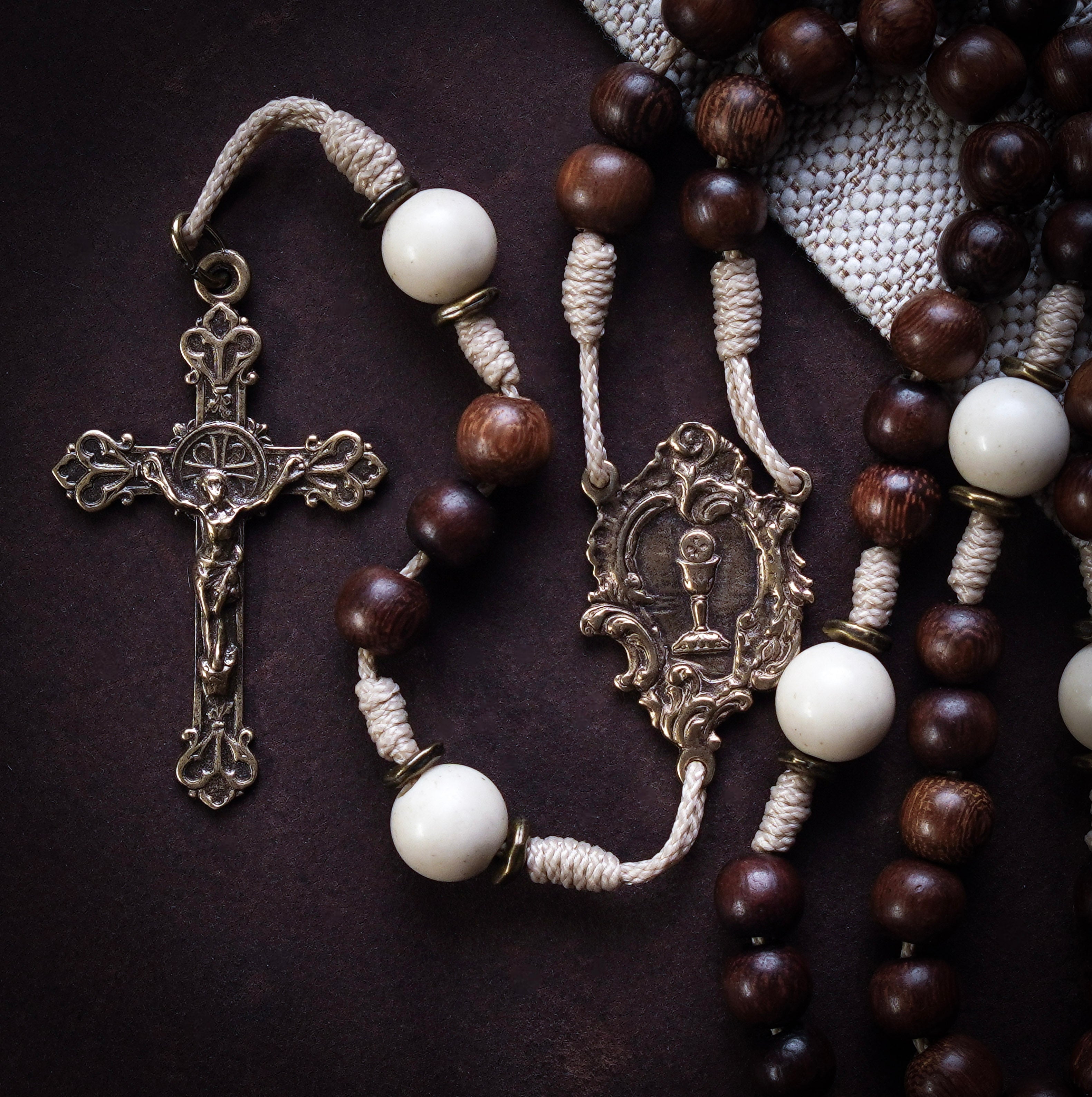
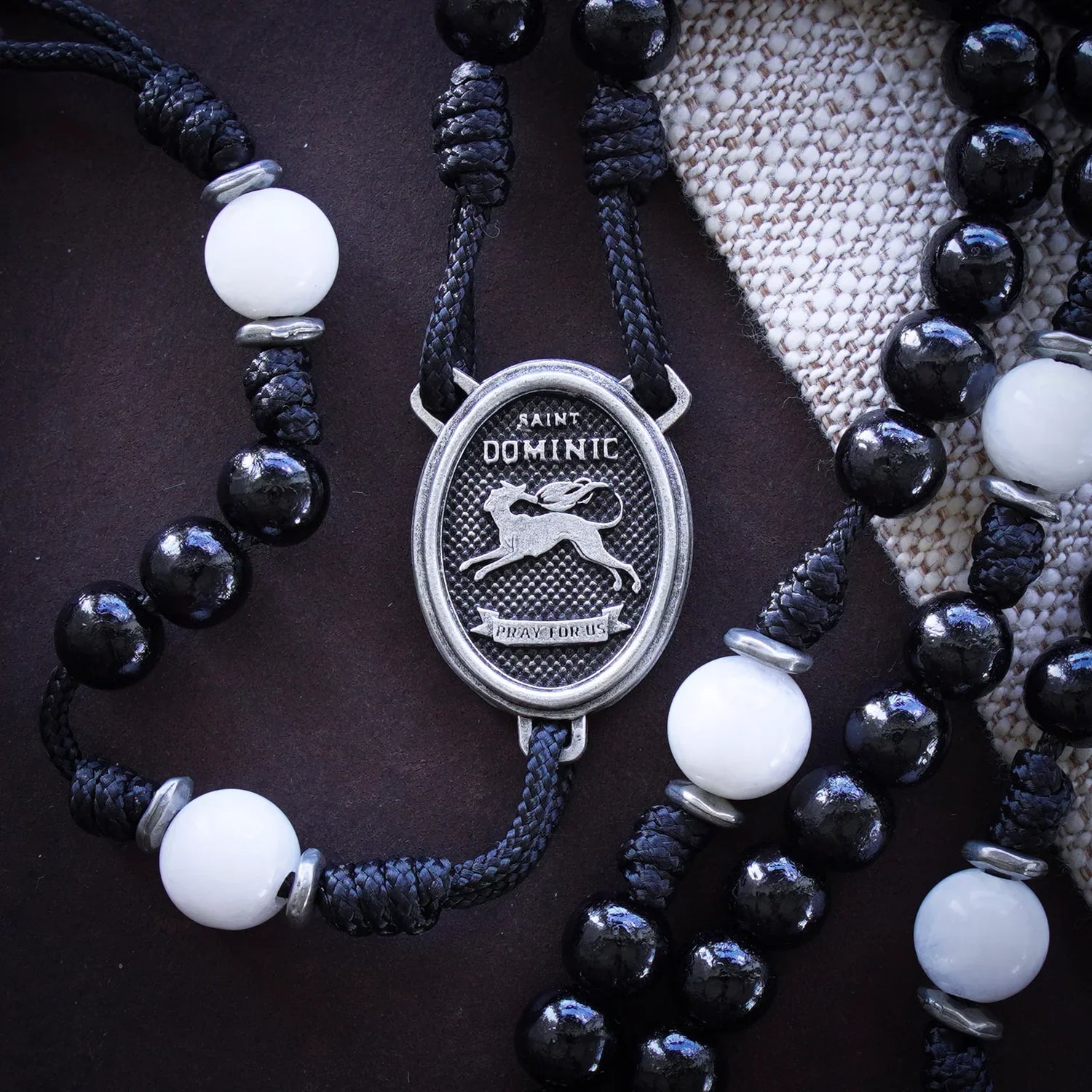
The St. Dominic Rosary from The Catholic Woodworker honors this mission. Designed with the Godsplaining Dominican friars, it features a St. Dominic centerpiece in place of the traditional Marian medallion — connecting the pray-er directly to the man who received this devotion from Our Lady and gave his life to spreading it. Every decade prayed on this rosary is a continuation of the mission he began in 13th-century France.
St. Dominic's greatest contribution to the Church was not a sermon or a treatise — it was a prayer that any Catholic, learned or illiterate, could carry in their pocket and pray with their hands. The rosary is his legacy, and it is still working.
A Saint for Every Catholic
St. Dominic was not a man of comfort. He sold what he had to feed the hungry, walked into regions torn apart by heresy, and poured his life into a mission that would outlast him by eight centuries. He was a scholar who understood that the heart must be reached before the mind, a preacher who recognized that prayer is more powerful than argument, and a saint who trusted a vision from Our Lady and let it shape everything.
We remember and celebrate his dedication to preaching the Gospel, his courage against heresy, and his deep devotion to the Blessed Virgin Mary. The rosary — one of the greatest gifts he left the Church — has become an unmistakable symbol of Catholic spirituality. For centuries to come, it will continue to guide Catholics in their spiritual journeys, one decade at a time.
Source: Content produced for The Catholic Woodworker · youtube.com/@thecatholicwoodworker · April 2026
Q&A Flashcards: Who Was St. Dominic?
Tap any card to reveal the answer.