
A Guide for Catholic Families
First Communion is one of the most sacred moments in a Catholic child's life: the first time they receive the Body and Blood of Christ at the altar. Here is everything families need to know to prepare well, understand the ceremony, and carry this milestone into a lifetime of faith.
Quick Reference| Topic | Key Fact | Why It Matters |
|---|---|---|
| Age | Typically around 7 or 8 years old | The age of reason, when children can understand the significance of the sacrament |
| Origin | Instituted by Christ at the Last Supper (Luke 22:19-20) | The Eucharist is the true Body and Blood of Christ |
| Preparation | Typically 6 to 12 months of catechesis | Children learn about the Mass, the Eucharist, and the importance of Confession |
| Prerequisite | Baptism and First Confession | Prepares the child to receive Christ in a state of grace |
| Attire | White dress and veil (girls), white or dark suit (boys) | White symbolizes purity and the grace of the sacrament |
What Is the First Holy Communion Ceremony?
First Communion is the sacred moment when a Catholic receives the Eucharist, the Body and Blood of Christ, for the very first time. It follows a period of preparation, typically catechesis classes, where children learn what it means to follow Christ and come to understand the significance of what they are about to receive.
For centuries, children in many places waited until around age 12 or older to receive their First Communion. In 1910, Pope St. Pius X's decree Quam Singulari affirmed that children may receive once they reach the age of reason, around seven, recognizing that even young children can understand and receive Christ in the Eucharist. Adults who enter the Catholic Church also receive the Eucharist for the first time after completing their preparation.
The Lord Jesus Christ Himself instituted the Eucharist at the Last Supper. As recorded in Luke 22:19-20, He took bread, gave thanks, broke it, and gave it to His disciples, saying it was His Body given for them. He then took the cup and gave it to them as His Blood, poured out for them. He commanded His followers to do this in memory of Him.
The Catholic Church teaches that at the consecration, the bread and wine become the true Body and Blood of Christ, the Real Presence of Jesus. This is what makes First Communion so profound: a child is receiving Christ Himself for the first time.
First Communion is more than a family celebration. It is a child's first encounter with the Real Presence of Christ in the Eucharist, and everything else around the day flows from that central reality.
Preparing for First Communion
Preparation for First Communion is a season. Here is how parents can support their child through every step of it.
Teach Them About Communion at Home
Parish preparation programs typically last 6 to 12 months and cover the Eucharist, the Mass, the importance of Confession, and the Christian life. What happens at home matters just as much. Use the language of faith deliberately: say "the Body and Blood of Christ" to reinforce the sacred nature of what your child is preparing for. Help them understand that God is truly present in their lives and that in the Eucharist He comes closest to them.
Start Attending Sunday Mass Together
Regular Mass attendance before First Communion is one of the most powerful forms of preparation. It gives your child the opportunity to watch how others receive the Eucharist, absorb the rhythm of the liturgy, and grow familiar with a ceremony that might otherwise feel overwhelming. Point out what they will do when the time comes so they have a visual roadmap.
Practice Receiving the Eucharist
Walking to the altar, saying "Amen," and receiving Communion are new physical experiences that can make children nervous. A little practice goes a long way. Help them process forward with hands folded. Teach them the two ways to receive: on the tongue, or in the hand by placing the left hand over the right. Many parishes help children practice during preparation; at home, a small piece of bread can help them get comfortable. Reassure them that what matters most is that they are ready to receive Jesus with an open heart.
Prepare Clothes and Send Invitations
Traditional First Communion attire is a white dress with a veil for girls, and a white or dark suit with a white shirt for boys. Many parishes have their own guidelines, so check with your catechist. The white symbolizes purity and the grace of the sacrament. If you are inviting family and friends, send invitations well in advance so loved ones can plan accordingly.
The most effective First Communion preparation happens both in the classroom and at home. Regular Mass, deliberate language, and a little practice give children the confidence and understanding to receive Christ with joy.
| Preparation Step | Who Leads It | When to Start |
|---|---|---|
| Catechesis program | Parish or school catechist | 6 to 12 months before the ceremony |
| Home faith conversations | Parents | Throughout the preparation period |
| Regular Sunday Mass attendance | Family | As early as possible; make it a habit |
| Practicing receiving the Eucharist | Parents and catechists | A few weeks before the ceremony |
| First Confession | Parish priest | Before First Communion |
| Attire and invitations | Family | Several weeks in advance |
Mass and the First Communion Ceremony
First Communion is celebrated during Mass, often a special Mass that becomes an occasion for the whole parish community. Children dressed in white receive the Eucharist for the first time in the presence of their families and the broader Church. Details vary from parish to parish, but the celebration usually unfolds around three key moments.
The Entrance Procession
The Mass begins with the entrance procession. In many parishes, an altar server carries the cross at the front, followed by candle bearers, the first communicants, and finally the priest, who enters last. This procession is a visible sign that the whole community is gathered together for something sacred.
The Liturgy of the Word
After the priest welcomes the children and the community, Scripture is proclaimed, and the homily often speaks directly to the children about what they are about to receive. Many parishes also include a renewal of baptismal promises, where the first communicants publicly reject sin and profess their belief in the Holy Trinity and the teachings of the Church.
The Rite of First Communion
Following the consecration, the moment during the Eucharistic Prayer when the bread and wine become the Body and Blood of Christ by the power of the Holy Spirit, the children approach the altar for the first time. Each child hears "The Body of Christ" and responds "Amen," professing their faith and beginning their life of regular participation in the Eucharist.
The First Communion Mass is a liturgical encounter with the living Christ. The procession, the renewal of baptismal promises, and the reception of the Eucharist each carry deep sacramental meaning.
| Part of the Mass | What Happens | Significance |
|---|---|---|
| Entrance Procession | The first communicants process in with the altar servers and priest | The whole community gathers to witness the sacrament |
| Liturgy of the Word | Scripture readings, homily, and often a renewal of baptismal promises | Children publicly affirm their faith before receiving Christ |
| Consecration | Bread and wine become the Body and Blood of Christ | Jesus becomes truly present on the altar |
| Rite of First Communion | Children approach the altar and receive for the first time | The beginning of their life of regular participation in the Eucharist |
Receiving the Eucharist
It's easy for children to lose sight of the meaning of receiving the Eucharist on a day that is also filled with family, celebration, and excitement. Parents play a crucial role in keeping the focus on what is happening at the altar.
Remind your child clearly and simply: they are receiving Jesus, His Body, Blood, Soul, and Divinity, truly present under the appearance of bread. The Eucharist is the source and summit of the Catholic faith, and every First Communion is an encounter with the living Christ.
When your child returns to their seat after receiving Communion, invite them to close their eyes and speak quietly to Jesus. They don't need long, formal prayers. A moment to thank Him for coming to them and to share what is in their heart is enough. This personal prayer after Communion is one of the most intimate encounters a Catholic can have with God.
Consider telling your child before Mass: "When you receive the host, you are receiving Jesus." Simple. Concrete. True. Children who understand this carry it with them for life.
First Communion is the beginning of a lifelong Eucharistic journey. Help your child understand from the very first reception that they are receiving a Person, and that this encounter is available to them at every Mass for the rest of their life.
Helpful Tips for Families on the Big Day
A First Communion Mass is a meaningful day, and it can also be a busy and emotional one. These practical steps help families stay grounded in what matters most.
Prepare the Night Before
Lay out your child's outfit, confirm the Mass time, and know exactly where your child needs to be when you arrive. A calm, organized morning lets your child approach the altar with peace and lets you be fully present for the moment.
Arrive Early
First Communion Masses often draw larger crowds than ordinary Sunday Masses. Arriving early gives your child time to get settled, find their seat, and feel calm and ready before the ceremony begins.
Remember the Communion Fast
The Church asks Catholics to fast from food and drink, except water and medicine, for one hour before receiving Communion. Plan breakfast with that in mind so your child is ready to receive.
Keep the Focus on the Sacrament
Photos, outfits, and celebrations are all beautiful parts of the day, but the sacrament is the center of it. A simple reminder in the morning goes a long way: "Today is special because you are receiving Jesus for the first time." That one sentence can keep both parent and child grounded in what matters.
Review What to Expect
Even after weeks of preparation, a quick review on the morning of the ceremony helps nervous children feel confident. Gently remind them: they will go up to the altar, the priest will say "The Body of Christ," they will say "Amen," and they will receive exactly as they practiced.
Celebrate in a Meaningful Way
After Mass, celebrate with family and friends with a meal, a gathering, and a moment of joy. Beginning with a prayer of thanksgiving brings the focus back to the sacrament and teaches children that celebration can be an act of worship too.
The most peaceful First Communion days are prepared the night before and grounded in the sacrament throughout. Let the logistics serve the liturgy.
Transitioning to a Lifelong Journey with the Eucharist
First Communion is the starting point. The day your child receives Christ for the first time is the day they begin receiving Him week after week for the rest of their Catholic life. How you help them make that transition shapes everything that follows.
Create a Weekly Habit
The simplest step after First Communion is to keep going. Now that your child can receive Communion at Mass, help them see this as a normal, expected, and cherished part of Sunday. Language helps enormously: "You can receive Jesus again this Sunday." "Mass is where we go to be with Jesus." Consistent, low-key, and true.
Help Your Child Stay Engaged at Mass
Children take time to understand what is happening at Mass, and that is perfectly normal. Quiet guidance and consistency help: pointing out key moments, whispering a brief explanation of what the priest is doing, and encouraging your child to pray silently after receiving Communion. Over time, familiarity becomes participation and participation becomes devotion.
Build a Prayer Routine at Home
First Communion is the ideal moment to begin a simple daily prayer practice. Even one decade of the rosary together at bedtime, a short morning offering, or a brief prayer before school creates a rhythm of faith that children carry with them long after they leave home. Small and consistent is far more powerful than occasional and elaborate.
The goal of First Communion is to open a door that stays open for life. Keep going to Mass. Keep praying at home. Keep receiving Christ. That is how the grace of this day grows over a lifetime.
First Communion Gift: The Glory Rosary
The most meaningful First Communion gift connects your child to the sacrament they received and supports the prayer life they are just beginning. A rosary is the most traditional and spiritually significant option.

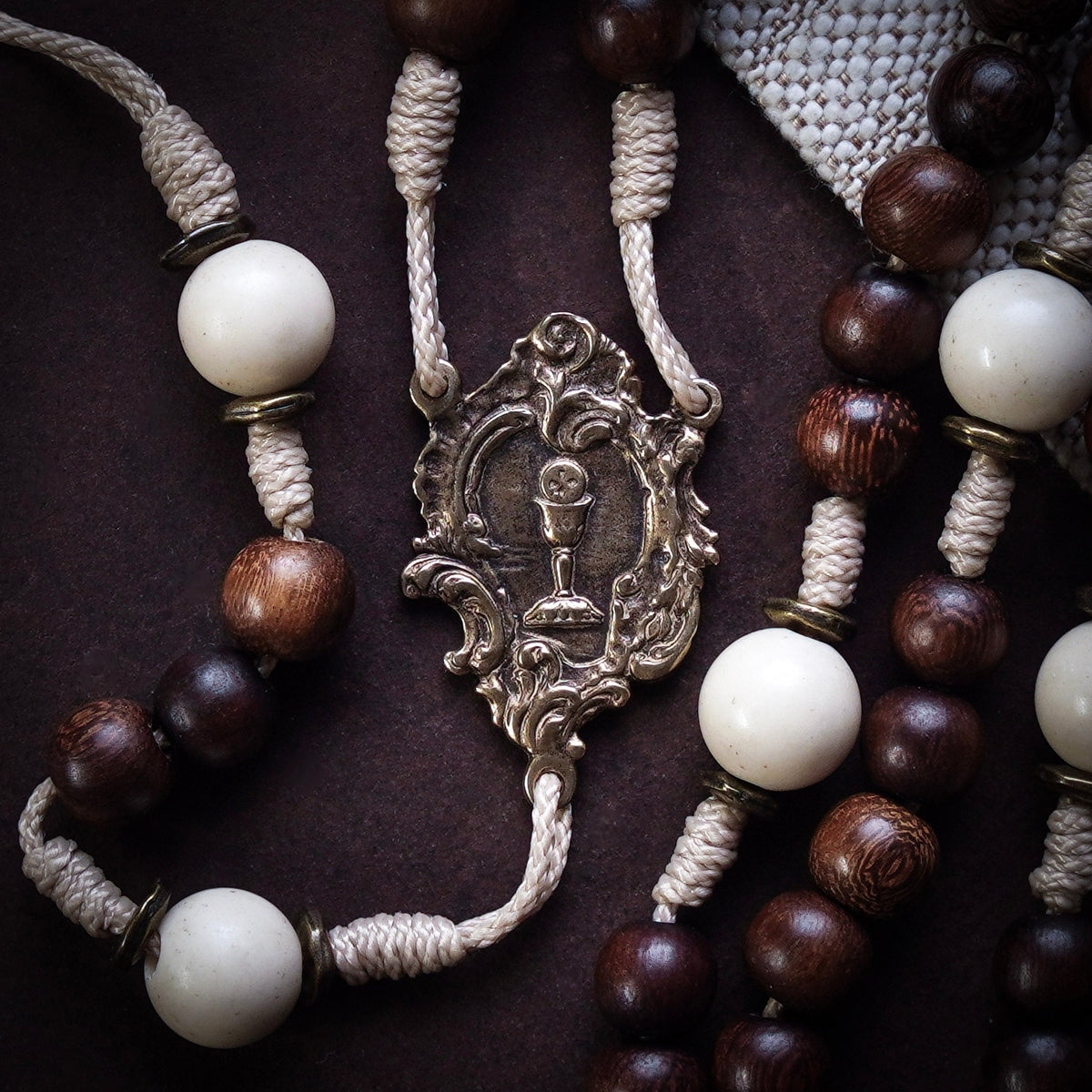
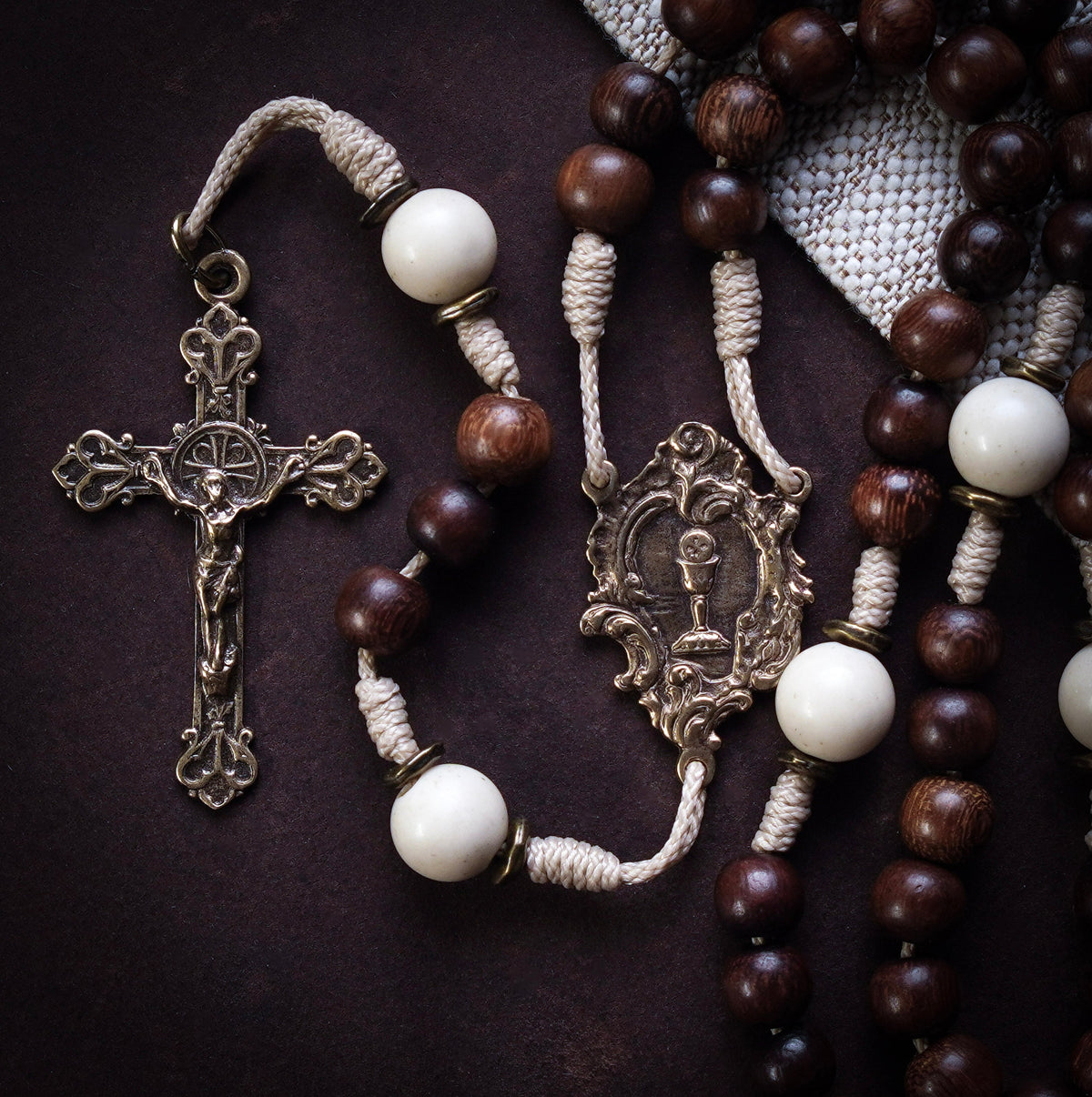
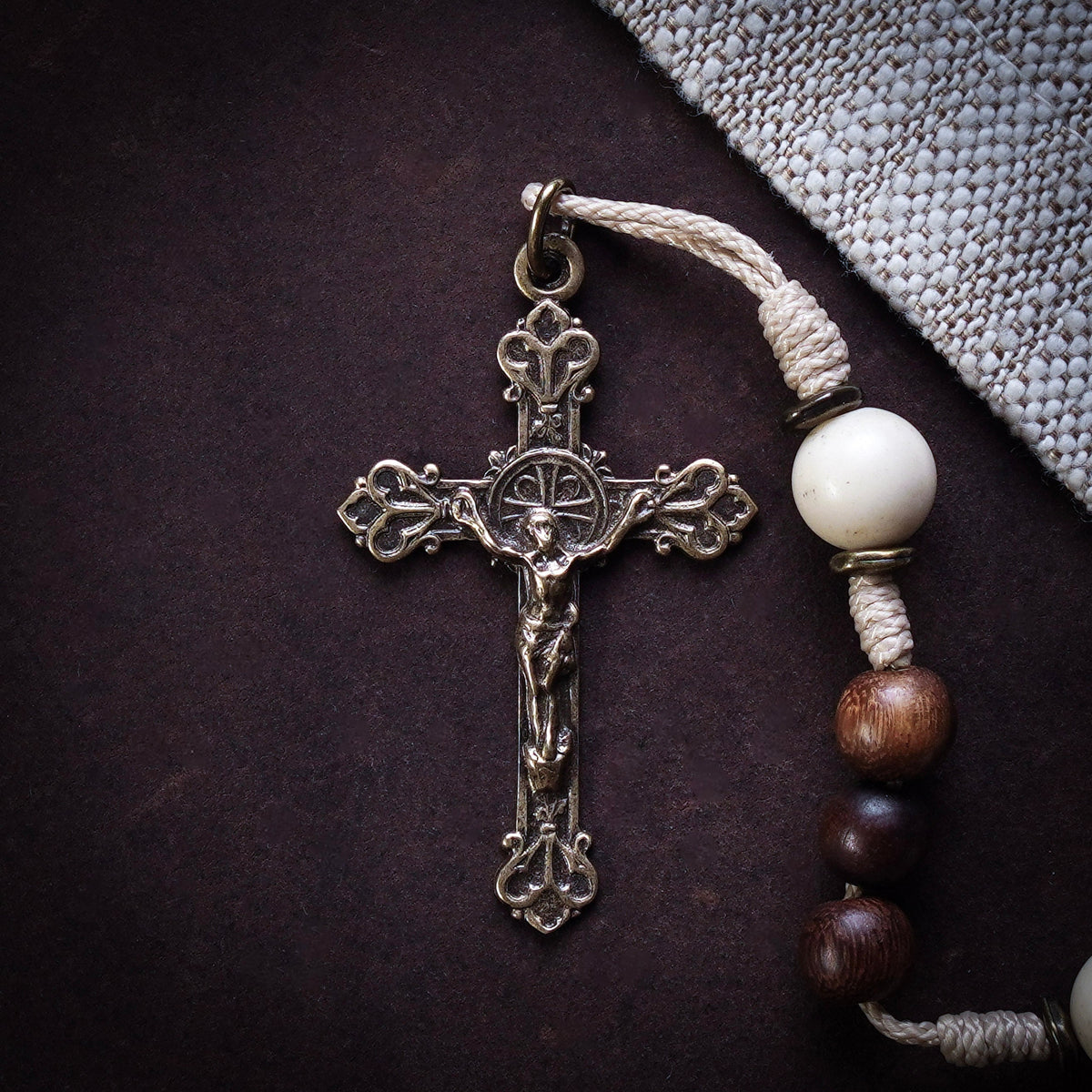
At the center of the Glory Rosary by The Catholic Woodworker is a medal depicting the chalice and host, a direct visual connection to the sacrament your child just received. Especially fitting as a First Holy Communion gift, this rosary reminds the wearer that the Blessed Mother gently leads us closer to her Son, most perfectly encountered in the Eucharist.
It is handmade with Madre de Cacao wood beads and Riverstone Our Father beads, and comes with a My Rosary Story Book notebook so your child can track their rosary journey over the years, building the habit of prayer from the very first day.
The best First Communion gift keeps working after the day is over. A rosary with a Eucharistic centerpiece ties prayer directly to the sacrament, a daily reminder of what your child received and Who they received.
Build Your Child's Understanding of the Eucharist
First Communion is a meaningful moment for any Catholic family. It marks the first time your child receives the Eucharist and opens the door to a lifelong relationship with Christ through the Mass. You don't have to get everything perfect. What matters most is helping your child understand what is happening, feel supported, and take this next step in their faith with confidence.
The preparation, the Mass, and the celebration all play their role. What comes after, the weekly Mass, the home prayer routine, the rosary prayed at bedtime, is what truly shapes a Catholic life. Those small, consistent steps help your child grow in their understanding of the Eucharist and their relationship with God, year after year.
Source: Content produced for The Catholic Woodworker · youtube.com/@thecatholicwoodworker
Q&A Flashcards: First Communion
Tap any card to reveal the answer.