
Why St. Michael and the Rosary Have Always Been Connected
The Rosary and St. Michael the Archangel have been linked in formal Catholic teaching since at least 1884, when Pope Leo XIII wrote the St. Michael Prayer and placed it after the Mass. Leo XIII also issued eleven encyclicals on the Rosary, more than any other pope before or since. These were not separate projects. They were expressions of the same conviction: the Church is in a fight, the Rosary is a weapon, and St. Michael is the protector assigned to the ones who pray it.
| The Connection | Historical Anchor | What It Establishes |
|---|---|---|
| Leo XIII's prayer | 1884 papal vision | Formal link between Michael's mission and daily Catholic prayer |
| Leo XIII's Rosary encyclicals | 1883–1898 | 11 documents; more than any other pope |
| Revelation 12:7–9 | New Testament | Michael commands the Church's war against the dragon |
| CCC §335 | Catechism | The Church benefits from the "mysterious and powerful help of angels" |
| The Defender Rosary | Present | A handcrafted rosary built to carry this tradition |
Eleven Documents About the Same Weapon
Between 1883 and 1898, Leo XIII issued eleven encyclicals devoted to the Rosary. The sheer volume is worth pausing on. Leo XIII was not a man who repeated himself without cause. He was one of the most prolific and intellectually serious popes in modern history. The fact that he returned to the same prayer eleven times suggests he understood it as the Church's primary response to something he saw clearly: coordinated, serious, and sustained spiritual opposition.
He was not wrong to see it. The late 19th century saw widespread attacks on the Church through secular political movements, the suppression of religious orders in multiple European nations, and rapid intellectual shifts that treated faith as an artifact of an earlier age. Leo XIII responded to each of those with encyclicals. He responded to the underlying spiritual reality with the Rosary.
| Historical Pressure | Leo XIII's Response |
|---|---|
| Secular political movements against the Church | Encyclicals on political authority and the common good |
| Suppression of religious orders across Europe | Defense of religious life and Church independence |
| Intellectual trends dismissing faith | Encyclicals on Thomism, reason, and revelation |
| The underlying spiritual reality beneath all of it | Eleven encyclicals on the Rosary |
What Revelation 12 Actually Describes
The passage is often quoted for its drama. What it actually contains is a specific account of how spiritual warfare works in the heavenly realm and its correspondence to what happens on earth.
"There was war in heaven. Michael and his angels fought against the dragon" (Revelation 12:7). The dragon and his angels were defeated and hurled down. The text then draws an immediate connection to the woman clothed with the sun (an image the Church has consistently read as referring to Mary) and to "those who keep God's commandments and hold fast to the testimony of Jesus" (Revelation 12:17).
The Structure of the Passage
The architecture of Revelation 12 is precise: Michael fights in heaven; Mary is given a specific role in the conflict; the faithful on earth are identified as the direct targets of the dragon's rage. The Rosary, which centers on Mary's intercession and meditates on Christ's life, sits exactly at this intersection. It calls on the woman the dragon pursues. It is prayed by the people the dragon targets.
| Revelation 12 Element | Catholic Understanding | Rosary Connection |
|---|---|---|
| Michael and his angels (v.7) | Heavenly defender of God's people | Invoked before and after the decades |
| Woman clothed with the sun (v.1) | Mary, Mother of the Church | The Rosary is addressed to her directly |
| "Those who keep God's commandments" (v.17) | The faithful on earth, the dragon's targets | The ones praying the Rosary |
Three Concrete Additions for Catholic Men Who Pray the Rosary
The tradition of invoking St. Michael alongside the Rosary does not require a new form of the prayer. It requires three simple additions that take under two minutes combined.
Before the Creed
Pray the St. Michael Prayer. Place yourself and your prayer under his protection explicitly before beginning the decades.
During the Fatima Prayer
After each decade, the Fatima Prayer asks that souls be saved from hell. Hold St. Michael's intercession alongside that intention. He is, in Catholic tradition, one of the angels who assists souls at death and at judgment.
At the Close
After the Hail Holy Queen, pray the St. Michael Prayer once more, as an offering. The prayer you just completed belongs to the battle he leads.
| Position in Rosary | Prayer | Purpose |
|---|---|---|
| Before the Apostles' Creed | St. Michael Prayer | Explicit invocation of protection before beginning |
| After each decade | Fatima Prayer + Michael's intercession | Penance, intercession for souls, angelic assistance at judgment |
| After Hail Holy Queen | St. Michael Prayer (again) | Offering the prayer completed to the battle he leads |
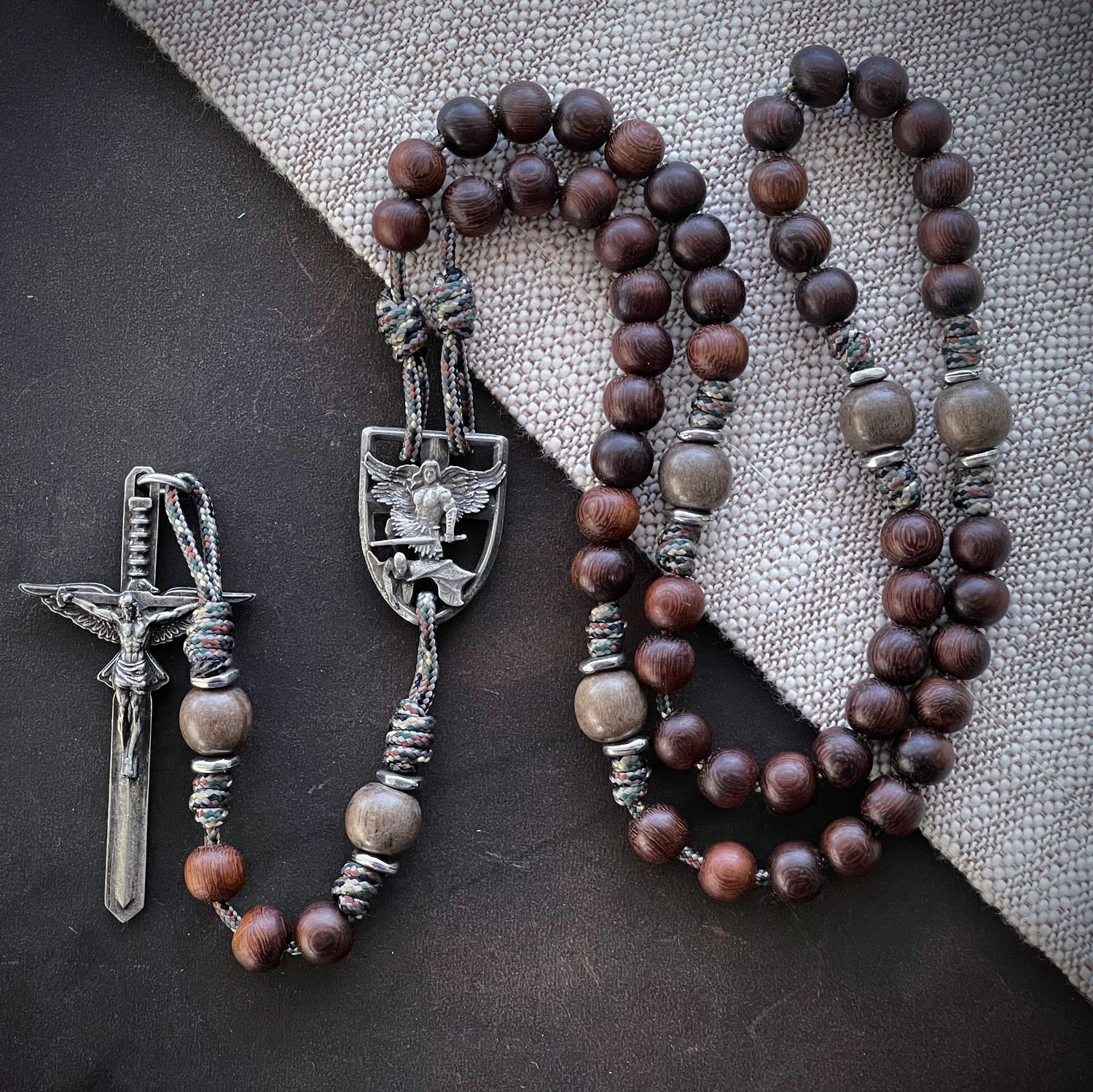
The St. Michael Defender Rosary

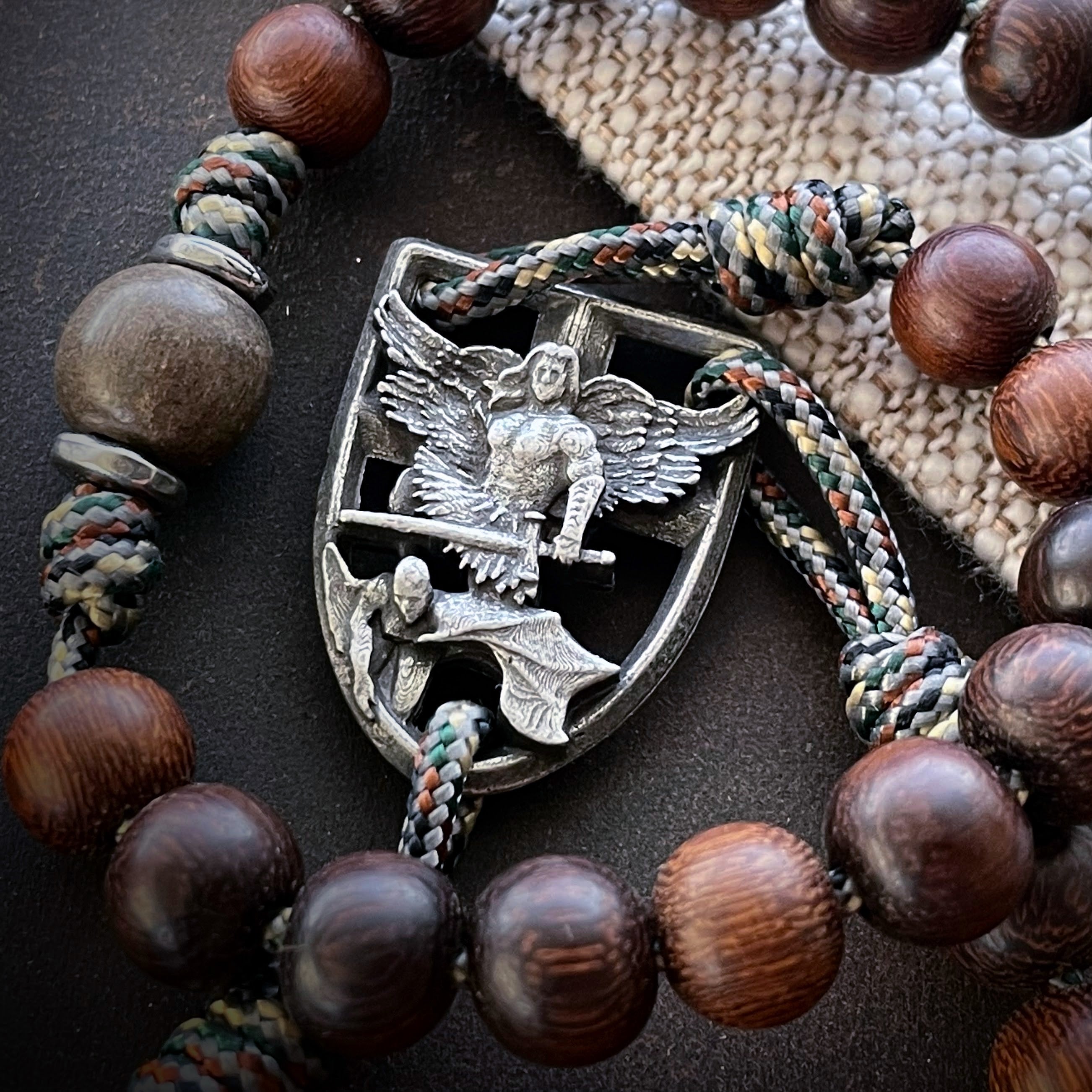
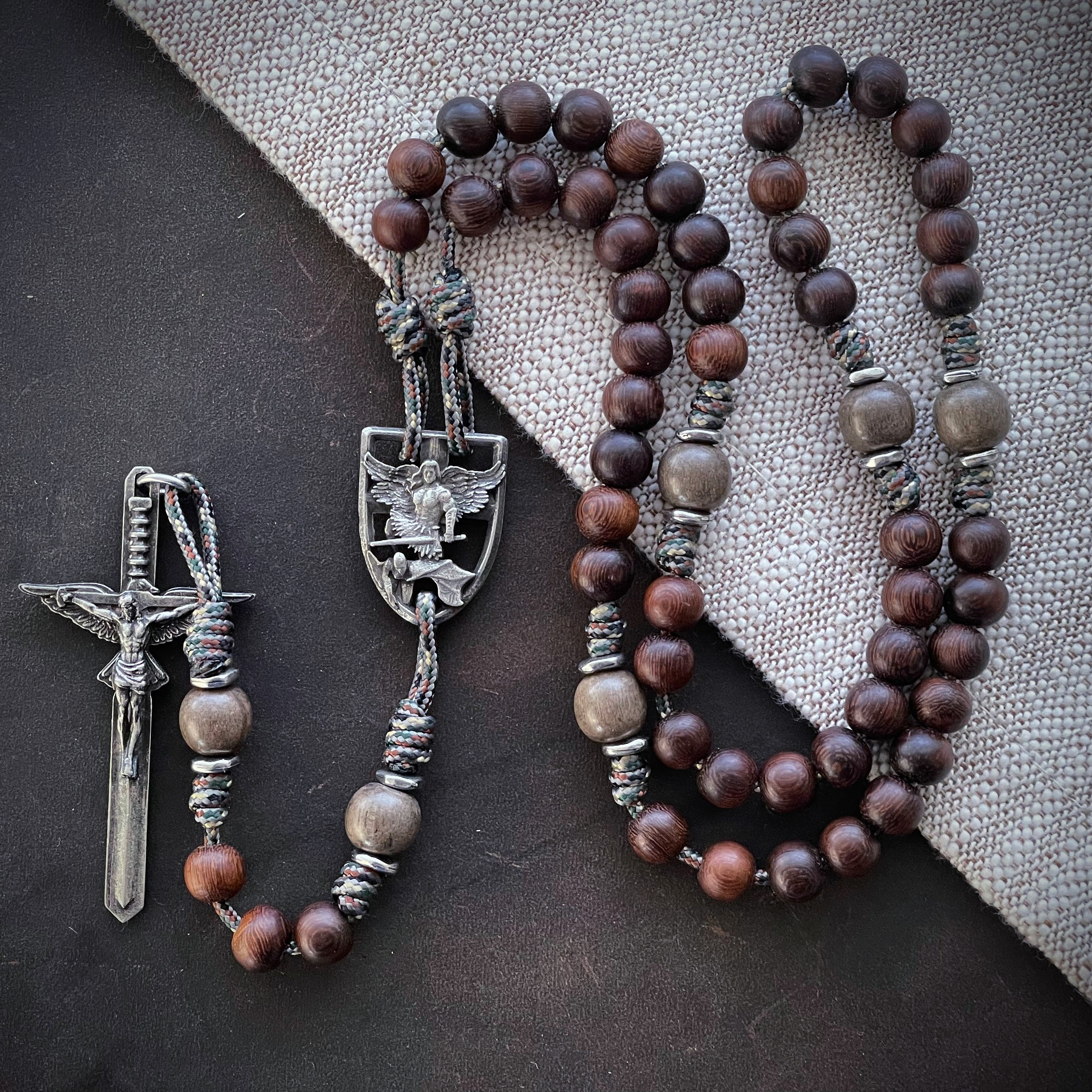
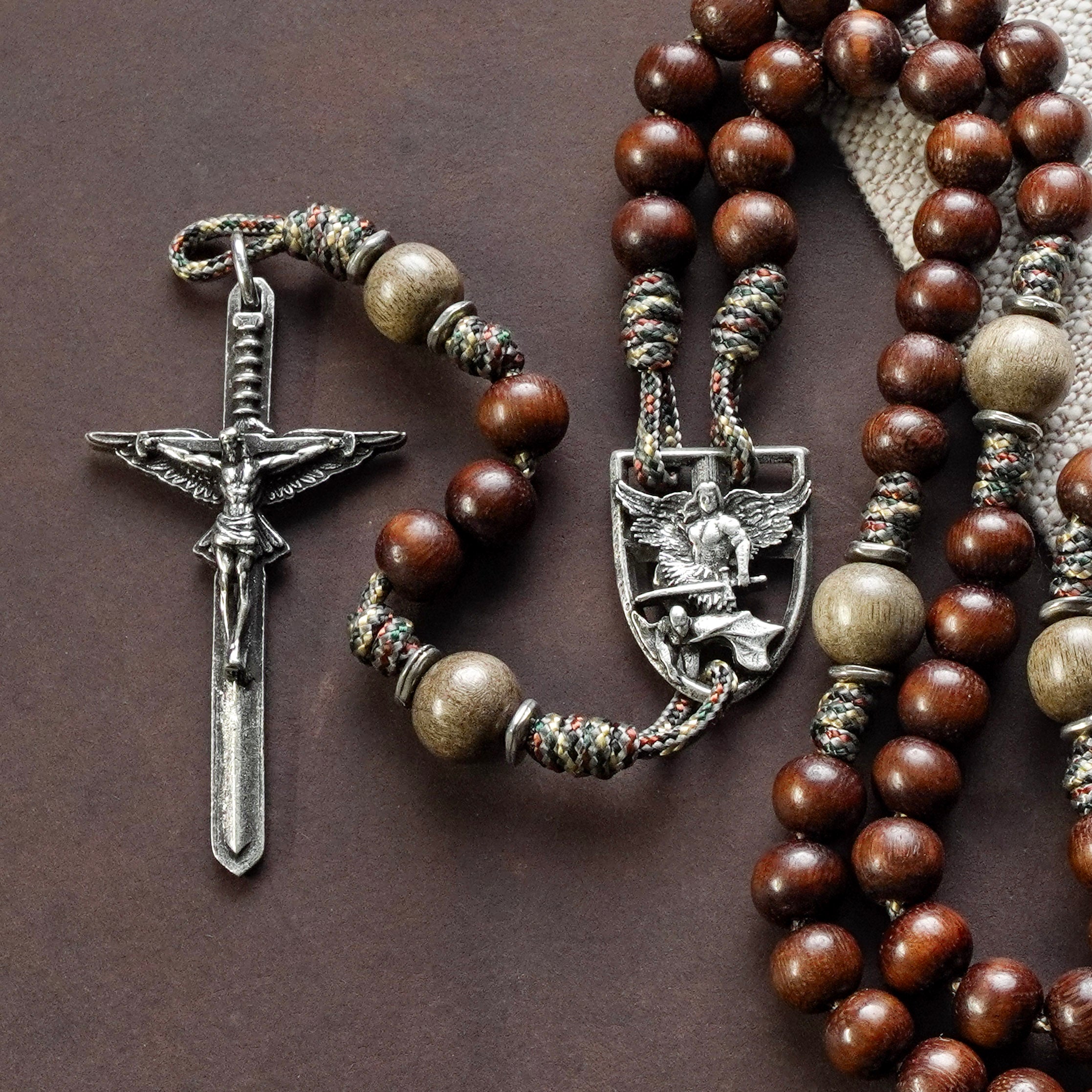
The St. Michael Defender Rosary from The Catholic Woodworker is handcrafted with hand-inspected wooden beads and military-grade 95 paracord. Built for daily, purposeful prayer. The material choice is deliberate: a spiritual weapon deserves to be built with the durability of a real one. Backed by a lifetime guarantee.
Final Thoughts
The Rosary is not a meditation practice with Catholic vocabulary. It is a weapon with a specific tradition of intercessors, a documented history of results, and a scriptural architecture that places it inside the conflict described in Revelation 12. St. Michael is the archangel Scripture assigns to that conflict. Leo XIII understood this well enough to write eleven encyclicals about the Rosary and one prayer naming Michael by name. The connection is not decorative.
Pray the Rosary. Invoke the protector assigned to the ones who do.