
The Archangel Assigned to Protect the Church
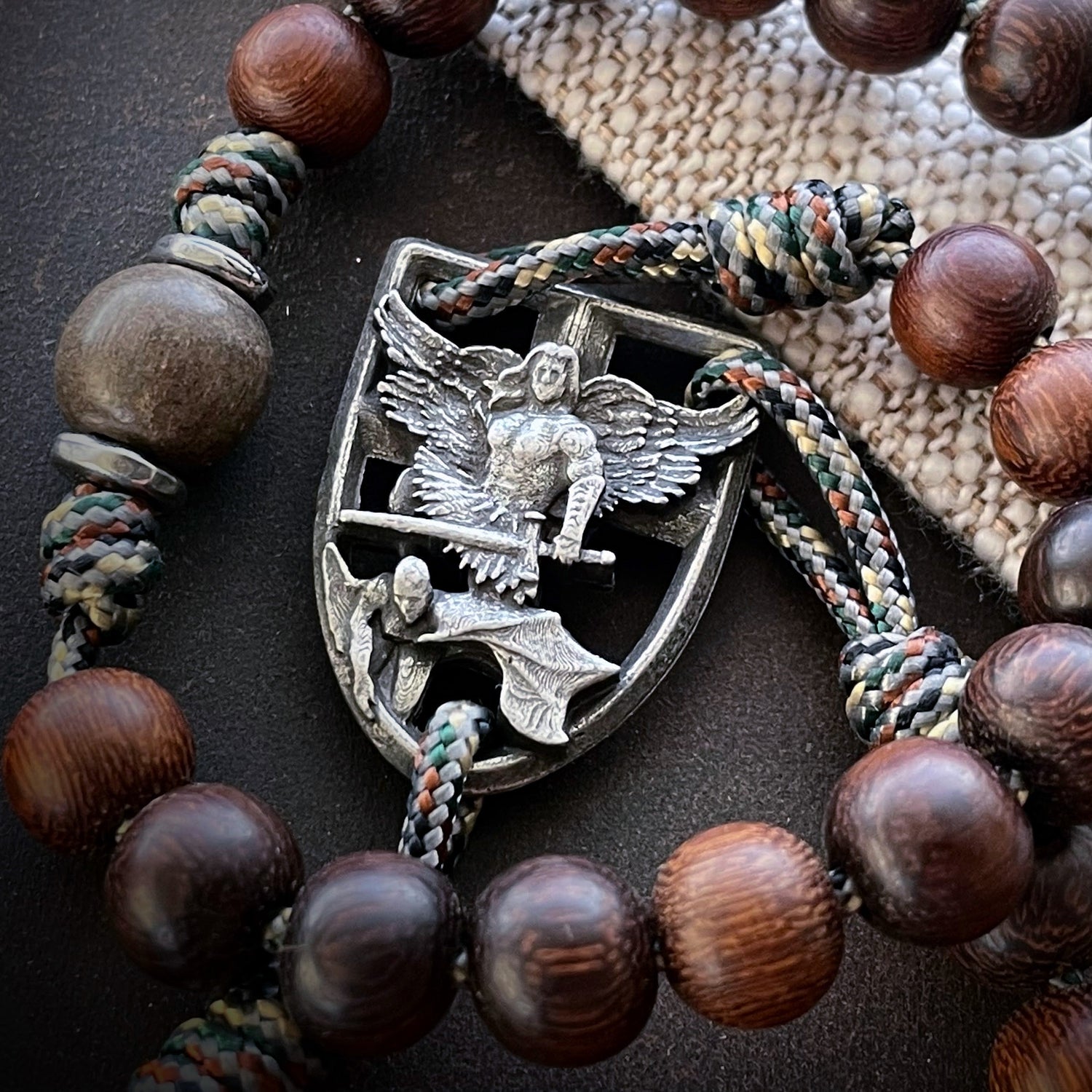
The popular image of St. Michael shows a warrior in full armor, sword raised, standing over a defeated serpent. It is accurate. It is also incomplete. The archangel's role in Catholic tradition extends beyond a single dramatic moment at the beginning of time — his name is a theological statement, his Scripture appearances span three books, and he is directly connected to the Rosary through one of the most important prayers Pope Leo XIII ever composed.
| The Fact | What It Means | Why It Matters |
|---|---|---|
| His name | "Who is like God?" (Hebrew: Mi ka El) | The battle cry against Lucifer; a theological statement in itself |
| Scripture appearances | Daniel 10 & 12; Jude 1:9; Revelation 12:7–9 | The Church's oldest, most consistent witness to his mission |
| His Feast Day | September 29 | Feast of Sts. Michael, Gabriel, and Raphael, Archangels |
| The St. Michael Prayer | Written by Pope Leo XIII in 1884 | Origin: Leo XIII's reported vision of Satan's designs on the Church |
| Battle of Lepanto | October 7, 1571 | Victory attributed to the Rosary; now the Feast of Our Lady of the Rosary |
The Name That Is a Question
Michael's name is not a title assigned after a victory. It is a question that became a battle cry. In Hebrew, Mi ka El means "Who is like God?" When Lucifer declared himself a rival to the Most High, Michael's name was the answer the faithful angels gave back. The question is rhetorical. The answer is no one.
This matters for how Catholics understand his patronage. Michael is not simply a powerful figure who happens to be on the right side. His entire identity is oriented toward God's supremacy. He is the embodiment of the first commandment enacted in combat.
His Three Appearances in Scripture
The Book of Daniel calls him "one of the chief princes" (Daniel 10:13) and "the great prince who protects your people" (Daniel 12:1). The Letter of Jude records him disputing with the devil over the body of Moses. The Book of Revelation describes him leading the angels in war against the dragon, casting him and his followers from heaven. Across every appearance, the mission is the same: to stand between the people of God and the one who wants to destroy them.
| Scripture Reference | Michael's Role |
|---|---|
| Daniel 10:13 | "One of the chief princes" — assists the heavenly messenger to Daniel |
| Daniel 12:1 | "The great prince who protects your people" |
| Jude 1:9 | Disputes with the devil over the body of Moses |
| Revelation 12:7–9 | Leads the angels in war; casts Satan and his followers from heaven |
Why Pope Leo XIII Wrote the St. Michael Prayer
In 1884, Pope Leo XIII reportedly had a vision following Mass at the Vatican. Accounts hold that he heard what seemed to be a conversation between God and Satan in which Satan was granted a period of time and power to attack the Church. Leo XIII went immediately to his desk and wrote the prayer now known as the St. Michael Prayer:
He added it to the Leonine Prayers recited at the end of Low Mass. It was said in every Roman Rite Mass until the liturgical reforms following the Second Vatican Council. Its use has since been strongly encouraged, particularly by Pope John Paul II.
What Leo XIII Understood
The Church is not navigating history neutrally. It is engaged in a conflict that requires specific, named intercessors. Leo XIII's prayer is not decorative. It is a direct invocation of the one Scripture assigns to the protection of God's people — the same archangel whose name answered Lucifer's rebellion before the world began.
The Battle of Lepanto and the Rosary's Role in Spiritual Warfare
On October 7, 1571, the Holy League — a coalition assembled and urged by Pope St. Pius V — met the Ottoman fleet at the Gulf of Lepanto. The battle was decisive. Pius V had asked Catholics across Europe to pray the Rosary for the fleet. He is reported to have seen the victory in a vision before the official news arrived. He attributed the outcome entirely to Our Lady.
The date, October 7, became the Feast of Our Lady of the Rosary. Pope St. Pius V was himself a Dominican friar — the same order that had spread the Rosary for three centuries before Lepanto.
The Connection Between Michael and the Rosary
The connection between St. Michael and the Rosary is not ceremonial. Both are weapons assigned to the same fight. The Rosary orients the mind toward Christ through the Mysteries. St. Michael protects the one who prays. Invoking him before or after the Rosary places the prayer inside a tradition of Catholic spiritual warfare that goes back to Lepanto — and further.
How to Bring St. Michael Into Your Rosary Practice
The St. Michael Prayer takes approximately thirty seconds. Prayed before the opening Creed of the Rosary, it functions as an act of deliberate intention: you are placing yourself under his protection before beginning the decades. Many Catholics add the Fatima Prayer after each decade, then close the full Rosary with the St. Michael Prayer again.
This is not a complicated addition. It is a recognition that prayer happens in a context — and that context includes opposition.
| Position in Rosary | Prayer | Purpose |
|---|---|---|
| Before the Apostles' Creed | St. Michael Prayer | Deliberate invocation of protection before beginning |
| After each decade | Fatima Prayer (optional) | Penance and intercession for souls |
| After Hail Holy Queen | St. Michael Prayer (again) | Closing the prayer explicitly under his protection |
The St. Michael Defender Rosary

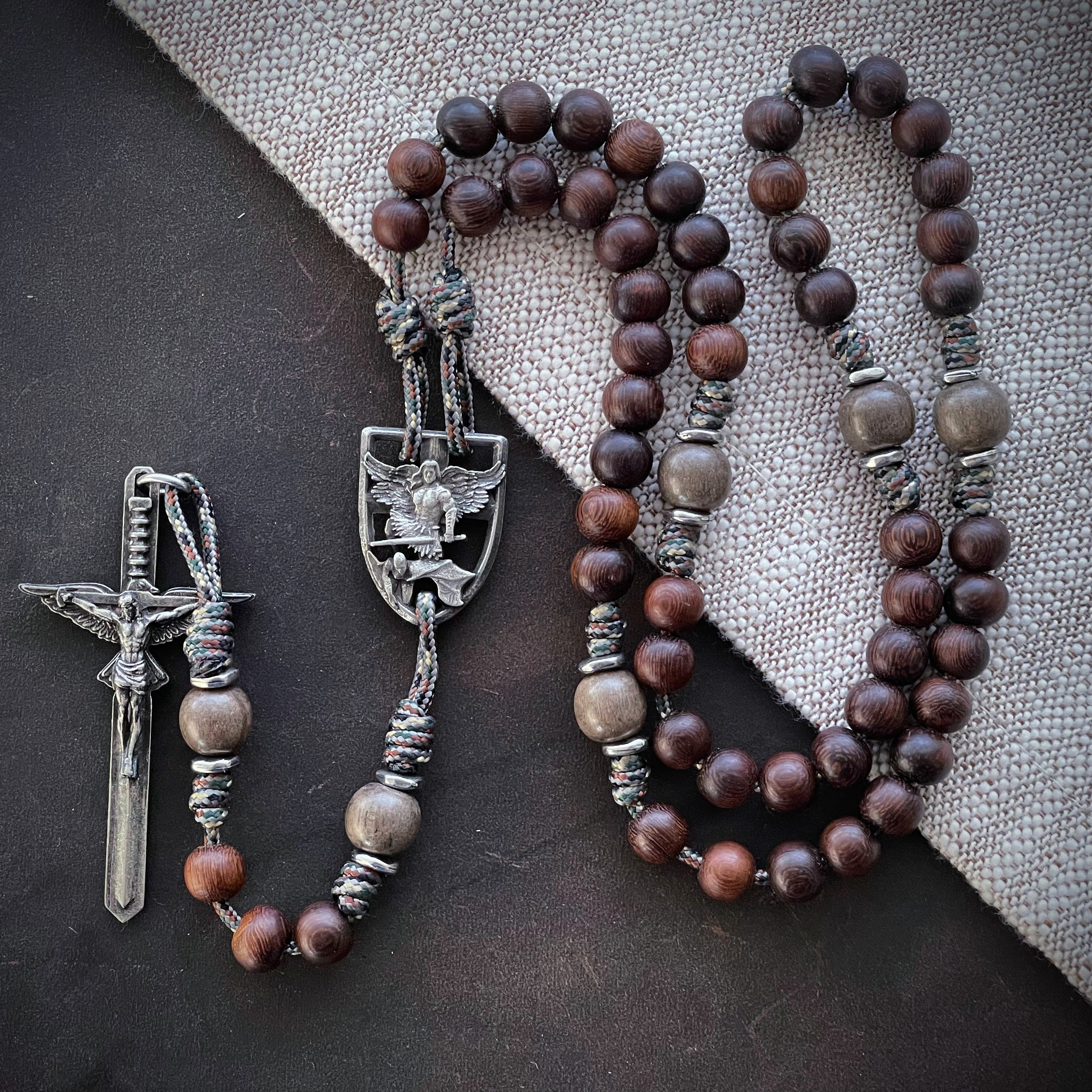
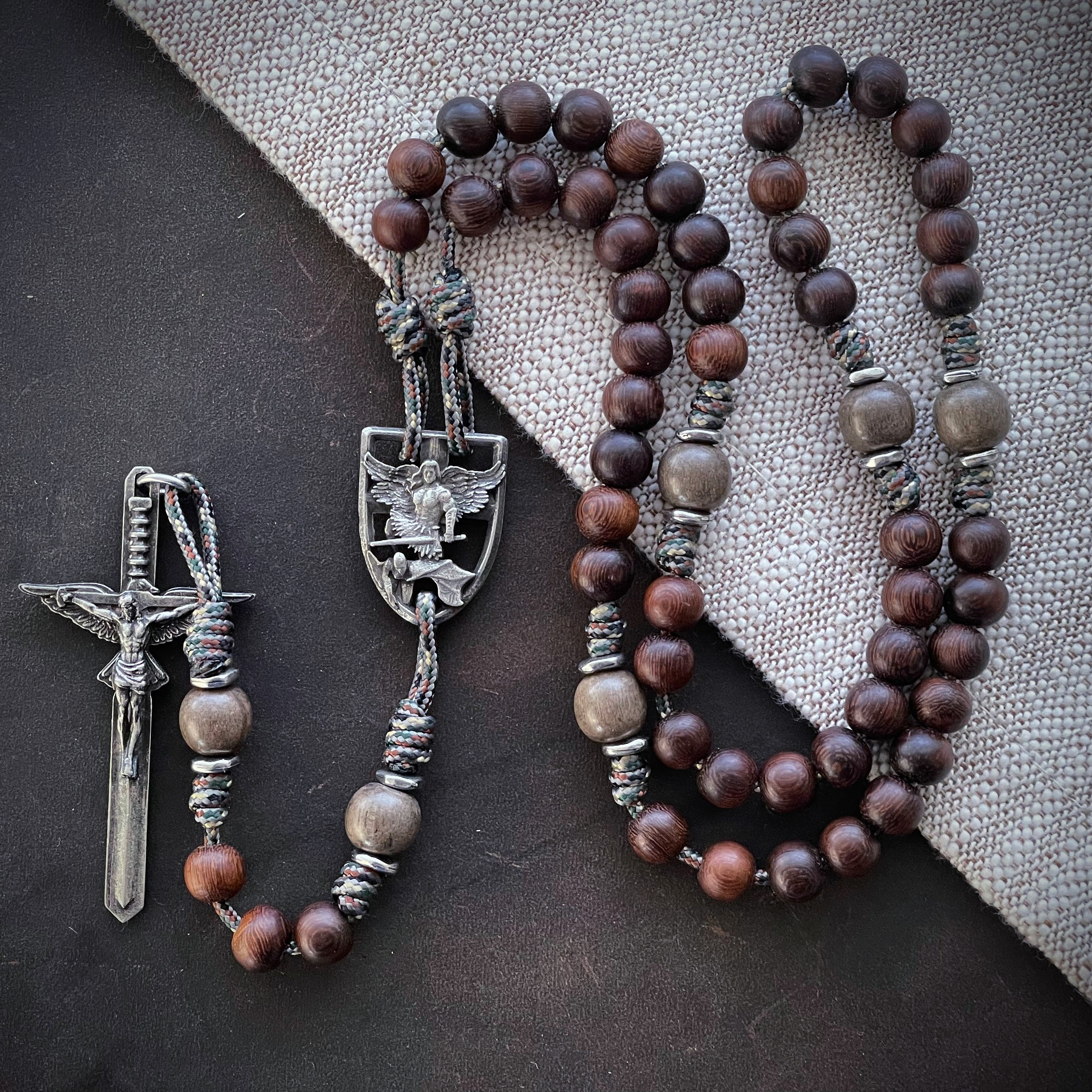
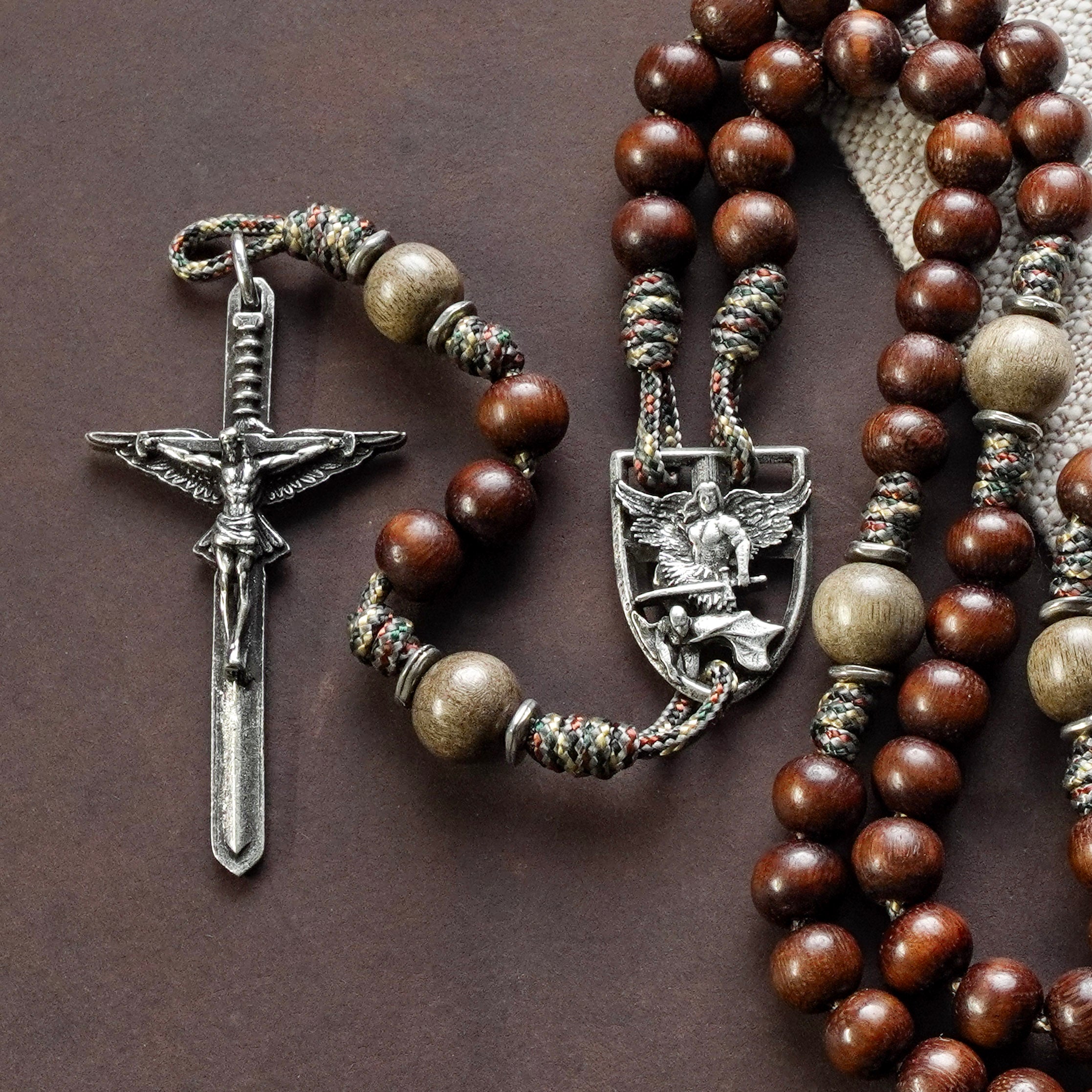
The St. Michael Defender Rosary from The Catholic Woodworker is built for the kind of prayer described above. Handcrafted with hand-inspected wooden beads and military-grade 95 paracord, backed by a lifetime guarantee — a rosary made for the man who prays with intent.
Final Thoughts
St. Michael's name is a question — Who is like God? — that became a battle cry before the world began. His mission has not changed since. He stands assigned to the protection of God's people, invoked by a pope who saw what was coming, honored on the feast day of the battle that proved what the Rosary can do. Praying his prayer before and after the decades is not superstition. It is tradition. It is theology. It is combat readiness.
The image of the warrior over the serpent is not wrong. It just needs the full story behind it.
Source: Content produced for The Catholic Woodworker · catholicwoodworker.com · May 2026