
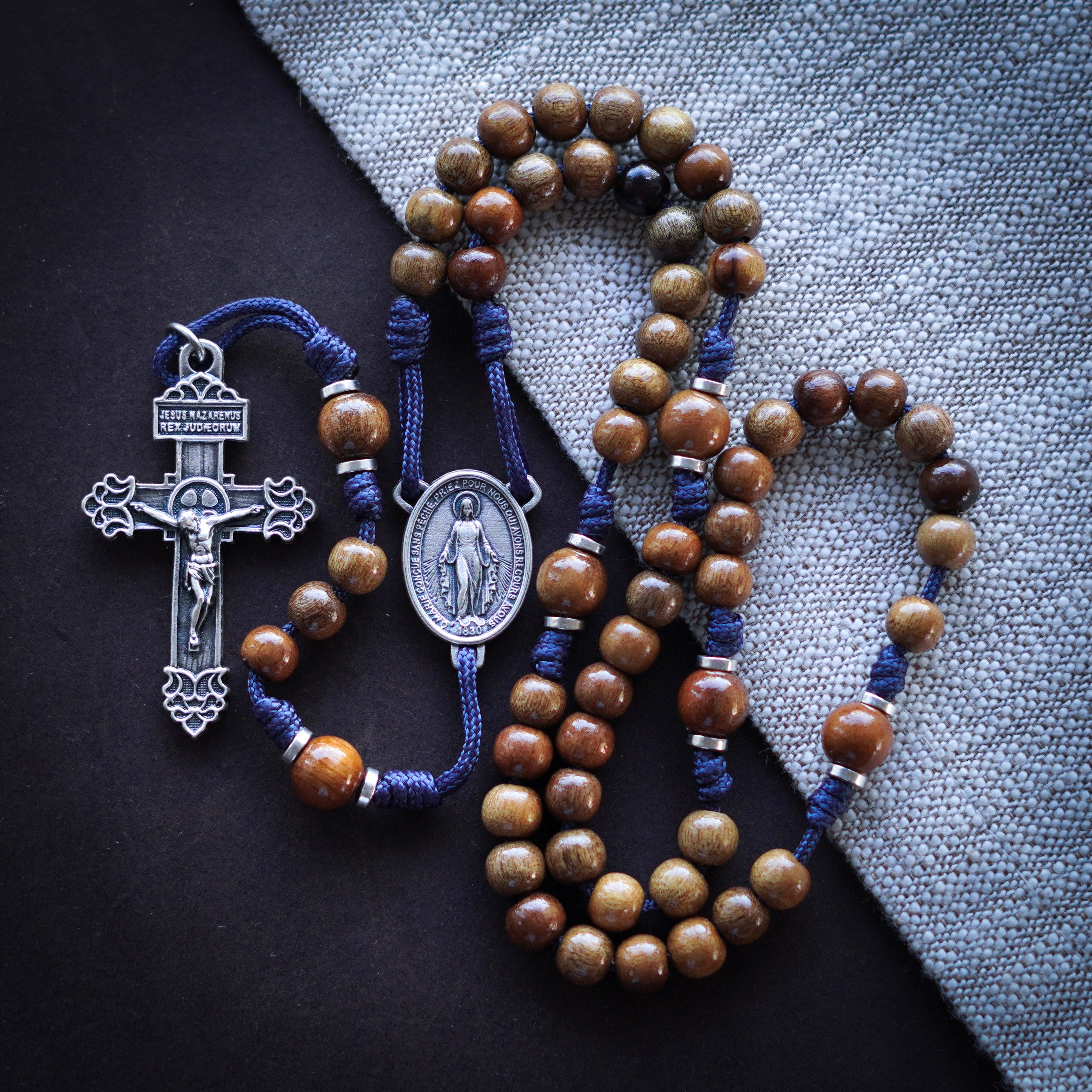
The Miraculous Medal Rosary
Every Miraculous Medal Rosary we make carries the same image Our Lady asked for herself: an apparition, a promise of grace, and the quiet confidence that comes from asking Mary to pray for you.
In 1830, a young novice named Catherine Labouré knelt in a Paris convent chapel and watched Mary describe a medal she wanted struck for the whole world to wear. Nearly two centuries later, that same image sits at the center of one of our most requested rosaries, a design we simply call the Miraculous Medal Rosary.
This isn't a devotion we invented. It's one of the best documented Marian apparitions in the Church's history, backed by a Church-approved feast day, a national shrine in Perryville, Missouri, and an unbroken line of Catholics who have worn the medal with confidence since 1832.
Where the devotion comes from
Mary appeared to Catherine on November 27, 1830, standing on a globe with her foot crushing a serpent, rays of light streaming from her hands. She asked that a medal be struck showing exactly what Catherine saw, front and back, and promised graces to anyone who wore it with confidence. Catholics started calling it the Miraculous Medal almost immediately, after reports of healings and conversions made the nickname stick. You can read the full account, including the exact dates and sources, in our history of the Miraculous Medal.
"Those who wear it with confidence will receive great graces," Our Lady promised St. Catherine Labouré in 1830.
What we build into the rosary
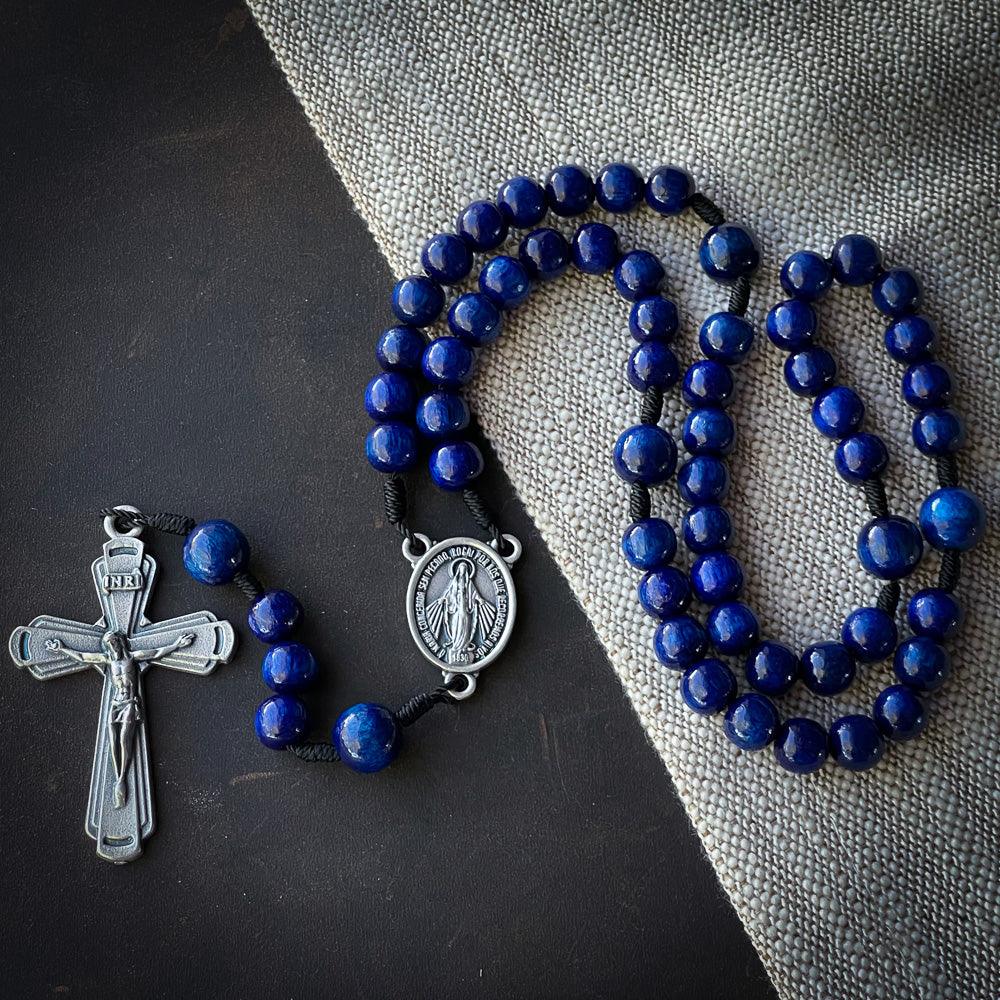
Our Miraculous Medal Rosary pairs a TCW Custom Silver Color Miraculous Medal Centerpiece with a matching silver-colored Pardon Crucifix, strung on dark Imbuia beads and navy 95 paracord. Every rosary ships with a navy blue burlap pouch for protection, ready for daily prayer from the day it arrives. We also offer a pocket-sized version for daily carry, and a 24K gold-plated version, Our Lady, Arrayed in Gold, for a more formal gift. Read more about why we build the medal into the center of the rosary in our centerpiece guide.
Whichever version you choose, the centerpiece carries the same image Catherine described: the same rays of light, the same serpent underfoot, the same promise.
Continue Reading This Series
- → The History of the Miraculous Medal
- → What Does the Miraculous Medal Mean?
- → How to Pray the Miraculous Medal Novena
- → Miraculous Medal Centerpieces
- → Miraculous Medal Rosary Gift Guide
- → The Miraculous Medal as Spiritual Armor
- → Miraculous Medal vs. Other Marian Medals
- → Teaching Kids About the Miraculous Medal
How to make it part of your prayer
The Miraculous Medal fits naturally alongside the Rosary because both devotions do the same work: leading you to Christ through Mary. Hold the centerpiece during the opening prayers, pray a novena in the weeks leading up to the Feast of the Miraculous Medal on November 27, or simply wear the medal daily and let it remind you to ask for Mary's intercession. Our novena guide walks through the tradition behind that nine-day prayer, and our guide to praying the Rosary covers the full structure if you're building that habit for the first time.
Continue reading
Every article in this series traces back to the same apparition, told from a different angle: the full history, the meaning behind each symbol, how to pray the novena, why we build the medal into our centerpieces, how to choose a gift, the medal as spiritual armor, how it compares to other Marian devotions, and how to teach the story to your own children.
Miraculous Medal Rosary
Dark Imbuia beads, a silver-toned Pardon Crucifix, and a custom Miraculous Medal centerpiece, built to last a lifetime of prayer, in stock.
Shop the Rosary →