
Skip to content
0

Your cart is empty

Continue shopping

Every image on the medal, explained

What Does the Miraculous Medal Mean?

Adam Minihan ●

The Miraculous Medal packs an entire catechism onto a disc smaller than a quarter. Once you know what each image means, the medal becomes less like decoration and more like a small, wearable prayer.

🌟

The front of the medal

Mary stands on a white globe with her arms lowered, palms open toward the earth. Rays of light stream from rings on her fingers, and Catherine Labouré understood these rays as the graces Mary obtains from her Son for those who ask.

Why some rays are darkCatherine reported that some of the rays coming from Mary's hands carried no light. She was told these represented graces that go unclaimed, because no one thought to ask for them.

Beneath Mary's feet, a serpent lies crushed, an image drawn from Genesis 3:15, where God promises that the offspring of the woman will strike the serpent's head. Around the whole scene, an oval frame carries the words “O Mary, conceived without sin, pray for us who have recourse to thee,” and the year 1830 marks the apparition itself.

✝️

The back of the medal

Turn the medal over and you'll find a large letter M topped with a small cross, resting on a bar that represents the earth itself, Christ's redemption reaching down into the world. Catherine described this as a symbol of Christ's cross planted in the world, with Mary intimately joined to His work of redemption.

Below the M, two hearts appear side by side: the Sacred Heart of Jesus, crowned with thorns, and the Immaculate Heart of Mary, pierced by a sword. Twelve stars circle the entire image, a reference to the woman “clothed with the sun” in Revelation 12, traditionally connected to Mary and, by extension, to the Apostles and the whole Church she leads toward Christ.

🔄

Reading front and back together

The two sides were never meant to be read on their own. Catherine described the medal as one connected vision that simply turned over, front becoming back in a single motion. The front shows Mary sending grace outward into the world. The back shows where that grace comes from: the cross of Christ, the love of two hearts, and the Church gathered under twelve stars.

Seen this way, the medal makes a single argument twice, once in each direction. Mary's graces on the front only make sense because of the cross and the hearts on the back. And the back's declaration of Christ's redemption only reaches the world through the hands shown pouring out light on the front.

📖

What the symbolism teaches

Every image on the medal points in the same direction: toward Christ, through Mary. She stands on the globe as Queen, but the rays she pours out come from graces her Son has already won. The Rosary works the same way, walking through the life of Jesus while Mary leads the way.

That's part of why the medal fits so naturally at the center of a rosary. Both are Marian without being about Mary alone. They're tools for getting to know Christ better, through the eyes of the person who knew Him best.

Once you can name what's on the medal, wearing one or praying with one stops being a habit you do without thinking and starts being a conversation you're having on purpose, one glance at a time.
Symbolism drawn from St. Catherine Labouré's own account of the apparition, as recorded by the Congregation of the Mission and the Catholic Encyclopedia (New Advent).

Frequently Asked Questions

Question 01What does Mary standing on a globe represent?
Her role as Queen of Heaven and Earth, and her closeness to every corner of the world.
Question 02Why does the medal show a serpent under Mary's feet?
It reflects Genesis 3:15, where the offspring of the woman crushes the serpent's head, a passage the Church has long connected to Mary and Christ's victory over sin.
Question 03What do the rays of light mean?
The graces Mary obtains from Christ for those who ask for them.
Question 04Why are some rays dark?
They represent graces that go unclaimed because no one asked for them, according to Catherine Labouré's account of the vision.
Question 05What prayer is written around the front of the medal?
“O Mary, conceived without sin, pray for us who have recourse to thee.”
Question 06What does the M on the back stand for?
Mary, shown joined to the cross of Christ that rises from it.
Question 07Whose hearts appear on the back of the medal?
The Sacred Heart of Jesus, crowned with thorns, and the Immaculate Heart of Mary, pierced by a sword.
Question 08What do the twelve stars represent?
The woman “clothed with the sun” in Revelation 12, traditionally linked to Mary and to the Apostles and the Church.
Question 09Is wearing the medal considered worshiping Mary?
No. Catholic teaching holds that devotion to Mary always points toward Christ. The medal's own symbolism, graces flowing from her Son, makes that clear.
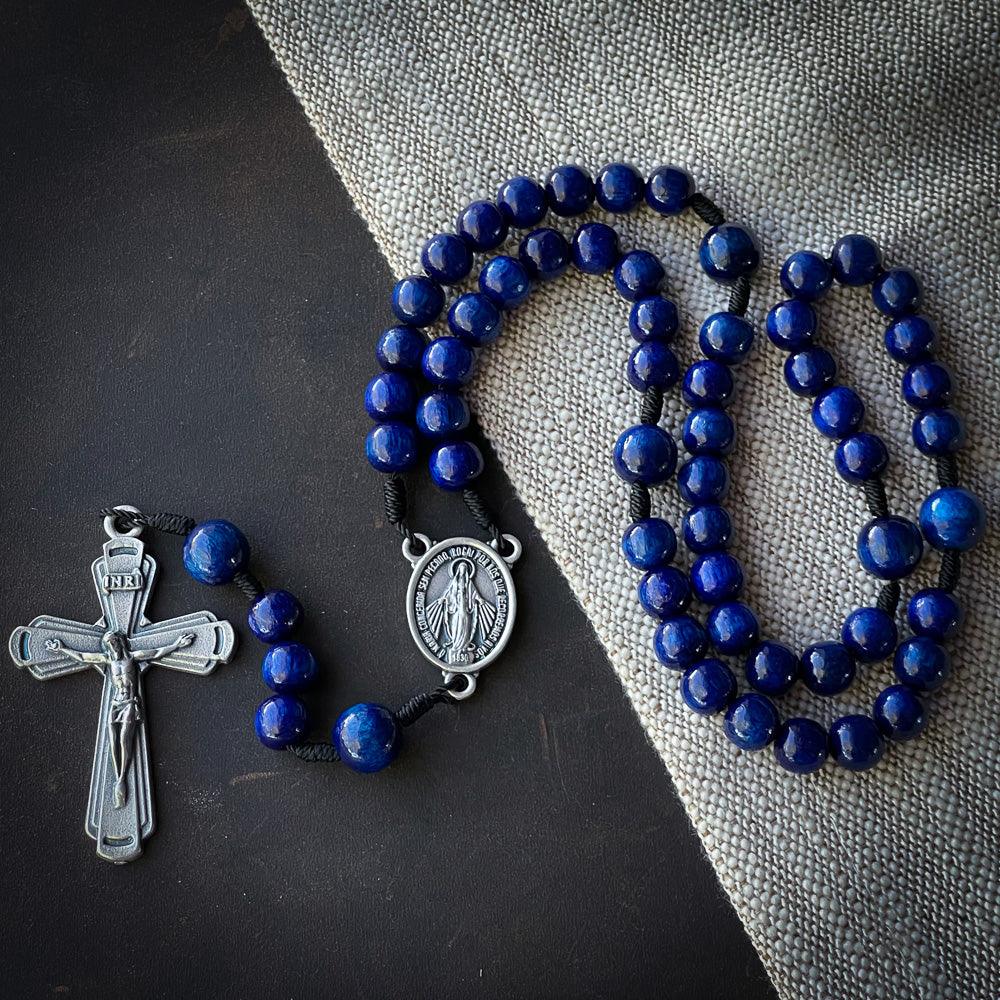
Question 10Why does the Miraculous Medal fit naturally as a rosary centerpiece?
Both the medal and the Rosary are Marian without being about Mary alone. Each one leads the person praying back to the life of Christ.
Question 11Are the front and back of the medal meant to be read separately?
No. Catherine described them as one connected vision, the front showing Mary sending grace outward, the back showing the cross and hearts that grace flows from.
Question 12What does the bar beneath the cross on the back of the medal represent?
The earth itself, showing Christ's redemption reaching down into the world.
View all
Miraculous MedalWhat Does the Miraculous Medal Mean?

What Does the Miraculous Medal Mean?

Mary on a globe, a crushed serpent, two hearts, twelve stars. Here's what every image on the Miraculous Medal actually means.

Miraculous MedalThe History of the Miraculous Medal

The History of the Miraculous Medal

In 1830, a young novice named Catherine Laboure saw the Virgin Mary in a Paris convent chapel. Here's the true story behind the medal that vision produced.

Miraculous MedalThe Miraculous Medal Rosary

The Miraculous Medal Rosary

Every Miraculous Medal Rosary we make carries the same image Our Lady asked for herself: an apparition, a promise of grace, and the quiet confidence that comes from asking Mary to pray f...