
A meaningful way to nurture your child’s faith after First Communion
First Communion opens the door to a deeper relationship with Christ — and the rosary is the key that keeps it open every day. Here is how to teach your child to pray it, step by step, in a way that is simple, meaningful, and built to last.
Quick Reference| Step | Prayer / Action | Simple Explanation for Children |
|---|---|---|
| 1 | Sign of the Cross | We pray in the name of the Father, Son, and Holy Spirit |
| 2 | Apostles' Creed | We state what we believe as Catholics |
| 3 | Our Father | The prayer Jesus taught us — we trust God to care for us |
| 4 | Hail Mary × 3 | We ask Mary to pray for us, especially when we need help |
| 5 | Glory Be | A short prayer praising the Holy Trinity |
| 6 | Announce the Mystery | Choose which event from Jesus' life to reflect on |
| 7 | Our Father + Hail Mary × 10 + Glory Be | One decade — repeat for each mystery |
Why Children Should Pray the Rosary After First Communion
First Communion is an invitation — into a deeper relationship with Jesus Christ through the Eucharist. The rosary complements and sustains that relationship by giving children a structured, daily way to meditate on Christ's life, seek Mary's intercession, and build the habit of prayer that will carry their faith forward through every season of life.
The rosary is simple enough for a child to learn and deep enough to accompany them into adulthood. Unlike prayers that can feel abstract, the rosary is tactile — beads in the hand, mysteries in the mind, Mary alongside. It connects the child to what they received at the altar and to the broader tradition of Catholic prayer that stretches back centuries.
The rosary deepens what the Eucharist gives. Both are ways of being with Jesus — the Eucharist receives Him at the altar; the rosary reflects on His life through Mary's eyes. Teaching your child both together gives them a complete foundation for a Catholic life of prayer.
The rosary after First Communion is not an extra practice added to a busy life — it is the natural continuation of what the sacrament began. A child who prays the rosary is a child who keeps returning to Christ, decade by decade, day by day.
Understanding the Rosary Before You Begin
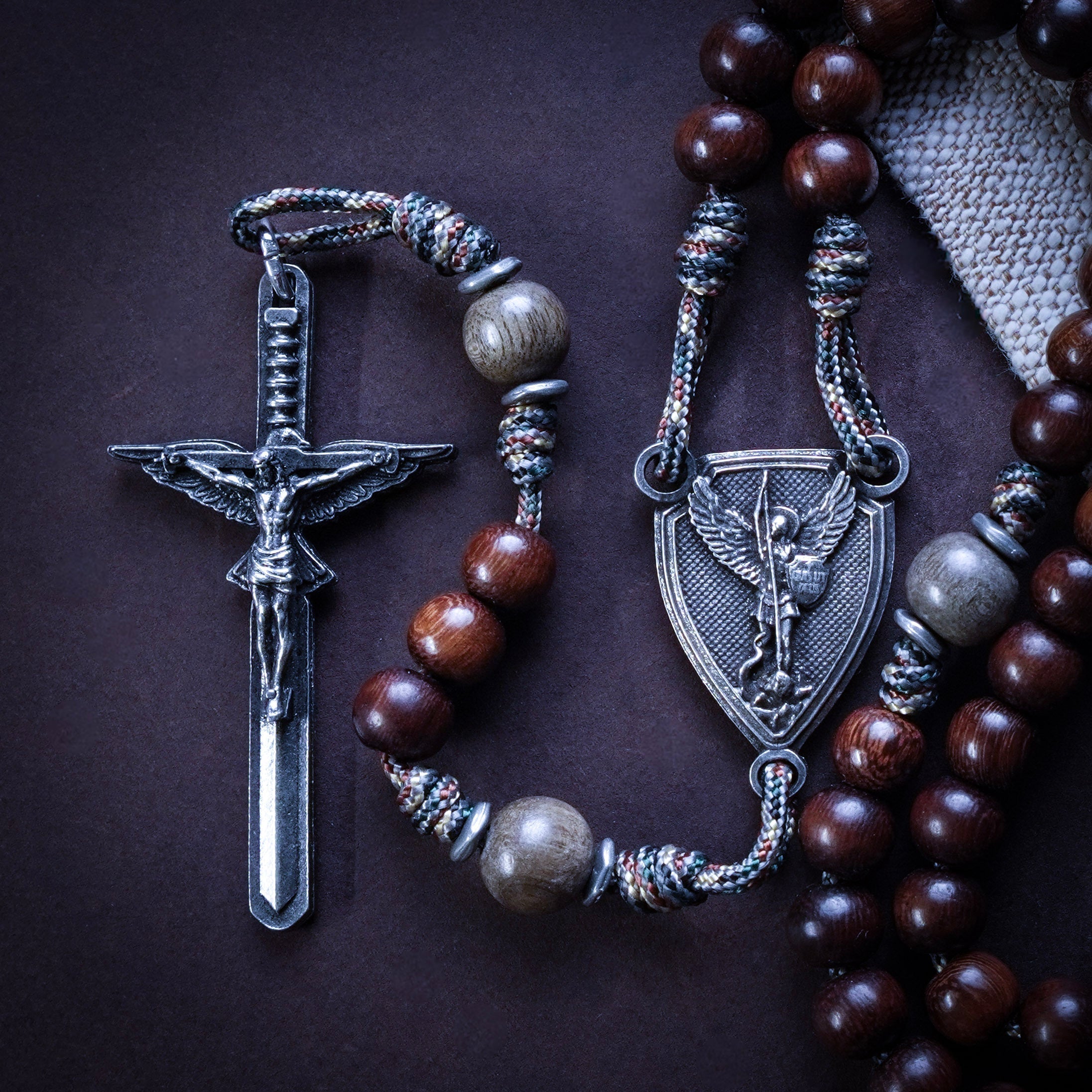
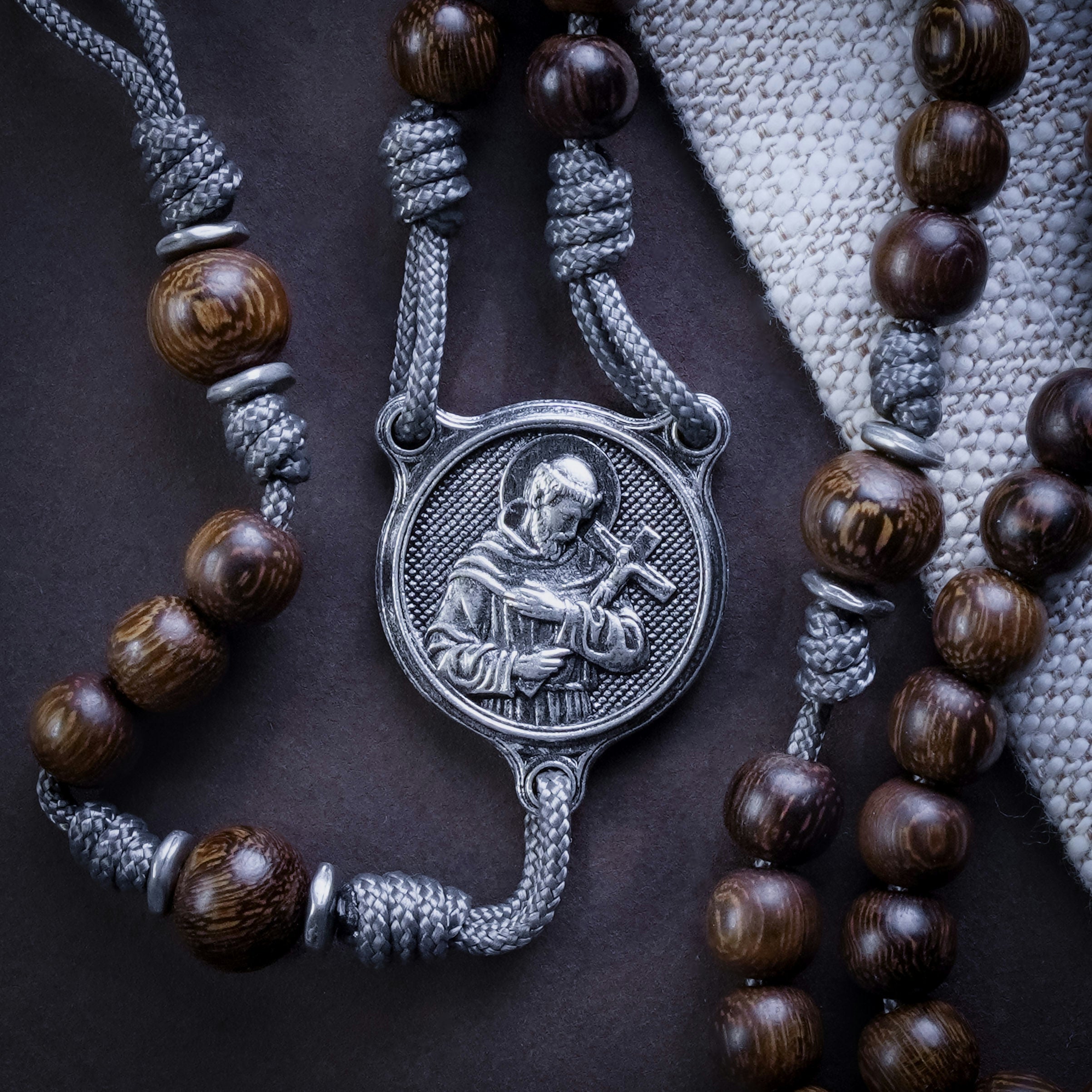
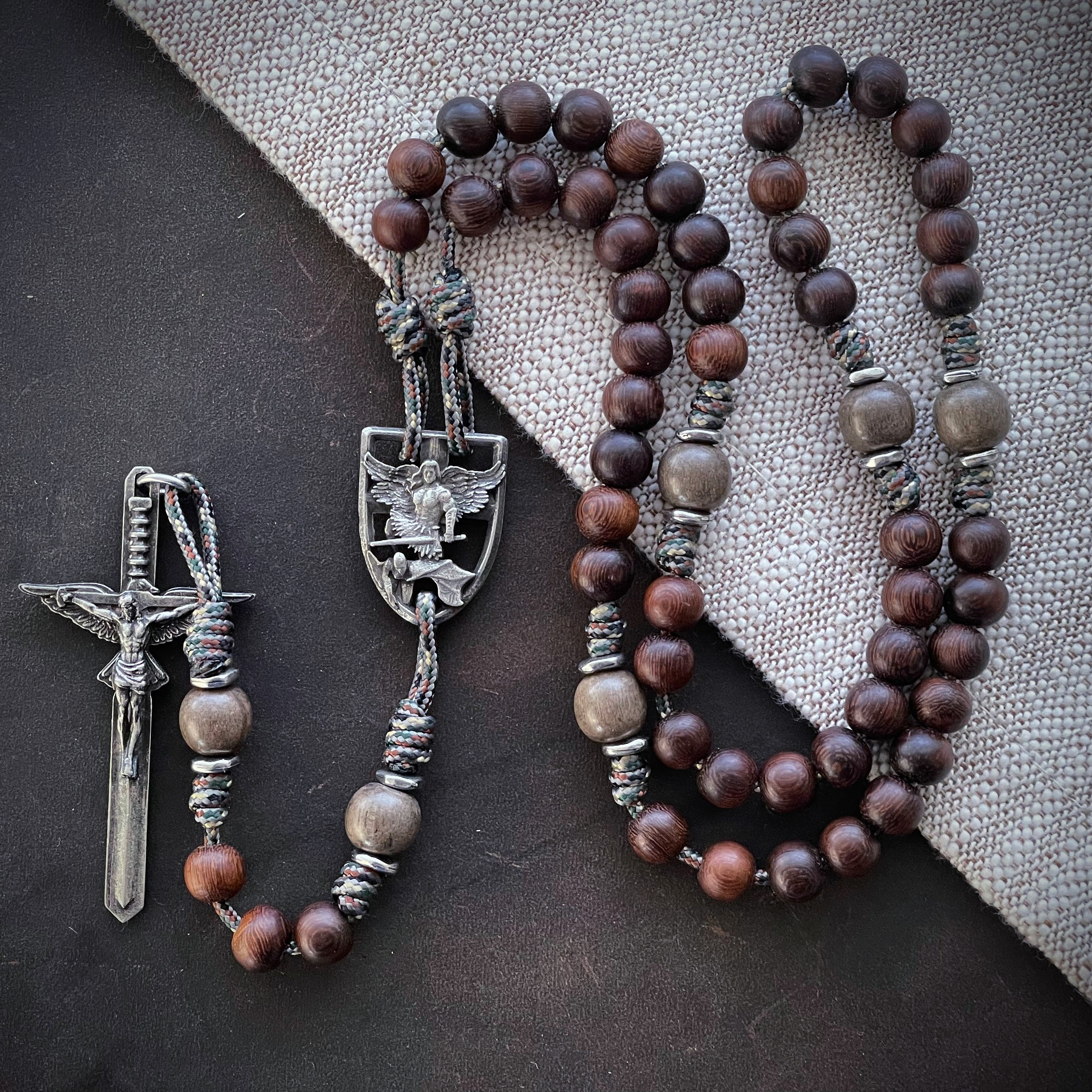
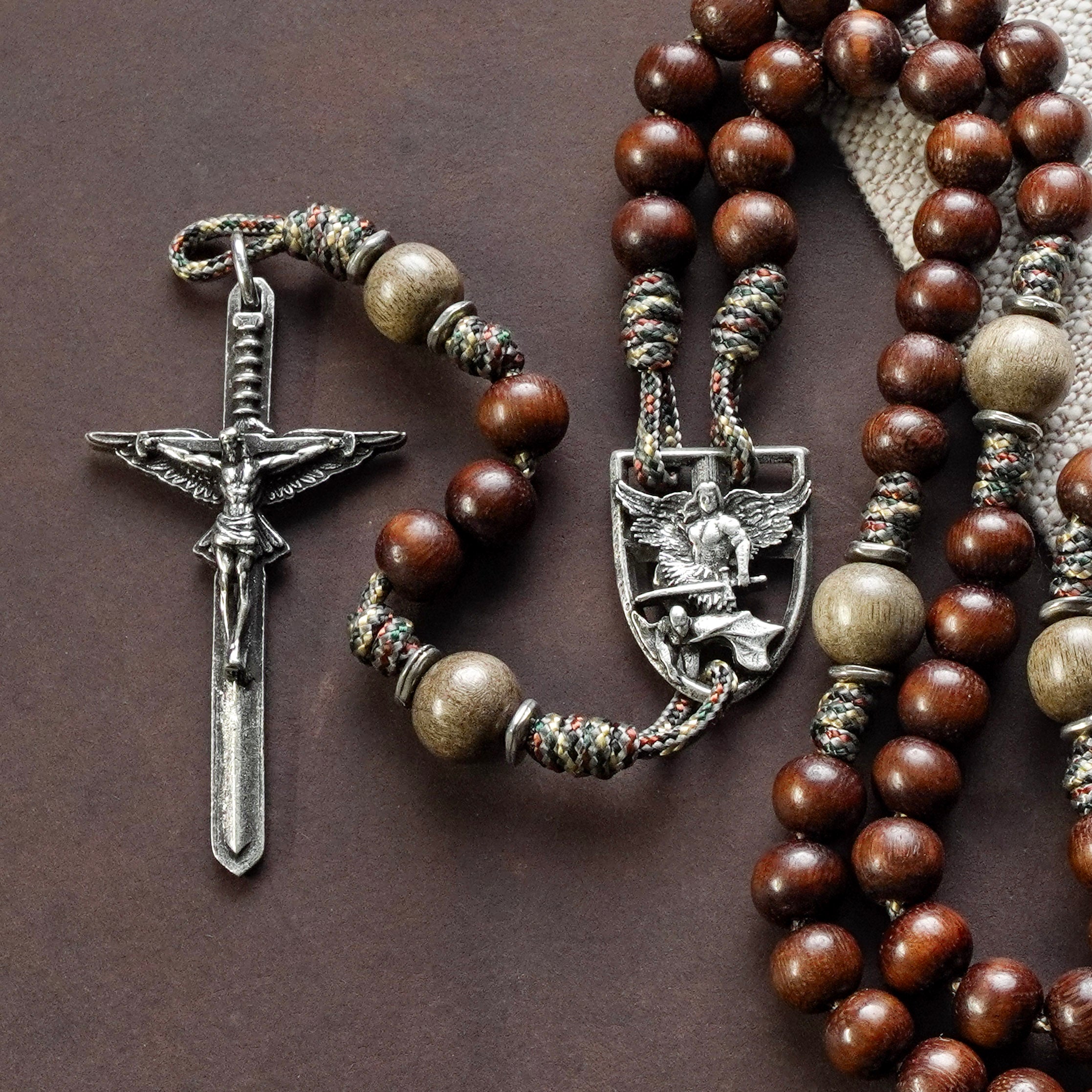
Before praying the rosary with your child for the first time, take a moment to show them what they are holding. A rosary has 59 beads: 6 large beads for the Our Father, 53 smaller beads for the Hail Mary, and a crucifix. Show them each part and explain what it is for — giving them a physical map of the prayer before the words begin.
| Part of the Rosary | Number | Prayer Prayed On It |
|---|---|---|
| Crucifix | 1 | Apostles' Creed |
| Large bead (after crucifix) | 1 | Our Father |
| Small beads (introductory) | 3 | Hail Mary × 3 (for faith, hope, charity) |
| Large bead (between decades) | 5 | Our Father (one per decade) |
| Small beads (decades) | 50 | Hail Mary × 10 per decade |
| Centerpiece | 1 | Transition between the tail and the circle |
Step-by-Step: How to Pray the Rosary With Children
Walk through these steps together the first few times, with your child repeating after you. Keep explanations short and clear — the goal is familiarity, not a theology lecture. The understanding will deepen as the habit grows.
1 Make the Sign of the Cross
Hold the crucifix together and guide your child to make the Sign of the Cross. Explain that this gesture begins every prayer by reminding us who we pray to — the Father, the Son, and the Holy Spirit. It is an act of faith before a single word of the rosary is spoken. Have them repeat: In the name of the Father, and of the Son, and of the Holy Spirit. Amen.
2 Recite the Apostles' Creed
The Apostles' Creed is the first prayer of the rosary — a profession of everything Catholics believe. Tell your child: "This prayer tells God what we believe." Recite it with them once, then gently ask what certain phrases mean to check their understanding. Don't correct anxiously — this is a growing conversation, not a test.
3 Recite the Our Father
Also called the Lord's Prayer, the Our Father was taught to us by Jesus Himself — which makes it the most important prayer a Christian can know. If your child already knows it, recite it together. If any lines confuse them, explain simply: "Our Father, who art in heaven, hallowed be Thy name" means God is holy and we honor Him. "Give us this day our daily bread" means we trust God to take care of us every day.
4 Recite Three Hail Marys
After the Our Father, three Hail Marys are prayed on the introductory small beads — traditionally offered for an increase in faith, hope, and charity. Introduce Mary gently: "We ask Mary to pray for us, the way you might ask a kind person to pray for you when you need help." Explain the key lines simply: "Hail Mary, full of grace" means God chose Mary because she is full of His grace. "Holy Mary, Mother of God, pray for us sinners" means we ask her to pray for us, especially when life is hard.
5 Recite the Glory Be
After the three Hail Marys, the Glory Be is prayed — a short doxology that praises the Holy Trinity. Explain: "This prayer gives glory to God the Father, Jesus the Son, and the Holy Spirit." It closes the introductory section and sets the tone for the decades ahead.
6 Announce the Mystery
Before each decade, announce the mystery to be meditated upon. Start simply: "In this mystery, we think about when the angel came to Mary and told her she would be the mother of Jesus." For younger children, visual and storytelling language works best. The mystery gives the Hail Marys their context — each one is prayed while holding that image in mind.
7 Pray the Decade: Our Father + 10 Hail Marys + Glory Be
Each decade follows the same rhythm: one Our Father on the large bead, ten Hail Marys on the small beads, and one Glory Be at the end. The repetition of the Hail Mary is not mindless — it is the rhythm that frees the mind to meditate on the mystery rather than focus on the words. After the Glory Be, many families add the Fatima Prayer: O my Jesus, forgive us our sins, save us from the fires of hell, lead all souls to heaven, especially those in most need of Thy mercy. Repeat for each mystery.
The rosary has a clear rhythm: Sign of the Cross → Creed → Our Father → 3 Hail Marys → Glory Be → then five decades of Our Father + 10 Hail Marys + Glory Be, each wrapped around a mystery. Once the rhythm is familiar, the prayer becomes second nature.
Making the Rosary a Regular Part of Your Child's Routine
Learning the prayers is only the beginning. The real work — and the real gift — is helping your child build a consistent habit of prayer. Consistency is what transforms the rosary from an occasional exercise into a living part of a child's spiritual identity.
Set a Specific Time
Habits form when they are tied to a regular time. Morning before school, after dinner, or at bedtime — choose a moment that works for your family and protect it. A short rosary prayed at the same time every day builds more than a long rosary prayed sporadically. The routine itself becomes a prayer.
Start Small
One decade. That is enough to begin. Ten Hail Marys and one mystery take about two minutes. Let your child experience success at that level before adding more. As they grow comfortable with the prayers and the rhythm, you can add decades naturally — following their pace, not your expectations.
Use a Child-Friendly Rosary
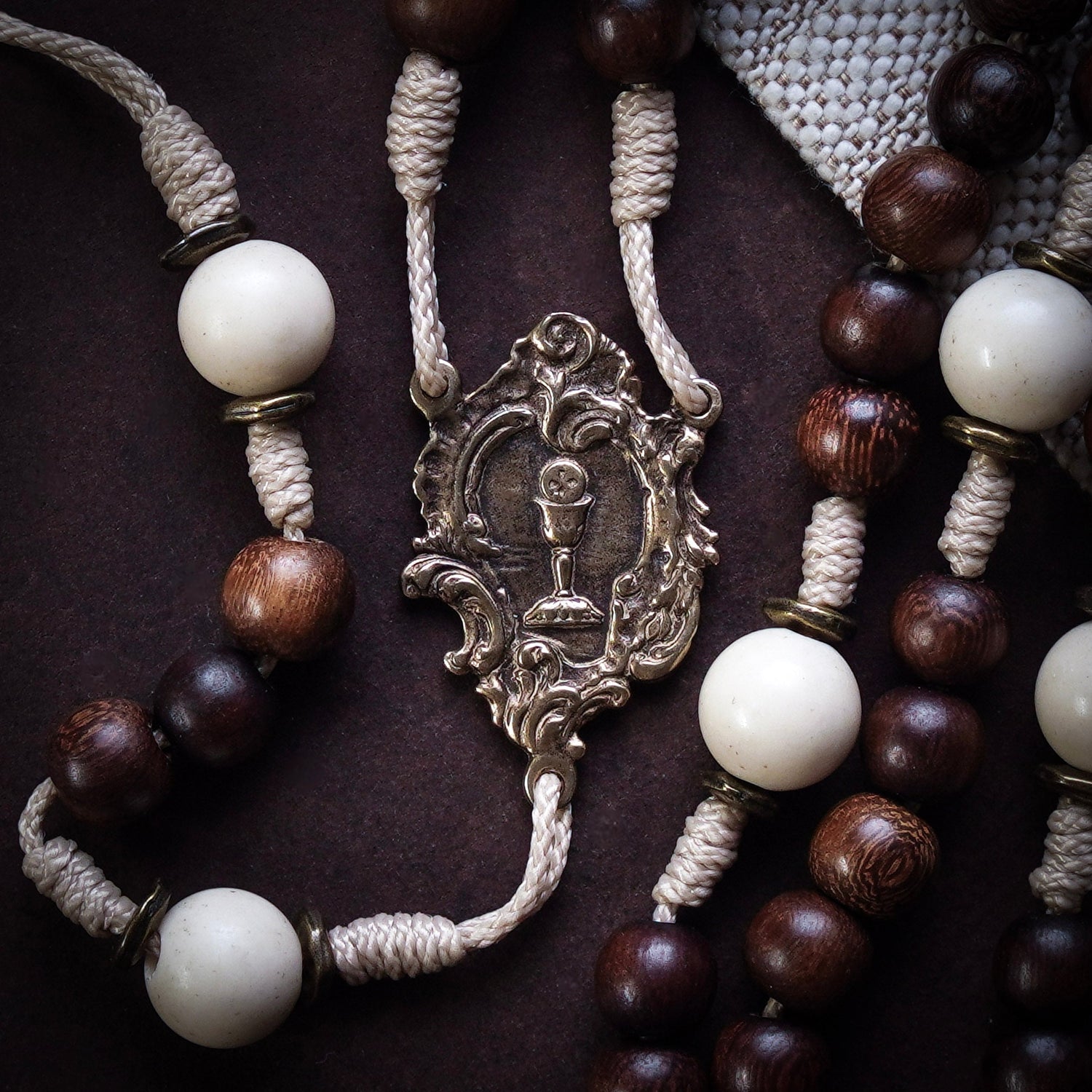
A rosary that fits a child's hands makes prayer easier and more engaging. Wooden beads on a durable cord are far more practical for daily use than delicate silver or crystal rosaries. The First Holy Communion Rosary from The Catholic Woodworker was designed exactly for this — child-friendly, durable, and featuring an Eucharistic centerpiece that helps your child feel connected to the sacrament they received.

Lead by Example
Children learn by watching. If they never see their parents pray, prayer becomes something assigned to them rather than something the whole family does. Pray the rosary at home — both with your child and on your own. Let them see you hold the beads. Let them hear you pray. That witness teaches more than any explanation.
Make It Engaging
For children, learning to pray should feel like an invitation, not an obligation. Use storytelling language for the mysteries, visuals or illustrated guides, and calm music or a rosary app to create an atmosphere of quiet prayer. Children who associate the rosary with warmth, presence, and family are far more likely to carry that practice into adulthood than those who associate it with strict rules and high expectations.
Some children take to the rosary immediately; others need time. Praise every small step — a single decade prayed attentively is worth more than five prayed under pressure. Patience and gentleness are the most important tools a parent has in this season.
A consistent, small, and joyful rosary practice is worth far more than an ambitious one that doesn't last. Start with one decade. Keep it at the same time. Pray it together. That is how a prayer habit forms.
Give Your Child's Prayer Life a Solid Foundation
Teaching your child to pray the rosary after First Communion is not just a spiritual exercise — it is a way of building a deeper relationship with Christ that will sustain them through every stage of their Catholic life. Through this simple, beautiful prayer, your child will come to know the life of Jesus and the love of Mary in a way that stays with them far beyond childhood.
As much as the rosary is about memorizing prayers, it is also about growing closer to God as a family — creating a rhythm of prayer that supports your child through joy and difficulty alike. Start simple. Stay consistent. Pray together. And trust that Mary, who is always gently leading souls to her Son, will do the rest.
Source: Content produced for The Catholic Woodworker · youtube.com/@thecatholicwoodworker · April 2026
Q&A Flashcards: Teaching Children to Pray the Rosary
Tap any card to reveal the answer.