

Every St. Michael centerpiece in our collection tells the same story in slightly different materials: a warrior, a weapon, and something crushed underfoot. Here is what each piece of that image actually means, and why it has looked roughly the same for over a thousand years.
The warrior stance
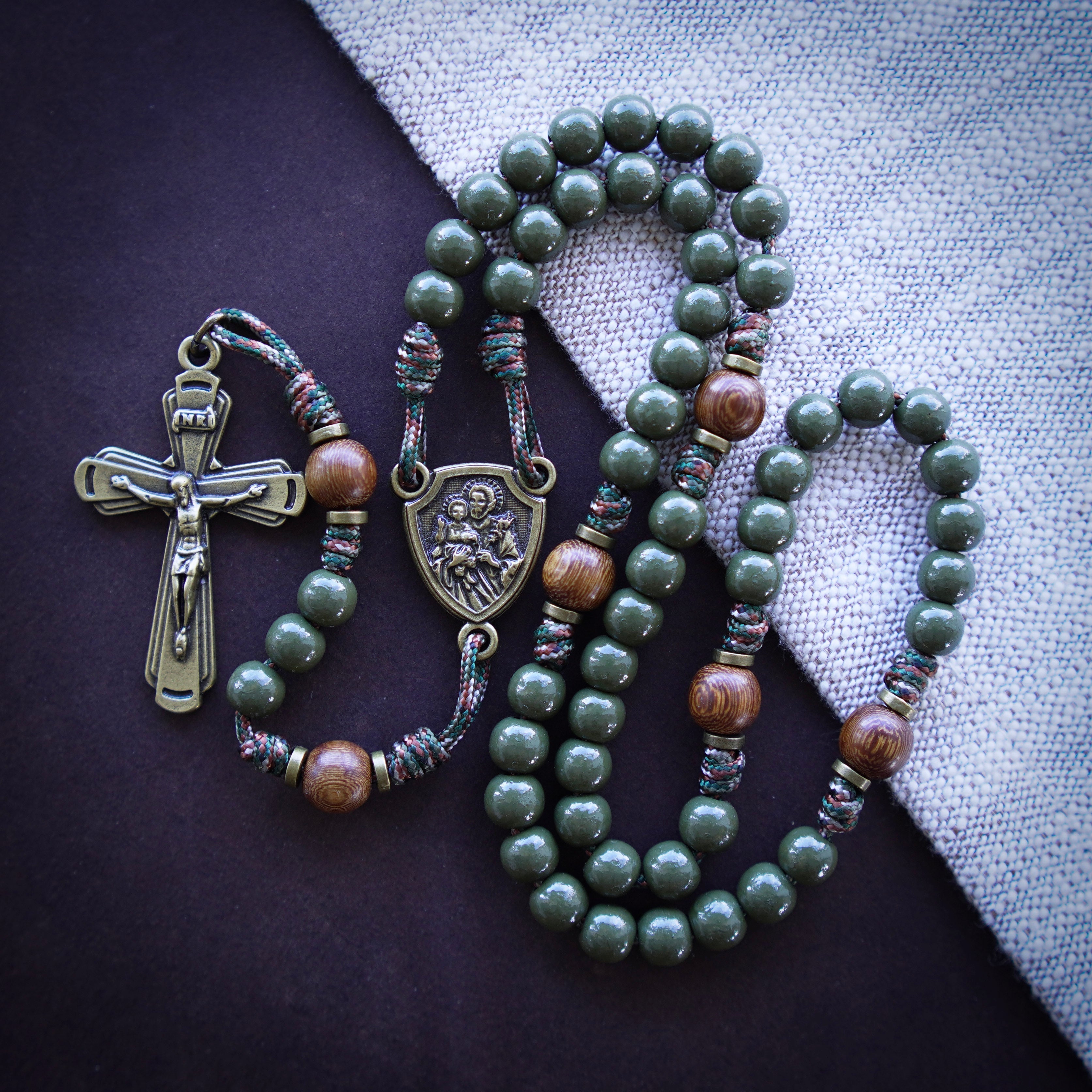
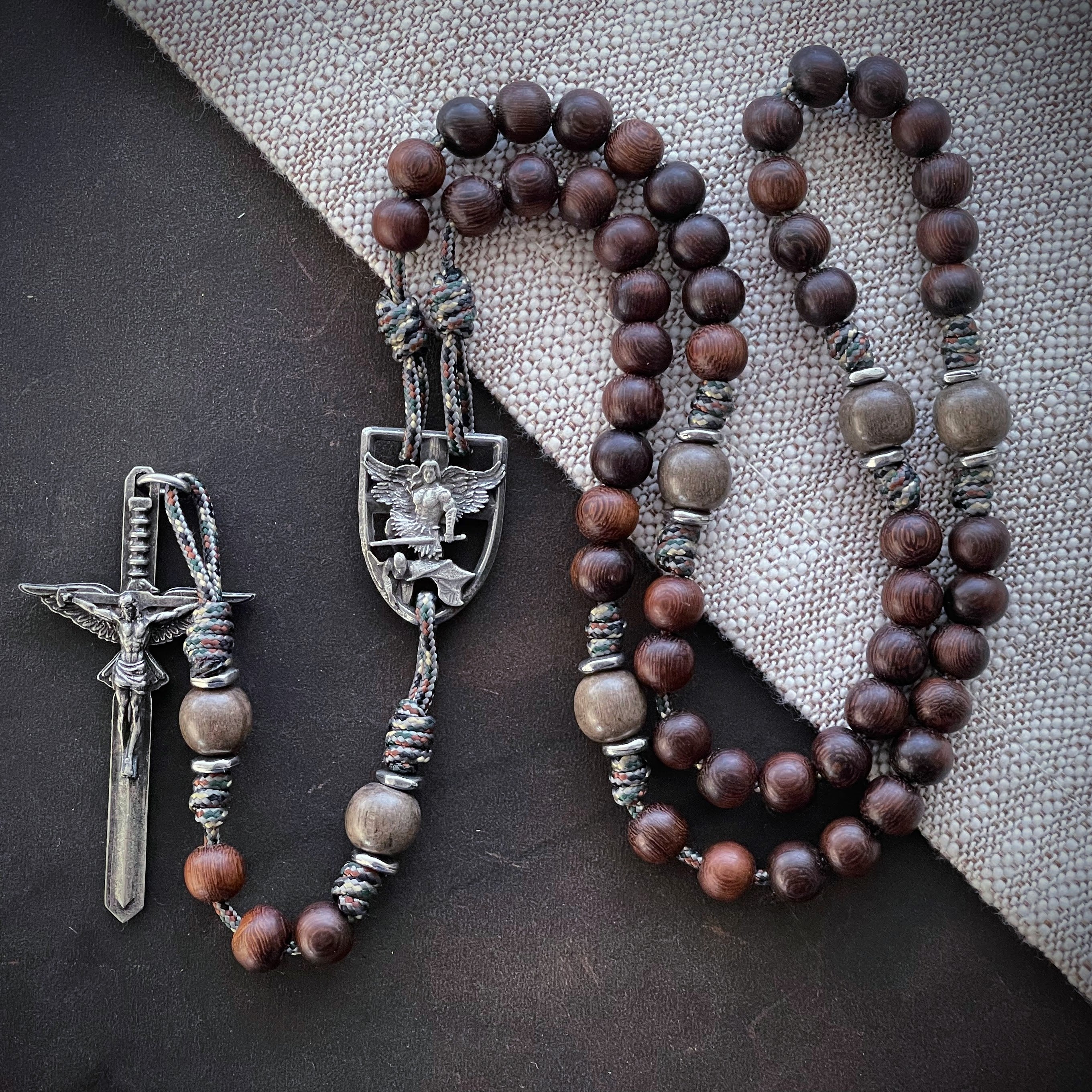
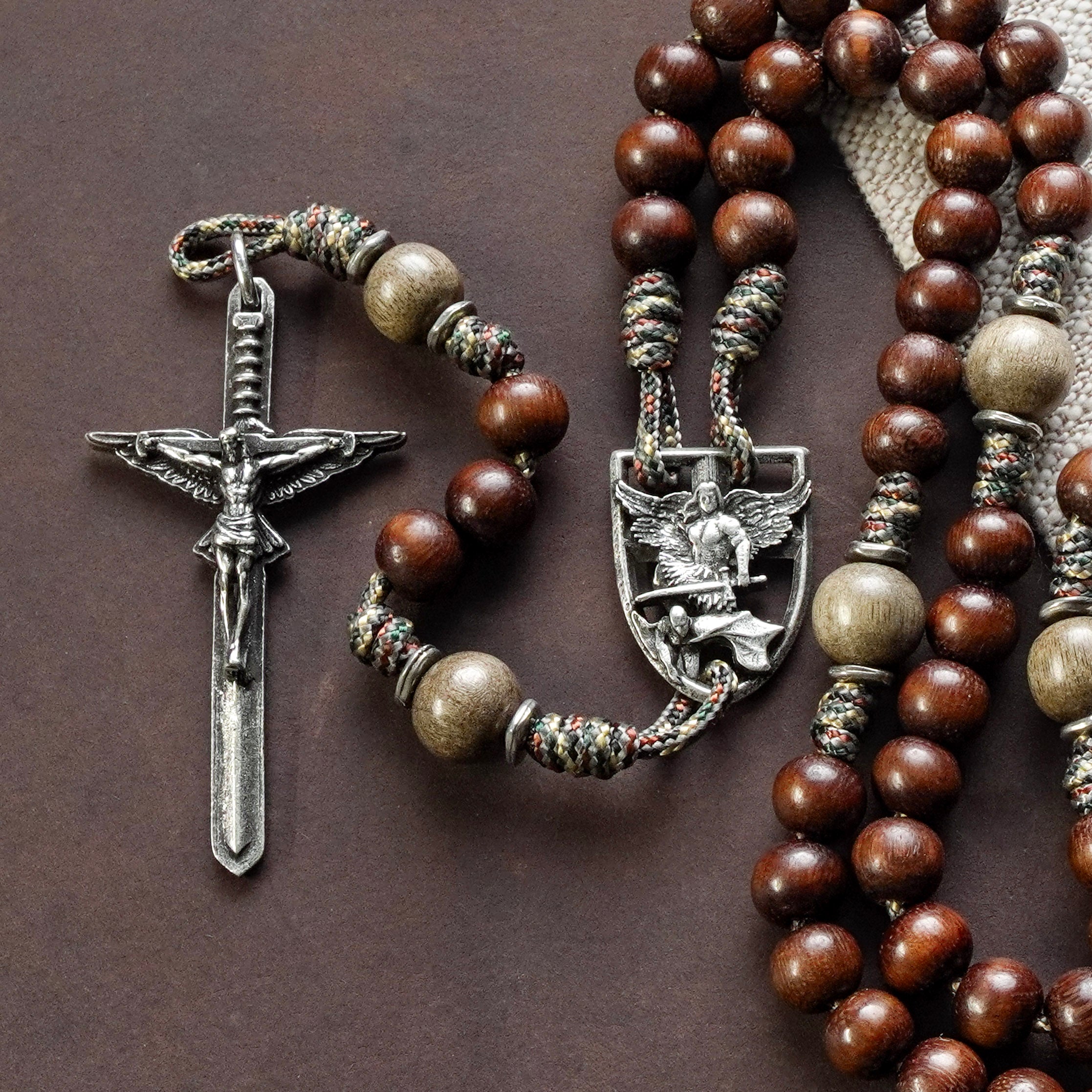
Michael is almost always shown mid-motion, weapon raised or already striking. This is deliberate. Unlike many saints who are pictured at rest in prayer, Michael's traditional iconography catches him at the moment of action, because his entire scriptural role is active defense. The centerpieces across our collection vary in style, from a shield design to a full figure with a raised sword, and all of them preserve this same sense of motion.
What the sword represents
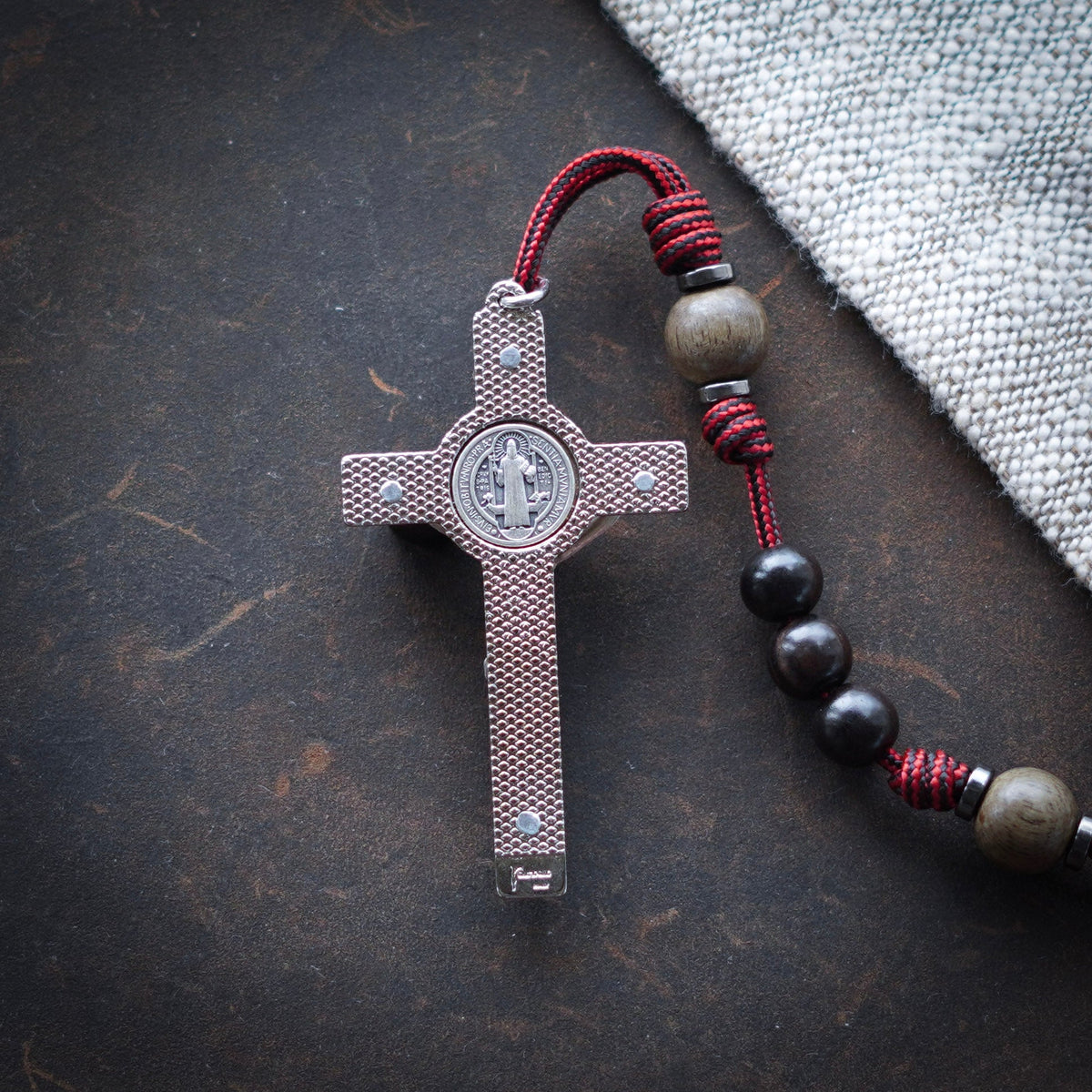
In Christian iconography, the sword in Michael's hand represents power given to him by God. He carries it on assignment, and that detail matters theologically. Michael fights because he has been sent to fight, the same pattern that shows up in every scriptural passage where he appears. Some rosaries in our collection, like the Defender Rosary, pair the sword imagery directly with the crucifix through a Sword and Spirit design, tying Michael's weapon back to the cross itself, the ultimate instrument through which evil was defeated.
What lies underfoot
Nearly every traditional image of Michael shows him standing over a serpent or a dragon, a direct visual reference to Revelation 12, where he leads the angels against the dragon and casts it down. The image also echoes Genesis 3:15, where God promises that the offspring of the woman will strike the serpent's head, the same verse Catholic tradition connects to Mary's own iconography on medals like the Miraculous Medal. Michael and Mary are shown defeating the same adversary in two different theological registers: hers through the Immaculate Conception, his through the direct exercise of angelic power.
What the name adds to the image
The visual symbolism only tells half the story. Michael's name, who is like God, functions as a caption for the entire image. The figure standing in triumph embodies a question aimed at exactly the kind of pride that started the conflict in the first place. Every centerpiece in our St. Michael line is, in that sense, carrying a small argument against vanity: real strength defers to God.
Prince of the heavenly host
Michael is traditionally titled Prince of the heavenly host, a phrase drawn directly from the short Prayer to St. Michael and echoed throughout centuries of liturgical language. A prince, in this sense, commands because he has been given command, the same logic that governs everything else about how Michael's authority is depicted. Some centerpiece designs render this title visually through a crown or a raised standard, others simply through the posture of command in Michael's stance. Either way, the title reinforces the same point his name already makes: whatever authority Michael holds, he holds on behalf of someone greater.
Reading the whole image together
None of these elements were meant to be read in isolation. The sword only makes sense next to the serpent it is raised against. The serpent only makes sense against the promise in Genesis that it would eventually be defeated. The name only makes sense as a response to the pride that caused the fall in the first place. A St. Michael centerpiece compresses a specific theological argument, that God's authority defeats rebellion, and that the creatures who serve Him do so in humility, into an image small enough to hold in one hand.
Reading the centerpiece this way changes what it means to hold one during prayer. Each time the rosary is picked up, the image offers the same reminder: that the fight belongs to God, that Michael's role was always to serve, and that the same posture of obedient strength is being asked of the person holding the rosary. If you want to see how these symbols show up across the eight rosaries in our line, our St. Michael centerpieces guide walks through each one, and the history of the Prayer to St. Michael shows where the title Prince of the heavenly host entered everyday Catholic prayer.
How to pray with the image
A simple way to let the centerpiece shape your prayer is to pause on it at the start and end of each Rosary. Before the first decade, look at the image and name one thing you need defending from this week, whether it's a temptation, a worry, or a hard situation at work. Ask St. Michael to stand with you. When you finish the fifth decade and return to the centerpiece, thank God for the help you've received, even if it hasn't looked the way you expected. Over time, that small habit turns a familiar image into a reminder of the whole story it tells, and it gives your Rosary a clear beginning and end.