

Some devotions arrive in a single dramatic moment. Devotion to the Sacred Heart grew slowly, over centuries, until it reached a quiet monastery in France and the life of a nun named St. Margaret Mary Alacoque.
If you've ever wondered why your parish has a Sacred Heart statue, or why an older relative kept the First Fridays, her story is where the answer starts. Here's how the devotion took shape, who carried it forward, and how it reached the universal Church.
Roots in Scripture and the medieval monasteries
The devotion begins in the Gospel. St. John records that a soldier pierced Christ's side with a lance, "and at once blood and water came out" (John 19:34). Christians have prayed over that opened side since the early centuries, and Pope Pius XII pointed to Christ's own invitation in John 7:37 as part of the devotion's foundation: "Let anyone who is thirsty come to me."
By the eleventh and twelfth centuries, according to the Catholic Encyclopedia, monks and nuns in Benedictine and Cistercian houses were praying to the wounded Heart of Jesus by name. Two nuns of the late thirteenth century, St. Gertrude and St. Mechtilde, wrote about the Heart of Jesus in their mystical writings. Pius XII named both women in Haurietis Aquas as saints whose experiences helped the Church grasp "the inner mysteries of His Heart."
For a long time, though, this stayed a private devotion. Individuals and religious communities practiced it, and the wider Church had no feast to mark it.
St. John Eudes and the first liturgical feast
That began to change in seventeenth-century France with St. John Eudes, a priest who preached parish missions and founded seminaries. He composed prayers for a liturgical celebration of the Heart of Jesus and had the feast kept in his seminaries around 1670. Pius XII credited him with "the first liturgical office celebrated in honor of the Sacred Heart."
Eudes laid the groundwork. A few years later, a young nun a few hundred miles away would receive the requests that turned the devotion into something the whole Church would share.
Margaret Mary Alacoque at Paray-le-Monial
Margaret Mary Alacoque was born in 1647 in the Burgundy region of France. She entered the Visitation monastery at Paray-le-Monial in 1671 and made her religious profession the next year. By many accounts she was a quiet, often sick, and frequently misunderstood member of her community.
On December 27, 1673, the feast of St. John the Evangelist, she received the first of the great apparitions. As she later described it, Jesus invited her to rest on His Heart as St. John had at the Last Supper, and He told her He wished to make the love of His Heart known to all people.
In 1674, He asked her for three practices that Catholics still keep:
- Receiving Holy Communion often, and especially on the first Friday of each month
- Keeping a Holy Hour on Thursday night, to share in His agony in the garden of Gethsemane
- Offering this devotion in a spirit of reparation for the coldness and indifference He received
The best known apparition came on June 16, 1675, within the octave of Corpus Christi. Jesus showed her His Heart and said, "Behold this Heart which has so loved men." He asked that the Friday after the octave of Corpus Christi be set apart as a feast in honor of His Heart. That request is the origin of the Solemnity we now celebrate each June, which we cover in our guide to the Feast of the Sacred Heart.
Her description of how the Heart appeared, on a throne of flames, with a wound, a crown of thorns, and a cross above it, became the model for nearly every Sacred Heart image since. We unpack each symbol in the meaning of the Sacred Heart image.
St. Claude de la Colombière, the confessor who believed her
Many in her community doubted her experiences. Help came in 1675, when a Jesuit priest named Claude de la Colombière arrived in Paray-le-Monial as superior of the Jesuit house and became her confessor.
He judged that her experiences were genuine, consecrated himself to the Sacred Heart, and encouraged her to write down what she had received. In 1676 he was sent to England as a preacher to the Duchess of York. He died in 1682, and the Catholic Encyclopedia notes that his spiritual writings, published after his death, helped carry her account across France and beyond.
The Church recognized his holiness as well. Pope Pius XI beatified him in 1929, and Pope St. John Paul II canonized him on May 31, 1992. His feast day is February 15.
From a convent chapel to the universal Church
St. Margaret Mary died at Paray-le-Monial on October 17, 1690. The devotion she carried did not spread without resistance. In the eighteenth century, some theologians influenced by Jansenism, a rigorist movement that kept God at a stern distance, criticized it, and the popes defended it.
Recognition came in stages:
- 1765: Rome first approved a feast of the Sacred Heart for particular places.
- 1856: Blessed Pius IX extended the feast to the universal Church.
- 1864: Pius IX beatified Margaret Mary.
- 1899: Pope Leo XIII consecrated the whole human race to the Sacred Heart.
- 1920: Pope Benedict XV canonized St. Margaret Mary Alacoque.
Her feast day falls on October 16. The story didn't end there, either. The 350th anniversary of the first great apparition drew renewed attention to Paray-le-Monial, and Pope Francis connected that anniversary to his 2024 encyclical on the Sacred Heart. You can follow the whole line of papal teaching in Dilexit Nos and the popes on the Sacred Heart.
What her story asks of you
St. Margaret Mary's life looked small from the outside. She was sick for long stretches, she struggled with her superiors' doubts, and she spent her days in ordinary convent work. Yet Christ chose that hidden life to spread a devotion that now reaches parishes and homes around the world.
That's good news for anyone who feels their own prayer is too small to matter. Here are a few ways to let her example shape your week:
- Keep a First Friday. Go to Mass and receive Communion on the first Friday of next month. Our First Friday devotion guide walks you through the nine-month practice.
- Try a Thursday night Holy Hour. Even 15 minutes in front of the Blessed Sacrament, or in a quiet corner at home, answers the request Jesus made to her. Archbishop Fulton Sheen kept a daily Holy Hour, and his habits are a helpful model for beginners in Fulton Sheen's daily Holy Hour and how to begin your own.
- Ask for her intercession. On October 16, ask St. Margaret Mary to pray that your heart becomes more like the Heart of Jesus.
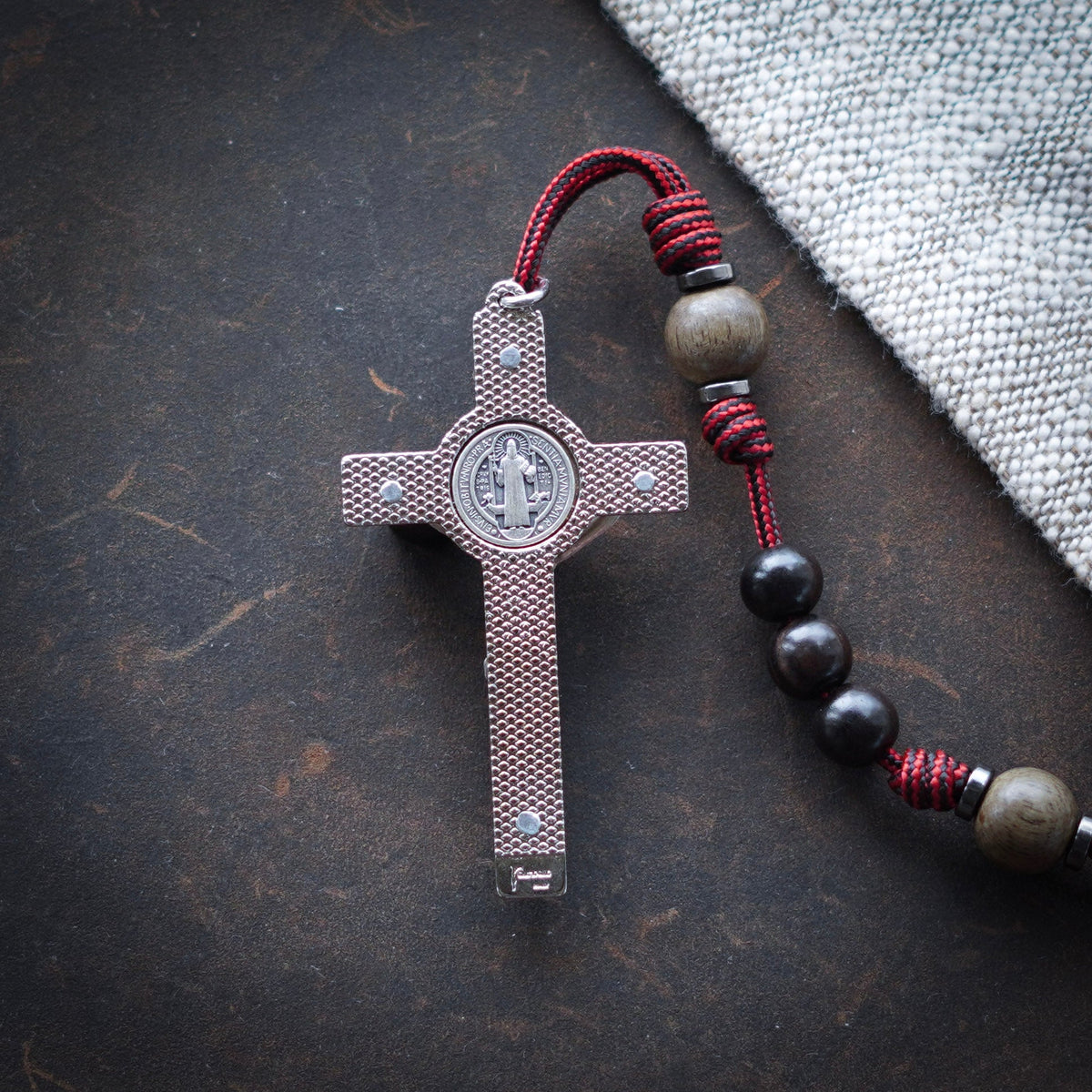
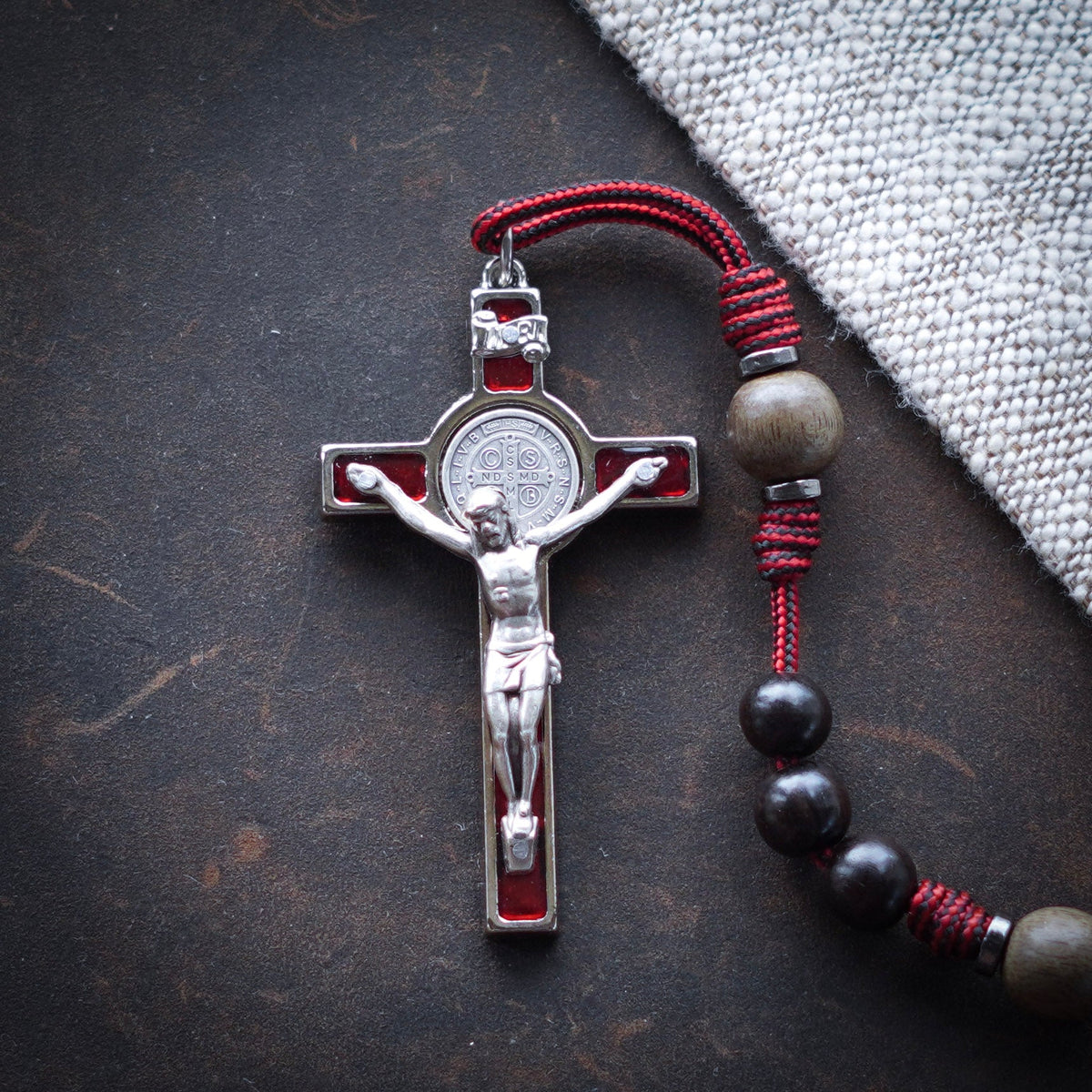
- Pray a decade with her. Pray the fifth Sorrowful Mystery, the Crucifixion, and think about the lance and the opened side that started it all. A Sacred Heart Pocket Rosary makes that single decade simple to carry into your day.
Do your best to come to prayer each day, and don't be discouraged if you miss a day or feel distracted. Keep returning, and trust that every effort is an opportunity to receive God's grace.