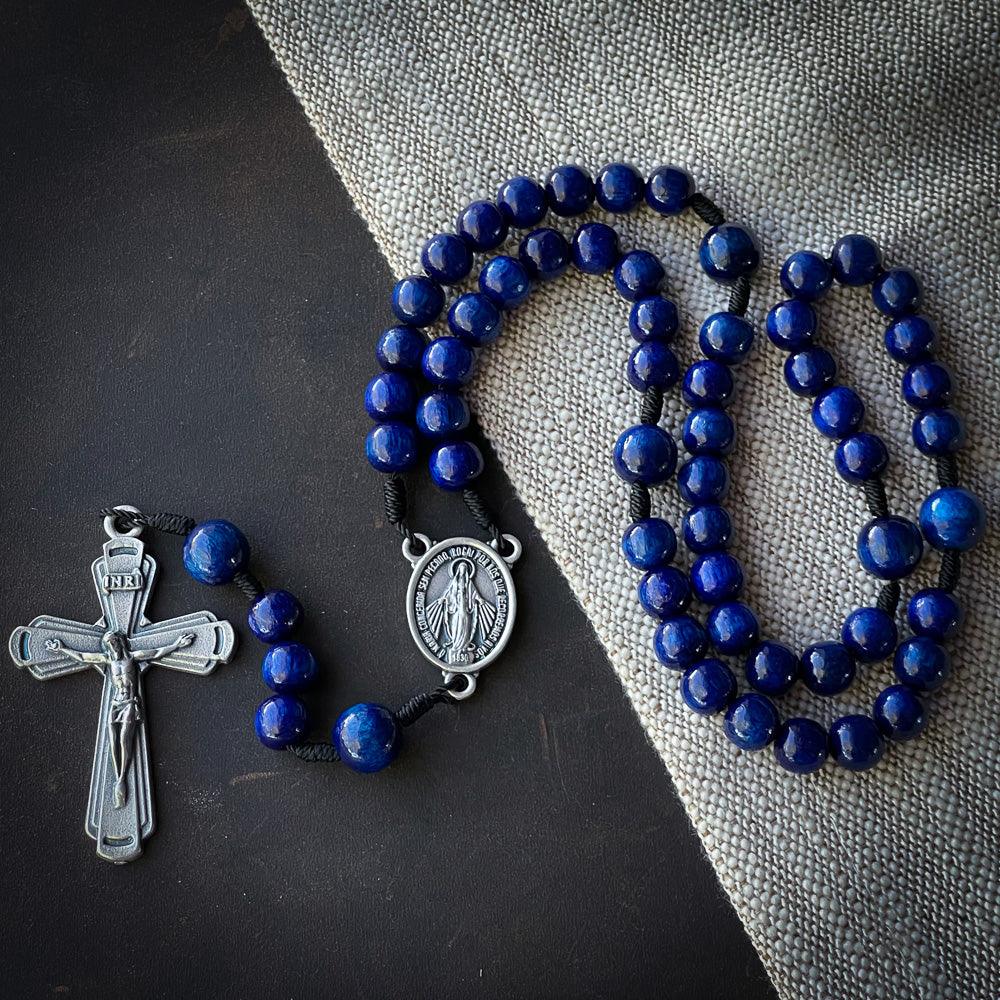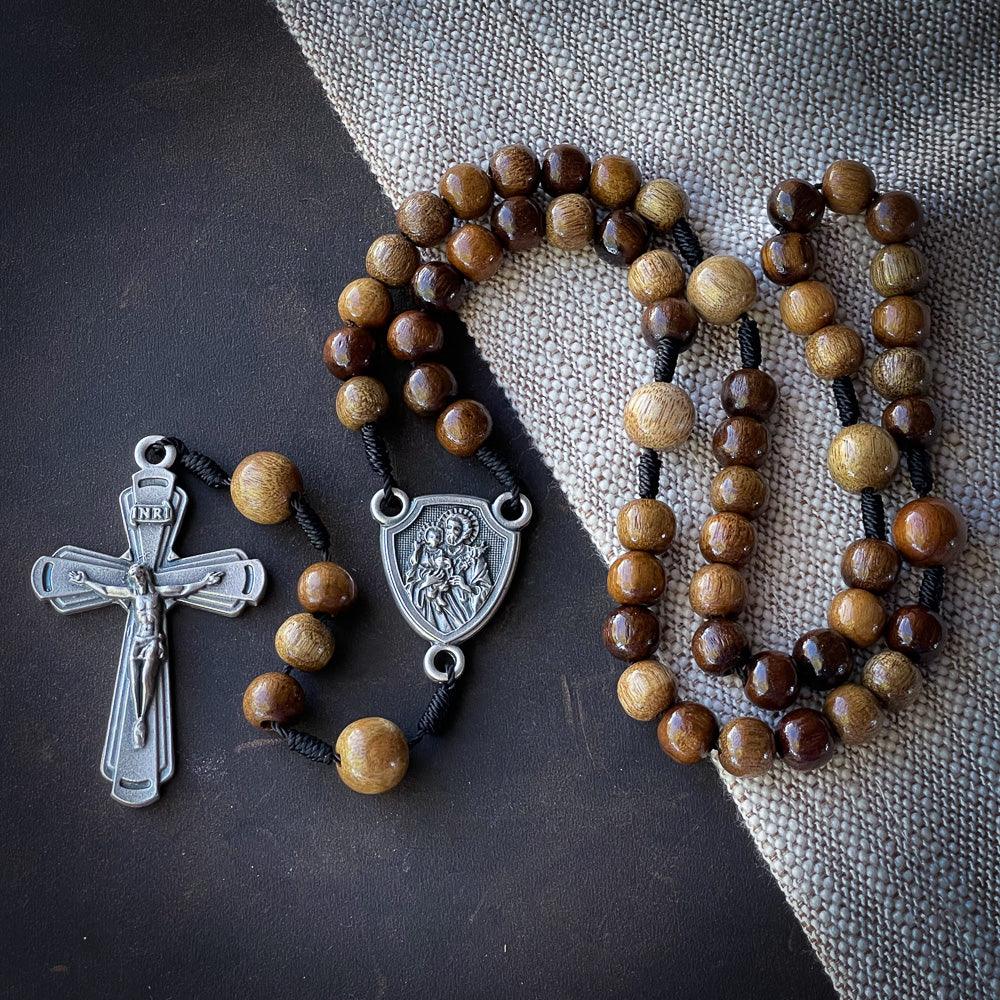

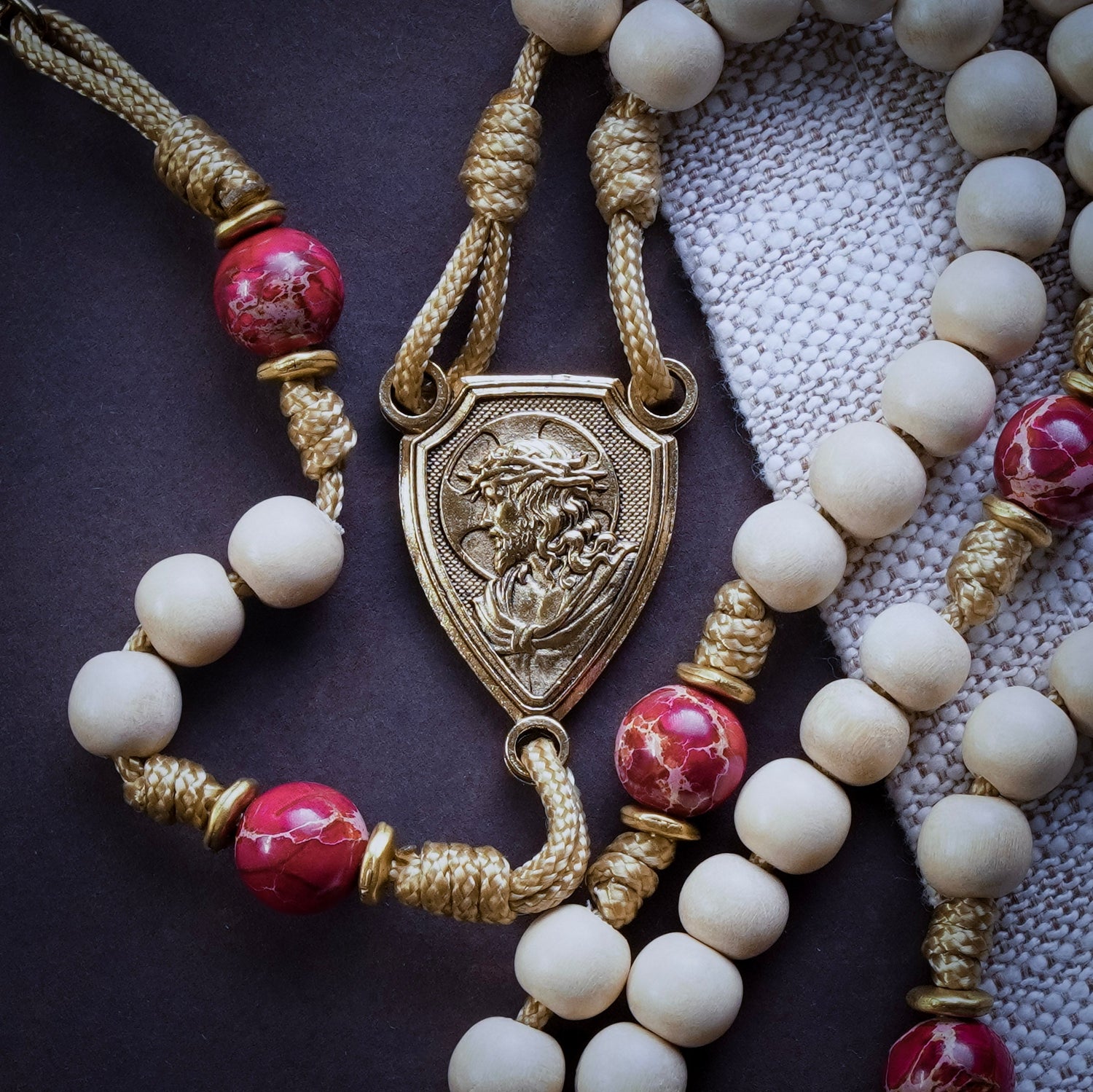
What actually makes rosary beads durable enough for daily prayer
If you have ever had a rosary break on you mid-prayer, you know the particular frustration of it. One second you are deep in the Third Sorrowful Mystery, and the next you are on your hands and knees chasing a bead under the couch. Not exactly the meditative experience you were going for.
The good news is that a rosary breaking on you is not inevitable. It is almost always a materials problem. Get the materials right and a rosary can survive years, even decades, of daily use without so much as a loose bead.
This guide covers exactly that: what makes durable rosary beads durable, why paracord and hardwood are the most reliable combination for daily use, and how to spot a well-built rosary before you buy it.
Where Cheap Rosaries Actually Fail
Before we get into what works, it helps to understand what usually goes wrong. Because most rosary failures are predictable, and most of them happen at the same three points.
The Links
The metal links connecting beads to each other and to the centerpiece are where most cheap rosaries give out first. These links are often made from thin-gauge wire that was never designed for the mechanical stress of daily repetitive use. You pull the beads through your fingers hundreds of times a week, and those little links flex just slightly every time. Eventually, one bends. Then it bends back. Then it snaps.
The worst part is that it usually happens at the worst possible time. We have heard from more than a few people who lost their rosary mid-flight, mid-Communion line, or mid-commute. Not ideal.
The Beads
Plastic beads, including the ones with a wood-grain surface texture that looks convincingly like wood until you hold them, do not hold up to daily friction the way real hardwood does. The texture wears smooth at the contact points, the finish yellows or chips, and after a year or two the beads feel noticeably worse than they did new.
The Cord
On cord rosaries, the failure point is usually the cord material itself or how the knots are tied. A cheap nylon or polyester cord stretches and frays over time. The knots loosen. Eventually a bead slips free, and the whole thing unravels from there.
Why Paracord Changed the Game
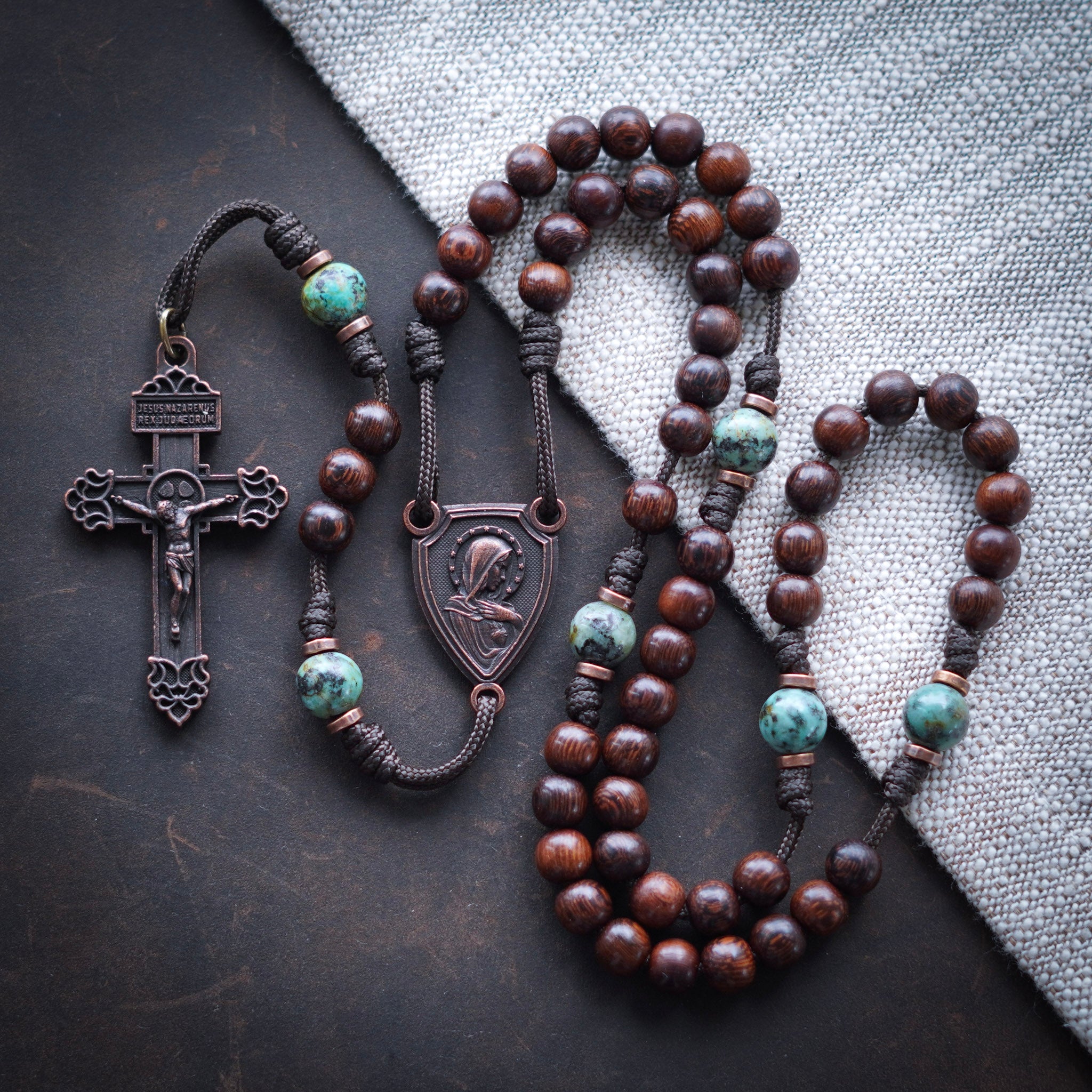
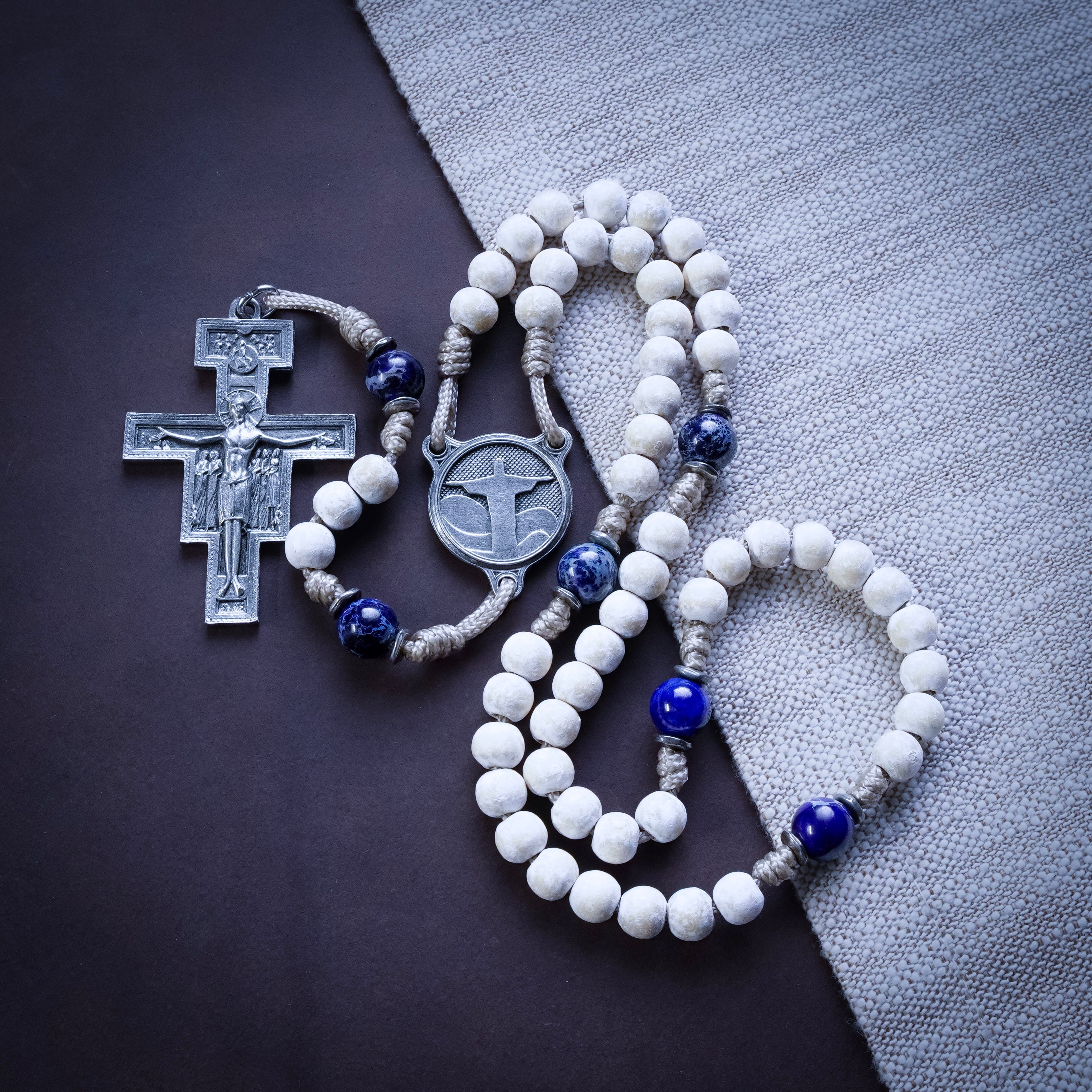
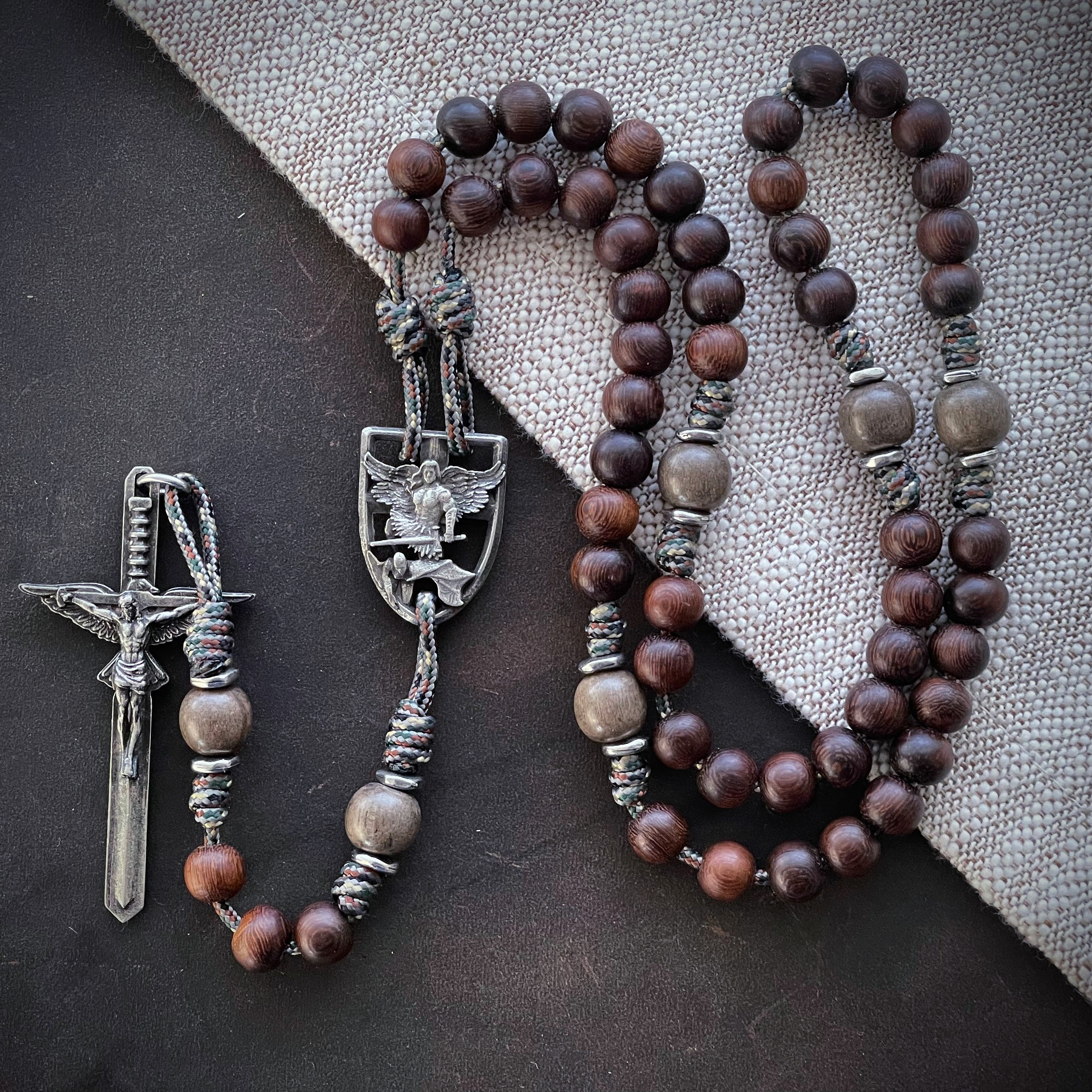
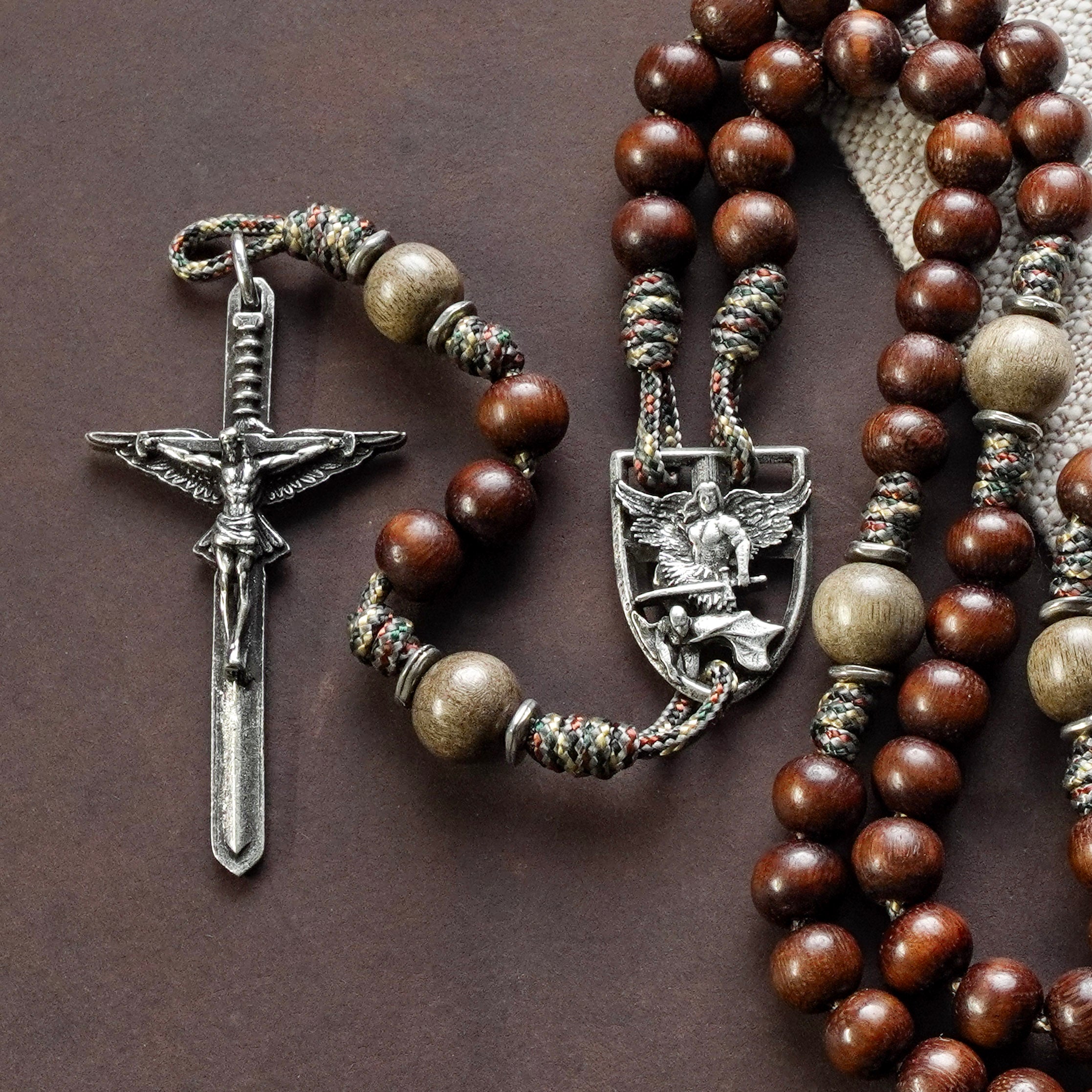
Paracord, specifically 550 paracord, was developed for military use. The 550 refers to its breaking strength: five hundred and fifty pounds. It was designed to deploy parachutes and survive conditions that would destroy most materials. Using it to make a rosary is, in some ways, massive overkill.
But that overkill is exactly the point.
What 550 Paracord Actually Does
A paracord rosary simply does not break under normal conditions. The cord does not fray, does not stretch significantly, and does not care about moisture, temperature changes, or the bottom of a gym bag. It is the right material for a man who carries his rosary every single day without thinking about it, who shoves it in a pocket with his keys and his phone and his work gloves and expects it to be fine.
It will be fine. That is the whole point.
The Knot Makes the Difference
The cord material matters, but so does how the knots are tied. A properly tied knot on a paracord rosary is locked in place and does not loosen with use. A poorly tied knot, even on good cord, will eventually work itself free. At The Catholic Woodworker, every knot is tied and set to hold, because a rosary that falls apart at the knots is no better than one with cheap links.
Why Hardwood Beads Hold Up
Not all wood is created equal when it comes to rosary beads. Softwoods dent, scratch, and absorb moisture in ways that cause them to swell, crack, or warp over time. Hardwoods, the dense, close-grained varieties like Imbuia and Wenge, are a different story.
Density Is Everything
The density of a hardwood bead determines how it responds to the daily mechanical stress of being pulled through fingers, dropped on hard surfaces, and carried in pockets. Dense hardwoods resist denting and scratching at a level that soft materials simply cannot match.
If you want a detailed comparison of which hardwoods work best for which situations, the guide on The Best Wooden Rosary For Men breaks down Imbuia and Wenge side by side.
How Wood Ages With Prayer
Here is the thing about a well-made hardwood rosary that surprises a lot of people. It gets better with age. The natural oils from your hands work into the wood slowly over time. Rough spots smooth out. The finish deepens. Imbuia in particular develops a warm, rich patina after years of daily handling that makes new Imbuia look flat by comparison.
This is the opposite of what happens with plastic or cheap materials, which only get worse. A hardwood rosary is one of the few objects in your life that improves the more you use it. If that is not a good metaphor for a prayer life, we do not know what is.
Chain or Cord: Which Is Right for You?
Both can be durable if they are made well. The right choice depends on how and where you carry your rosary.
| Construction | Best For | Durability Notes |
|---|---|---|
| Paracord with hardwood beads | Daily carry, outdoor use, active men, travel | Highest durability, waterproof, near-indestructible under normal use |
| Knotted cord with hardwood beads | Daily carry, traditional feel, monastic style | Very high durability, similar to paracord in most conditions |
| Quality chain with hardwood beads | Mass, formal prayer settings, office or home use | High durability when links are properly sized and weighted |
| Thin wire chain with plastic beads | Occasional or gift-shop use | Low durability, breaks within months of daily use |
If you're looking to buy a rosary for a man in your life, make sure you read our guide to Catholic gifts for men first.
How to Tell If a Rosary Is Built to Last
Whether you are shopping in person or online, here are a few things to look for that will tell you quickly whether a rosary is built for daily use or just for a shelf.
- Pick it up and feel the weight. Real hardwood beads have a satisfying density. Plastic feels light in a way that gives it away almost instantly
- Look at the links or cord. Links should be fully closed with no visible gaps. Cord should be tightly knotted, not looped or loosely tied
- Hold the crucifix. A solid metal crucifix has real weight and resonance when you tap it lightly. A hollow one rings thin and feels insubstantial
- Run your finger over the bead surface. Real wood has a texture that changes slightly from bead to bead. Plastic or resin beads are perfectly uniform, because they came out of the same mold
If a rosary passes all four of those checks, you have got something that was built to hold up.
Why Durability Is a Spiritual Argument Too
We know this sounds like a sales pitch at this point, but stay with us, because this part is worth saying.
A broken rosary interrupts prayer. A durable rosary does not. That sounds obvious, but the implication is bigger than it seems. Building a consistent daily prayer habit is hard. It requires showing up every morning and doing the work even when you do not feel like it. The last thing that habit needs is a physical object that keeps breaking and requiring replacement.
For anyone thinking about this from a gifting angle, the piece on What Makes A Handmade Rosary Worth The Price makes the full case for quality, and it is worth a read before you decide.
Built to Survive Daily Prayer
Every rosary at The Catholic Woodworker is built with real hardwood beads, durable construction, and solid metal hardware. Whether you want a paracord build for maximum durability or a chain-linked hardwood rosary for a more traditional feel, everything we make is built to hold up to daily prayer for years.
Browse the full collection at The Catholic Woodworker and find a rosary that actually keeps up with you.